Why Zhu Bajie Is a Smart Choice for a Character Page
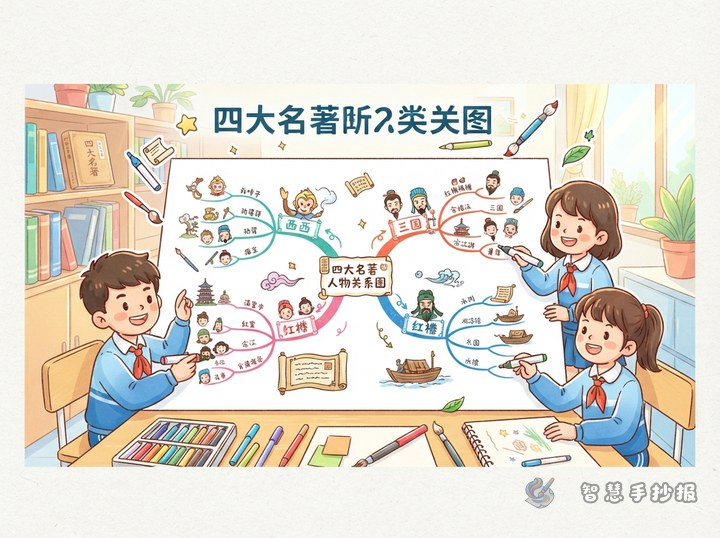
Many four great classical novels projects feature Sun Wukong, Zhuge Liang, or Lin Daiyu, while Zhu Bajie is often overlooked. That makes him a fresh subject. His flaws are easy to describe, yet he is also an essential member of the pilgrimage team, so the page can show contrast, story, and personality all at once.
The main thing to avoid is turning the whole page into a list of jokes. Start with a clear idea: Bajie is a likable character with real flaws, and his growth matters too. With that idea in place, every section has a purpose.
Ready-to-Use Material: Identity, Personality, and Key Scenes
Prepare three text blocks, about one hundred words each, and the page will feel complete.
Who he is
- He was Marshal Tianpeng in heaven, then was sent down to the mortal world and was reborn with a pig-like appearance.
- He was taken in by Tang Sanzang at Gao Village and received the name Zhu Wuneng, becoming the second disciple.
- On the journey he often carried the luggage and led the horse, and he was also the team's lively comic relief.
Personality words
- Greedy, lazy, and proud: he cannot resist food, wants to back out when things get hard, and feels hurt when corrected.
- Loyal and willing to admit mistakes: he complains a lot, but he never truly abandons the group and often comes back to help.
- Clever in small ways: he comes up with ideas when trouble appears, even if some of them go wrong.
Scenes worth writing about
- Being taken in at Gao Village: from a local troublemaker to a member of the pilgrimage team.
- Provoking Sun Wukong to return: when the master was in danger, Bajie used a clever taunt to bring his senior brother back.
- Carrying the luggage and leading the horse: much of the hard, ordinary work on the road was done by Bajie.
Sections and Layout: Turning a Funny Character into a Clear Page
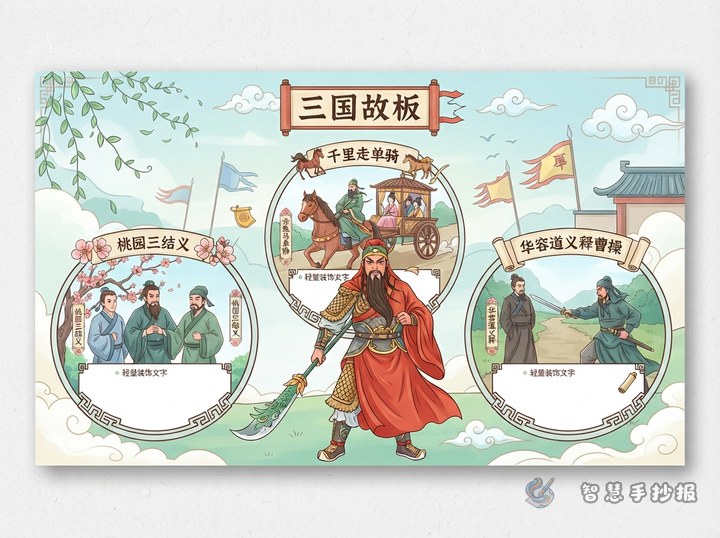
Divide the page into four columns, with small borders shaped like his rake or a watermelon. Useful sections include:
- Character Card: name, Buddhist name, identity, master, and fellow disciples, shown as a table or card.
- Key Scene Cards: choose two scenes and explain each in three sentences about the cause, event, and result.
- Personality Word Cloud: write greedy, lazy, proud, loyal, and admits mistakes in large letters, with a short note beside each one.
- My View of Bajie: two or three sentences in your own words, which teachers often notice first.
If there is still space, add a small box of Bajie quotes from the original novel, then write one sentence explaining what you think each quote means. Keep the sections separated, make headings one size larger than the body text, and leave some white space for a cleaner look.
Short Lines to Fill the Page
Many students finish the drawings first and then run out of words. Prepare a few short lines in advance:
- Bajie loves food, but he never misses a day on the journey.
- He often talks about giving up, yet he never actually leaves.
- A character with flaws can still be a necessary part of the team.
- From Gao Village to the West, Bajie changes little by little.
When you quote the original novel, keep the wording accurate. When you write your own opinion, you can be more personal. Spread short lines among the scene cards and the character card instead of putting them all in one block.
Color, Drawings, and a Final Check
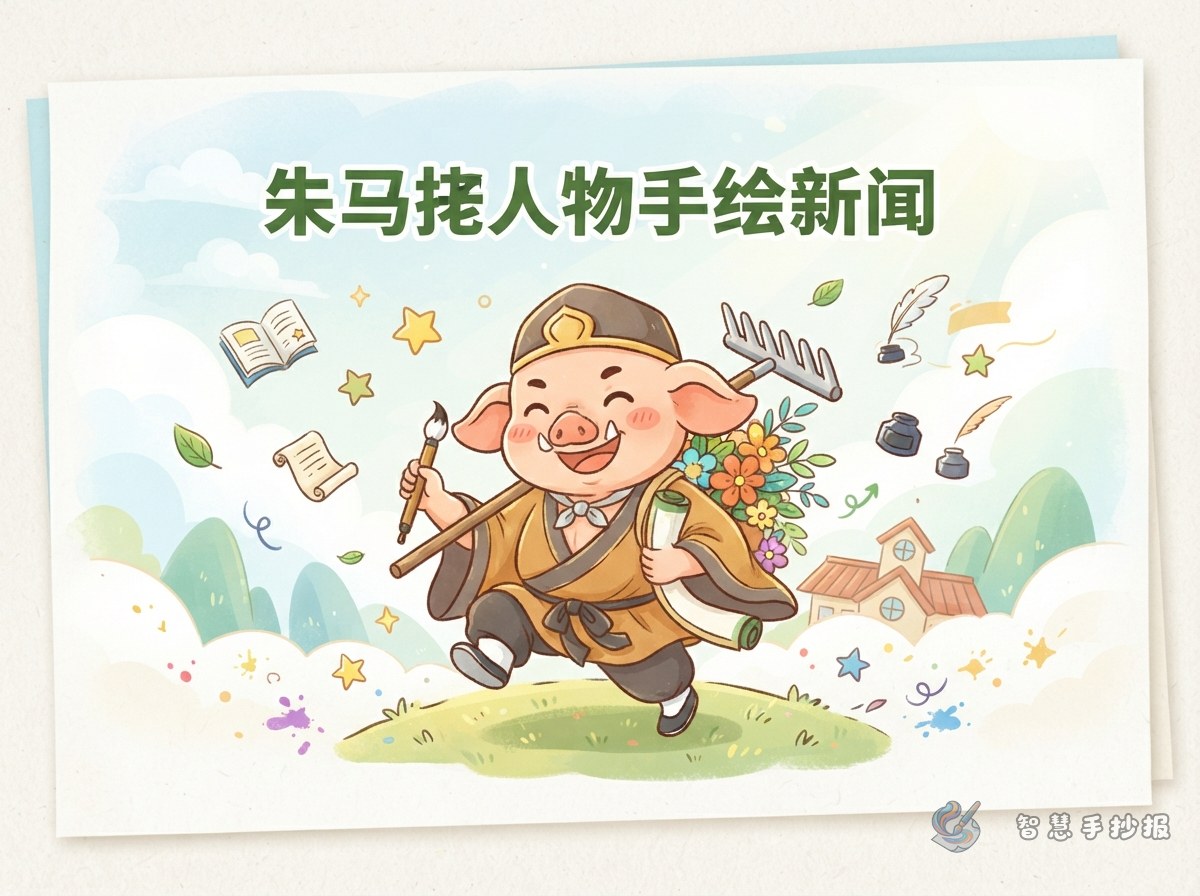
Bajie's image is lively, so warm yellow, orange, and light pink work well for the background, with dark green or deep blue to balance the page. Small drawings can include his nine-toothed rake, a watermelon, clouds, a rake-shaped border, or a simple picture of Bajie. Keep drawings small so the text has enough room.
Before finishing, check three things: does the title clearly say Zhu Bajie character handwritten newspaper; do the sections cover identity, personality, scenes, and personal opinion; and does the layout have a clear main focus. If you want a ready-made layout to fill in your prepared text, open the 智慧手抄报 WeChat mini program, choose a four great classical novels character template, and adjust the sections and decorations on your phone before printing or copying the design by hand.