Start with a Literary Character Map
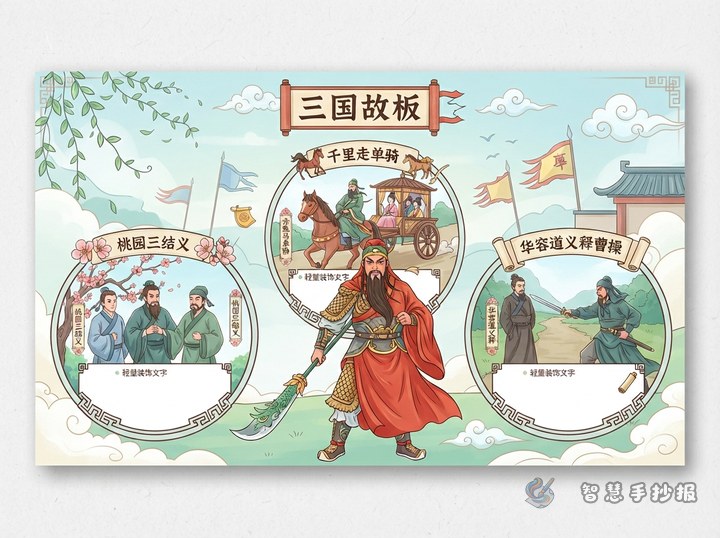
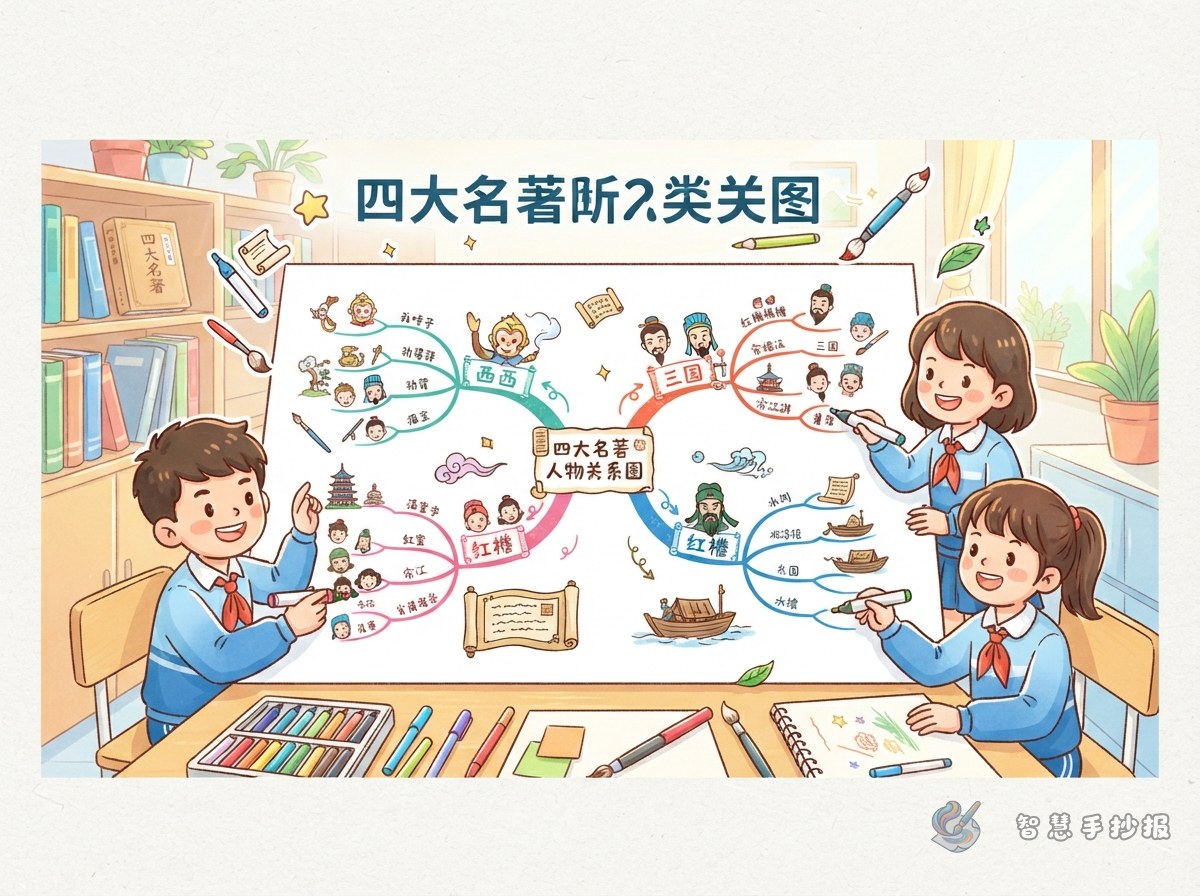
A Four Great Classical Novels character-map poster does not need to include every character. Choose several representative figures from each novel and show their main connections with character cards and lines. Place “Character Map of the Four Great Classical Novels” in the center, then create four areas for Journey to the West, Romance of the Three Kingdoms, Water Margin, and Dream of the Red Chamber.
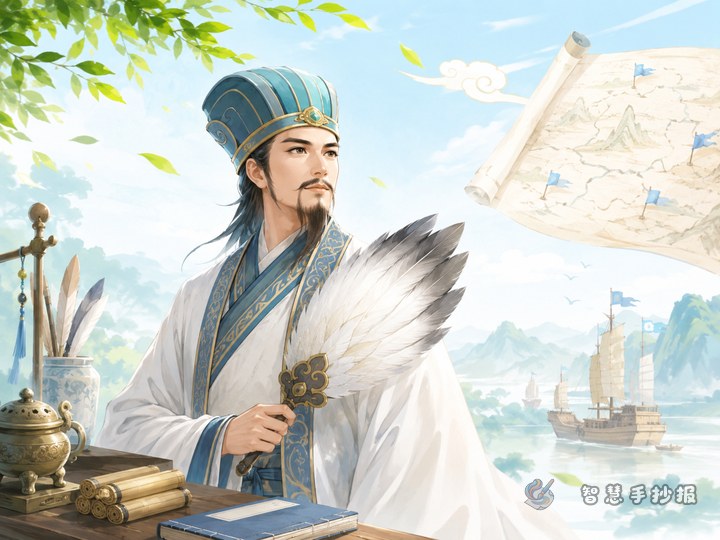
Suggested choices: Tang Sanzang, Sun Wukong, Zhu Bajie, and Sha Wujing from Journey to the West; Liu Bei, Zhuge Liang, Guan Yu, and Zhang Fei from Romance of the Three Kingdoms; Song Jiang, Lin Chong, Lu Zhishen, and Wu Song from Water Margin; and Jia Baoyu, Lin Daiyu, and Xue Baochai from Dream of the Red Chamber. Keeping the total between twelve and sixteen characters makes the poster detailed without becoming crowded.
Let Lines Explain the Connections
The purpose of a character map is not to fill the page with biographies. Let the lines carry the information. Add a small legend explaining that solid lines can show teacher-student, friendship, or companionship; two-way arrows can show mutual influence; and dashed lines can show conflict or opposition. Give each novel its own color family, and avoid connecting different novels unless there is a clear comparison.
- Teacher and companions: Connect Tang Sanzang with Sun Wukong, Zhu Bajie, and Sha Wujing using a radiating pattern.
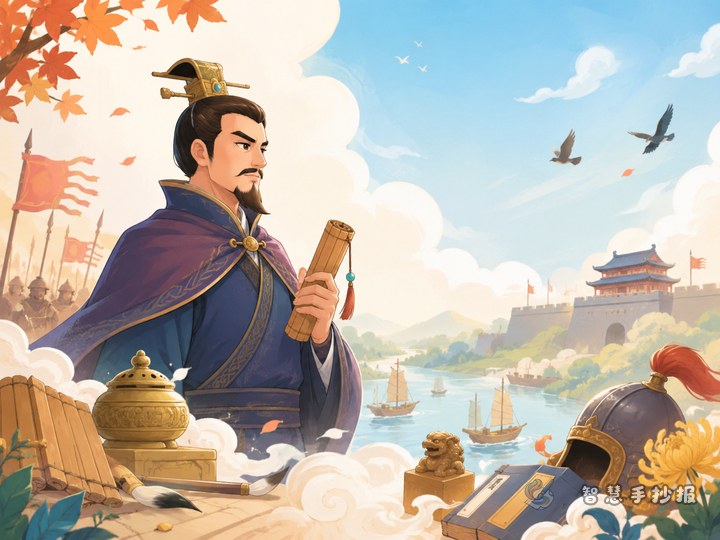
- Brotherhood and alliances: Place Liu Bei, Guan Yu, and Zhang Fei in a linked group, with Zhuge Liang nearby as an important strategist.
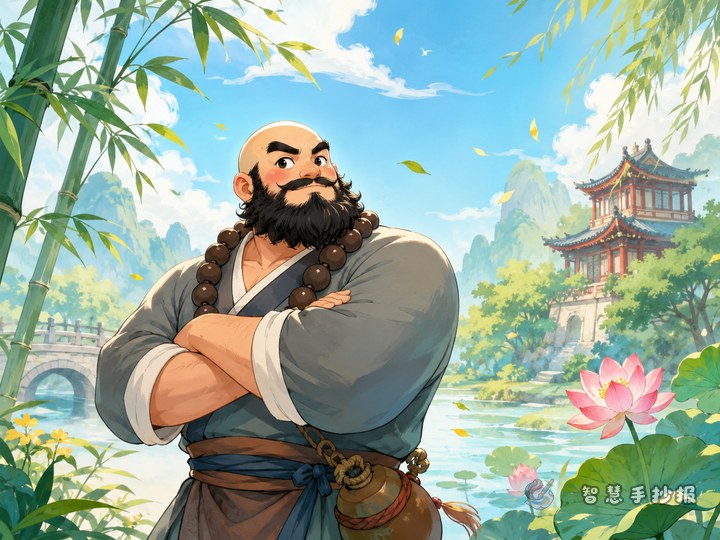
- A group of characters: Put Song Jiang, Lin Chong, Lu Zhishen, and Wu Song inside one framed section to suggest their shared Liangshan setting.
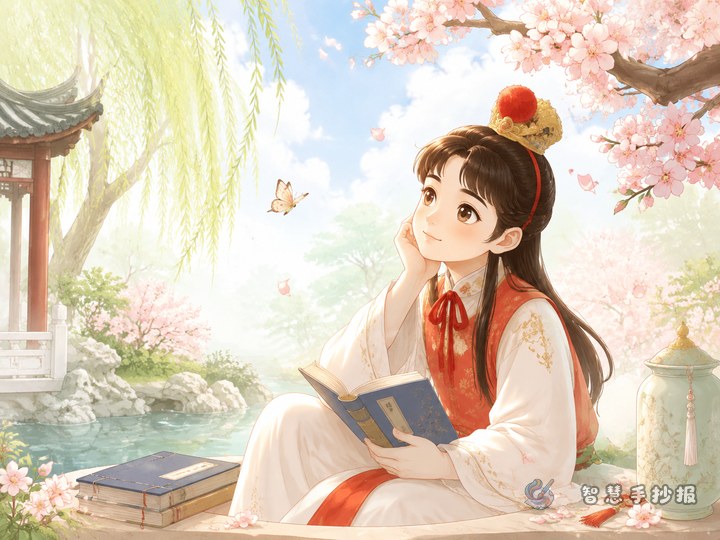
- Emotional connections: Arrange Jia Baoyu, Lin Daiyu, and Xue Baochai in a triangular section, adding short words that explain the emotional clues.
What to Put on Each Character Card
Use the format “name + role or quality + one-line impression.” For example: Sun Wukong—brave, clever, and willing to challenge difficulties; Zhuge Liang—thoughtful and skilled at planning; Lu Zhishen—direct, generous, and helpful; Lin Daiyu—sensitive, intelligent, and poetic. Use short, recognizable descriptions instead of turning every card into a full biography.
A Short Introduction to Copy
The Four Great Classical Novels created many vivid characters. Although they belong to different stories, each has left a distinct mark on Chinese literature. By studying their relationships, we can discover the companionship, cooperation, conflict, and concern that make classic stories memorable.
Try a More Creative Layout
- Draw a scroll or traditional window pattern across the top and write the main title inside it.
- Place a circular “literary character map” in the middle, with four colored paths leading to the four novels.
- Arrange character cards around the page using lantern, folding-fan, cloud, or bookmark shapes.
- Add a small section at the bottom called “The Character I Most Want to Know,” followed by two or three sentences explaining your choice.
Ivory, vermilion, teal, and deep blue work well for a classical look. Keep one or two main colors in each area. Make character names more prominent than explanatory text, and sketch all relationship lines lightly in pencil before tracing them with colored pens.
A Practical Order for Finishing the Poster
Draw the overall framework first, decide where the four novels will go, then add character names and connections. Finish with the introduction, borders, and decorations. Before coloring, check spelling, remove unnecessary crossings between lines, and make sure every sentence is easy to read. If you need help organizing sections and layout ideas, you can continue creating your poster in the WeChat Mini Program “Smart Handwritten Newspaper” and adjust the details to suit your grade and art supplies.