Why the Flower Festival Suits a Flower-Themed Poster
The Huazhao Festival falls in the second lunar month and is known in folk tradition as the Birthday of a Hundred Flowers or the Flower God Festival. In some places it is also linked to spring vegetable picking and butterfly outings. Since flowers are already the star of the day, the theme and the artwork fit together naturally.
Compared with crowded holidays like Spring Festival or Mid-Autumn, this festival leaves plenty of blank space, so younger students can draw one large blossom while older students add more written detail.
Peach, Apricot and Crab Apple: Flowers and Their Meanings
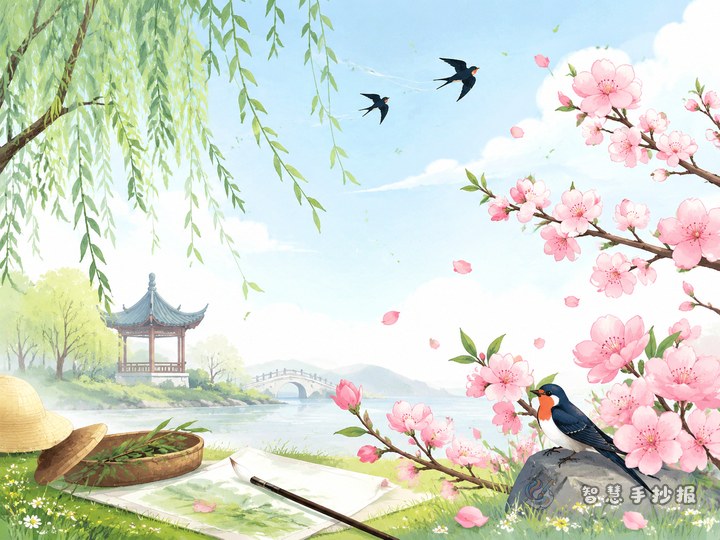
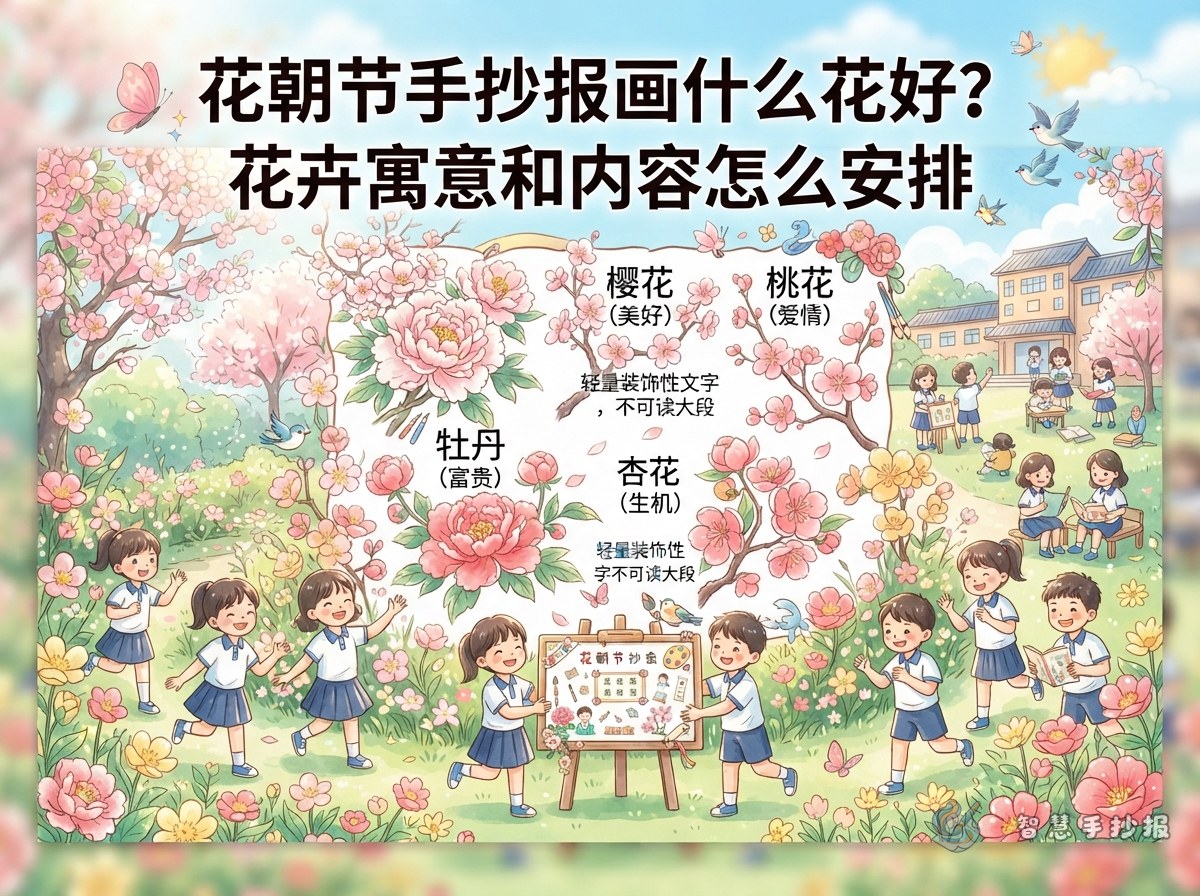
- Peach blossom: blooms in the second lunar month, the closest match to the festival date; stands for spring, liveliness and a good life.
- Apricot blossom: often linked to study and spring farming; pale pink or white works best and suggests hope.
- Pear blossom: plain and clean, a good choice for small corner decorations.
- Crab apple: tight clusters of flowers, meaning cherishing spring and family harmony; good beside the title.
- Magnolia: large, simple petals that are easy for younger students to copy; stands for purity and progress.
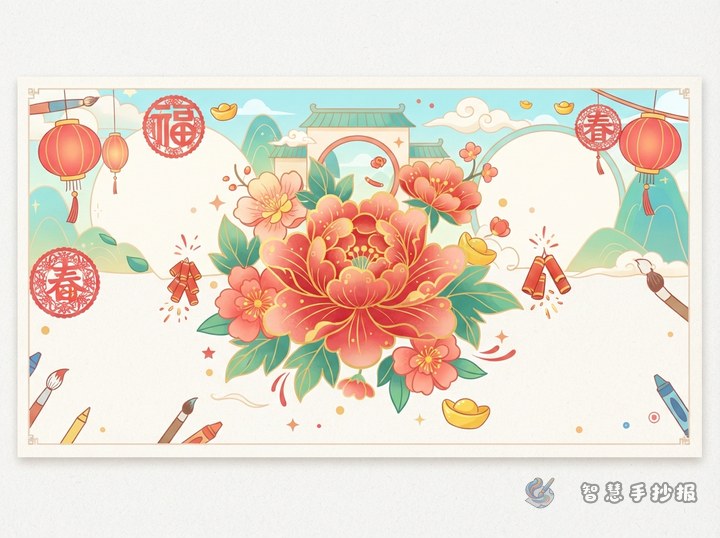
- Chinese peony: called the "king of flowers," meaning abundance and warmth; pairs well with herbaceous peony.
Pick two or three flowers as the main subjects and use the rest as small buds, petals or vines along the border. Big and detailed for the main flowers, small and simple for the decorations.
Text You Can Copy Into the Layout
A Short Fact About the Festival
The exact date varies by region, usually the second, twelfth or fifteenth day of the second lunar month. People go out to enjoy the blossoms and celebrate the flowers' "birthday."
Customs Worth Mentioning
- Tying red ribbons: red paper or cloth strips are tied to branches to wish the flowers well and bring good luck.
- Butterfly outings: old spring gatherings held around the festival; draw one butterfly to echo the idea.
- Picking spring greens: gathering wild vegetables to taste the new season, similar in spirit to biting spring.
- Flower god: folk tradition speaks of a deity who guards the blossoms, a nice addition to a small fact box.
Short Lines for Decoration
Phrases about "flower morning and moon evening" or "the birthday of a hundred flowers" work well as vertical side notes or border text. Use each phrase only once so the page does not feel crowded.
Four Blocks That Keep the Page Tidy
- Title block: the top third of the page, with the festival name in warm red, lotus pink or deep green.
- Main flower illustration: place it below the title on the right, with branches reaching past the frame for a sense of movement.
- Meanings and customs: two or three small boxes for flower meanings, festival customs and one short poem line, each around 30 to 50 characters.
- Wish or observation strip: a narrow band at the bottom for a flower you saw this spring or a wish such as "may the blossoms stay."
Color and Drawing Tips
- Use pale cream or light green as the base, pink, red and white for the main flowers, and two or three shades of green for leaves.
- Do not fill petals with one flat color; leave a light edge or a soft gradient so the flower has depth.
- Let vines and branches follow the border and connect the text blocks, so no large empty area appears.
- Keep the title to two or three colors and the body text to one, so everything stays readable.
A Quick Check Before You Finish
Make sure dates, alternative names and customs stay consistent. Illustrations and text should take up roughly half the page each, with breathing room between blocks. If you want to try a different flower pairing or rearrange the columns, open the 智慧手抄报 mini program in WeChat and choose a layout to continue.