Start with a clear theme idea
This kind of handwritten newspaper should not only introduce Jiaozi as an ancient currency, but also show the connection between money and the growth of commerce. A simple theme sentence could be: The appearance of Jiaozi made trade more convenient and reflected the progress of commercial civilization.
For the main title, short phrases such as “Learning About Jiaozi,” “From Coins to Paper Money,” or “The Wisdom of Ancient Trade” work well and are easy for children to use.
Section ideas students can use right away
Section 1: What is Jiaozi?
Write that Jiaozi was an early form of paper money in ancient China. It helped people avoid carrying too many heavy copper coins during larger transactions.
Section 2: Why did Jiaozi appear?
As trade became more active, merchants needed a safer and lighter way to handle money. This need encouraged the use of paper-based currency.
Section 3: Busy ancient markets
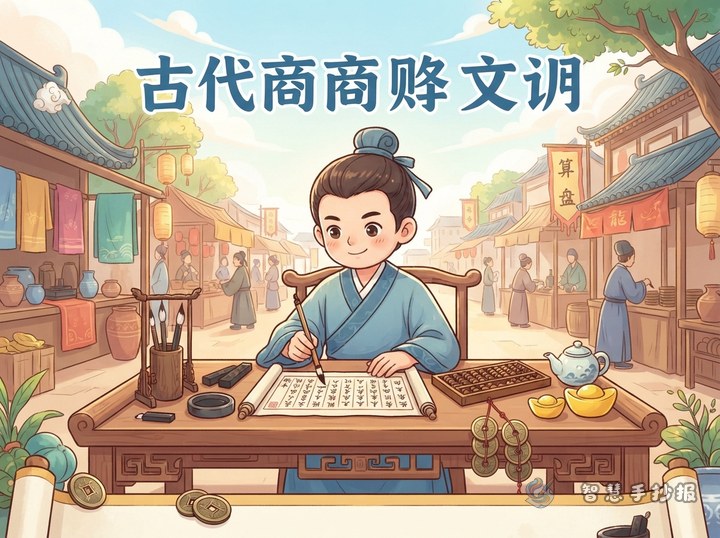
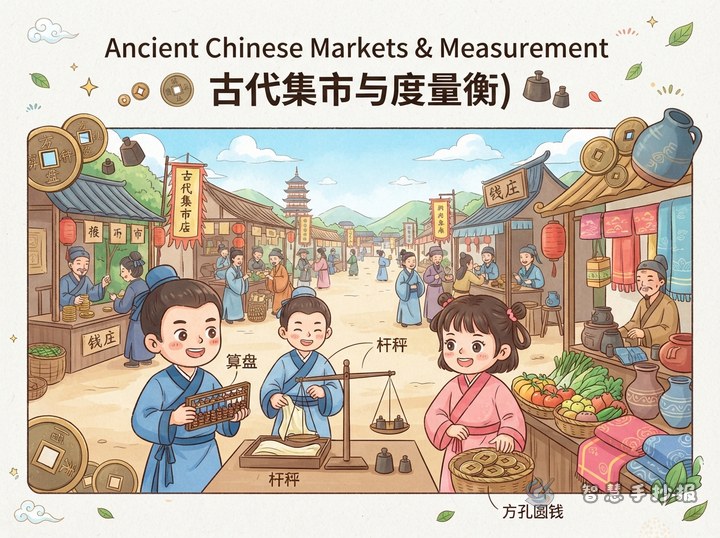
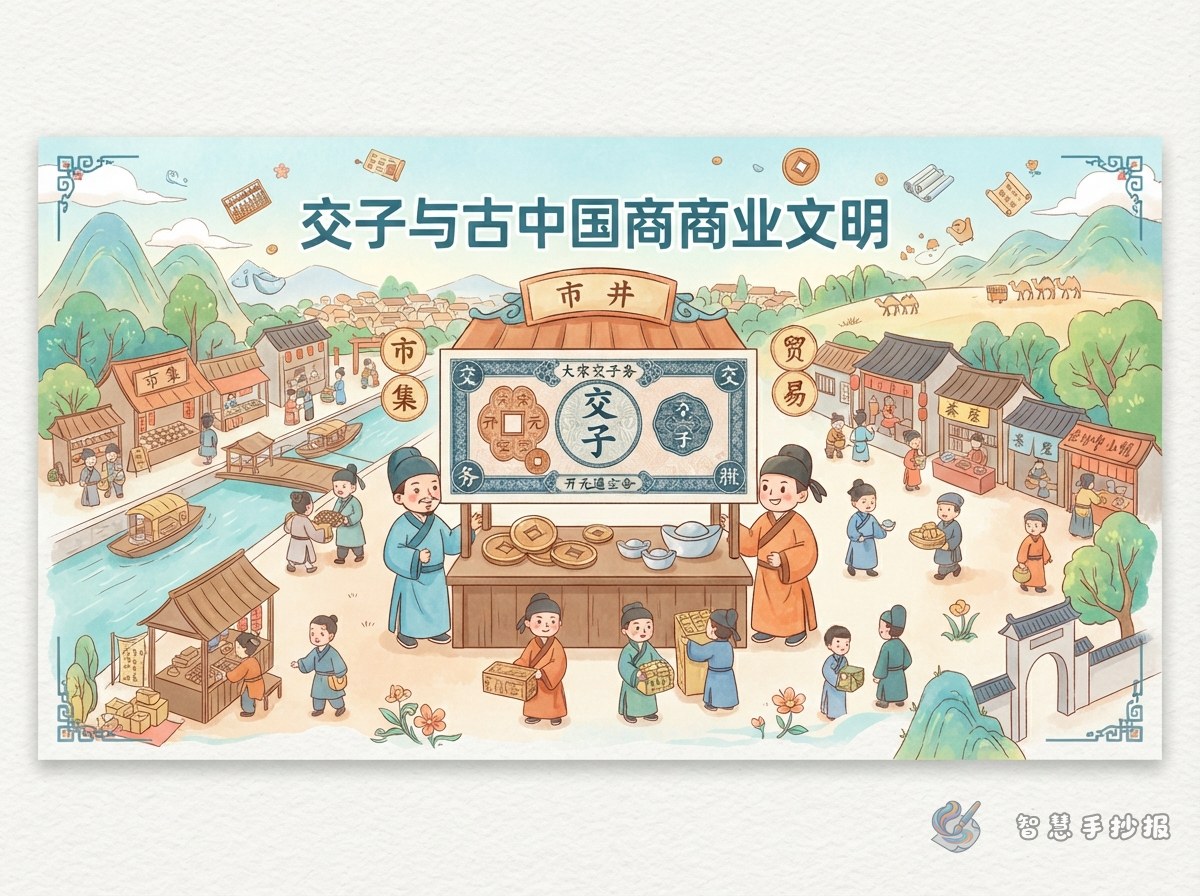
Explain that ancient cities and markets were full of shops and goods. Grain, cloth, tea, porcelain, and many other products were traded, showing how lively commerce had become.
Section 4: How money changed
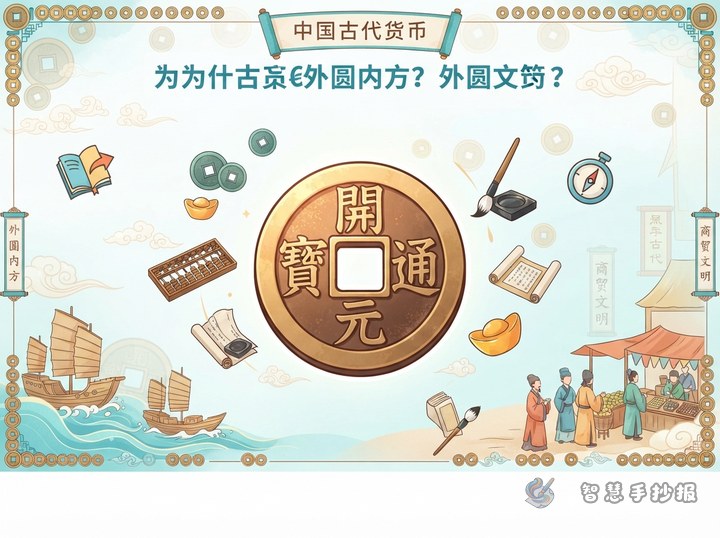
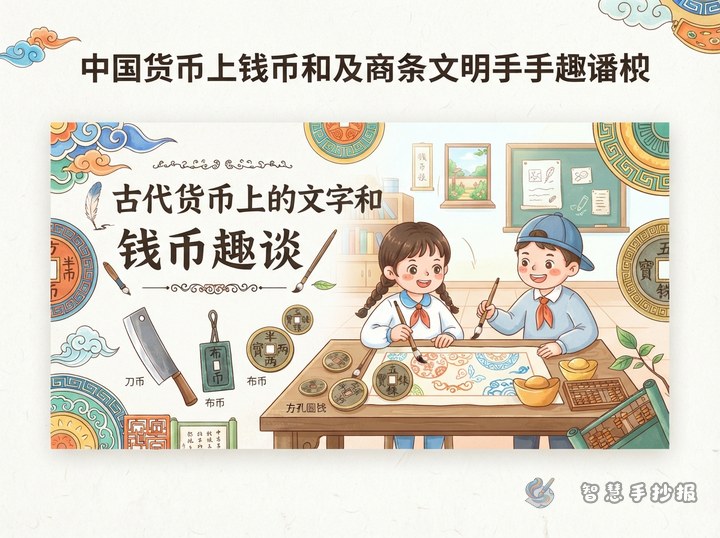
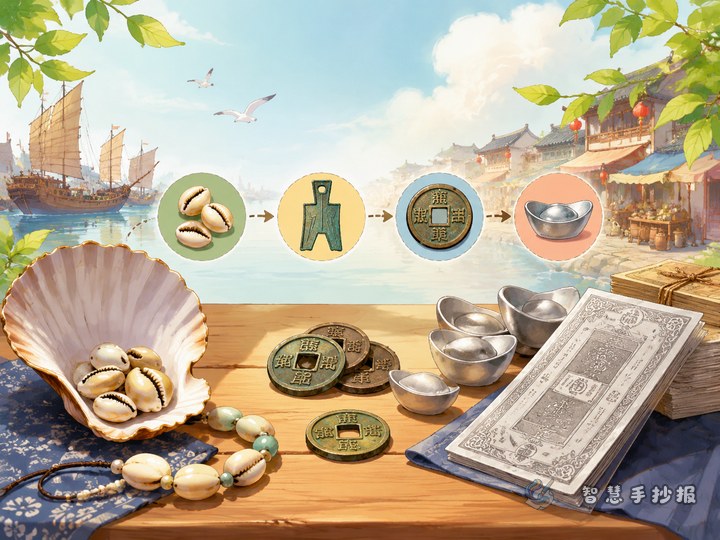
You can create a simple line of development: shell money, knife money, spade money, copper coins, and Jiaozi. This makes the page more organized and easier to illustrate.
Section 5: What I learned
Students can write a short reflection, such as: Jiaozi shows how smart people in ancient times were, and it teaches me that convenience, trust, and exchange are important in business.
Short text materials to copy or adapt
Material 1: Jiaozi was an important step in the history of money. It reduced the burden of carrying coins and made long-distance trade easier.
Material 2: Ancient commerce was not only about buying and selling. It also helped cities grow and supported transportation and handicrafts.
Material 3: The history of money shows human creativity. From barter to metal coins and then to paper money, people kept searching for easier ways to trade.
- Useful mini headings: early paper money, busy markets, trade growth, currency change, civilization progress
- Good short lines: One piece of Jiaozi linked many merchants. Changes in money reflect changes in society.
- Possible ending: Learning about ancient currency helps us understand the wisdom of Chinese commercial civilization.
Ways to make the page feel historical
You do not have to divide the page evenly. A strong layout is to place the main title in the center, fact boxes on both sides, and a short summary section at the bottom.
- Make the main title larger and decorate it with coin shapes or note-style borders.
- Use the left side for the origin of Jiaozi and the right side for ancient market life.
- Add a small timeline of currency development at the bottom.
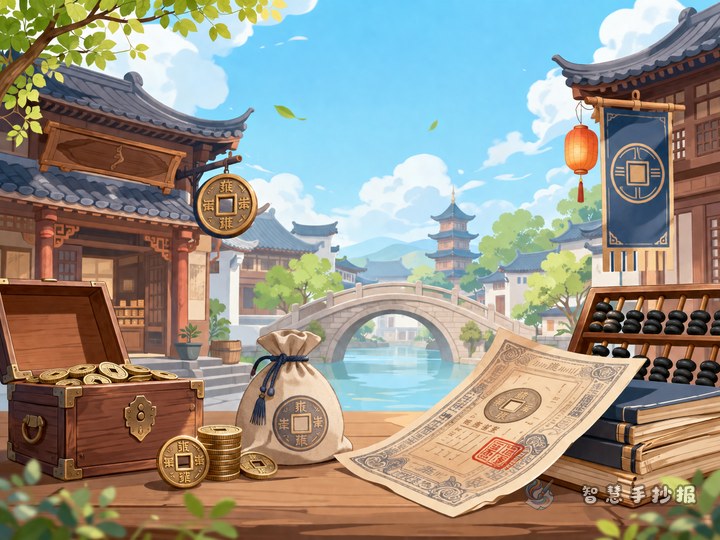
- Decorate empty spaces with an abacus, coins, shop signs, shelves, carts, or horses.
Colors such as brown, beige, and muted green can create a classic and historical feeling.
Common mistakes to avoid
A common problem is writing only about what Jiaozi was, without explaining its relationship to commerce. To make the newspaper complete, connect each section to ideas like easier trade and more prosperous markets.
Also keep the writing short. Two or three sentences per section are enough. Important ideas can be highlighted with bold phrases so readers can quickly understand the main points.
How to improve after the first draft
After finishing the content and sections, check three things: whether the theme is clear, whether each part is easy to read, and whether the decorations match ancient currency and trade. If you want a neater and more polished result, you can continue refining the page in the Smart Handwritten Newspaper WeChat mini program.