Turn the poster into a mathematical decoding mission
A “Math Magician’s Codebook” works well as a fun math handwritten poster with a clear story. Imagine that the poster is an open secret notebook. A young explorer receives a mysterious task and uses numbers, shapes, and operations to uncover hidden clues. This approach keeps the learning content while making readers curious and willing to calculate.
Use “The Math Magician’s Codebook” as the main title, with “Discover hidden answers with numbers” as the subtitle. Blue, yellow, and red can create a bright color scheme. Add small drawings of magnifying glasses, keys, stars, number cards, and code locks to build an exploration mood.
Four sections that feel like pages in a codebook
- Code Rules Station: Introduce a simple number substitution system, such as matching numbers from 1 to 26 with letters. Remind readers to create the matching chart before decoding.
- Shape Signals: Arrange triangles, squares, and circles into a visual code. Readers can observe the number of shapes, changes in corners, or the order of the symbols before explaining their ideas.
- Equation Key: Create several age-appropriate addition, subtraction, multiplication, or division problems. Match each answer with a letter or symbol to form a short message.
- My Decoding Notes: Leave space for “What I observed first,” “How I checked it,” and “What I discovered.” This highlights observation, reasoning, and checking.
Math text you can write directly on the poster
For a “Math Fact” section, write: “Math is more than finding an answer. It also means discovering relationships, asking questions, and checking ideas. When we solve a problem, we can observe the information first, try different methods, and then decide whether the answer makes sense.”
A “Decoding Tip” can say: “When you see numbers, do not guess too quickly. Look for their connection first. When you see shapes, count and compare them before explaining your reason.” These short sentences work well inside speech bubbles or sticky-note illustrations.
How to create an atmosphere of discovery
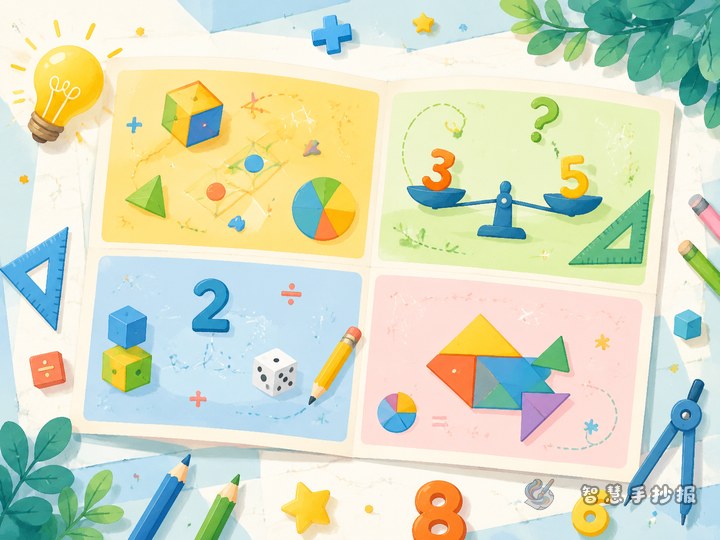
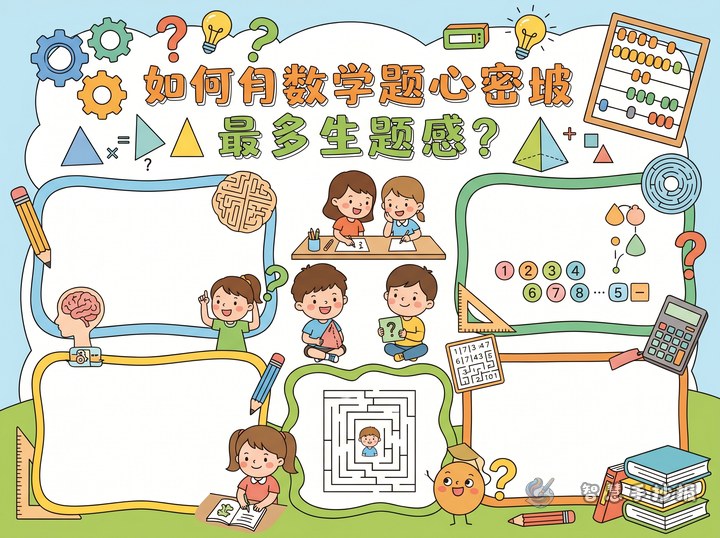
Try a composition with an open codebook in the center and clues surrounding it. Place the Code Rules Station in the upper left, Shape Signals in the upper right, Equation Key in the lower left, and My Decoding Notes in the lower right. Connect them with dotted lines, arrows, or small keys, while leaving enough empty space between sections.
Use a thick pen for the title and a fine pen for the main text. Highlight numbers, operation signs, and key steps with colored pens. Borders can look like combination locks, graph paper, or repeating number strips so that the decorations stay connected to the math theme.
Final checklist
- Plan the title, sections, and drawings lightly in pencil before coloring.
- Recalculate every equation and keep the code matches consistent.
- Break the text into short sentences and enlarge important formulas or clues.
- Check the handwriting, color balance, and section layout before finishing.
To complete a neat layout more quickly, continue in the Zhihui Handwritten Poster WeChat Mini Program, choose a math theme, and replace the sample text and decorations with your own decoding story.