Start with a clear theme: explain fog in a simple way
If you want a science-themed handwritten newspaper that is easy for children to complete, “How does fog form?” is a very practical topic. Students can connect it with daily life, such as foggy mornings, parks, riversides, and the road to school.
You can begin with a short introduction under the title: Fog is a weather phenomenon made of tiny water droplets or ice crystals near the ground, making distant objects look blurry. This works well as an opening line.
What to include in the main content
1. How fog forms
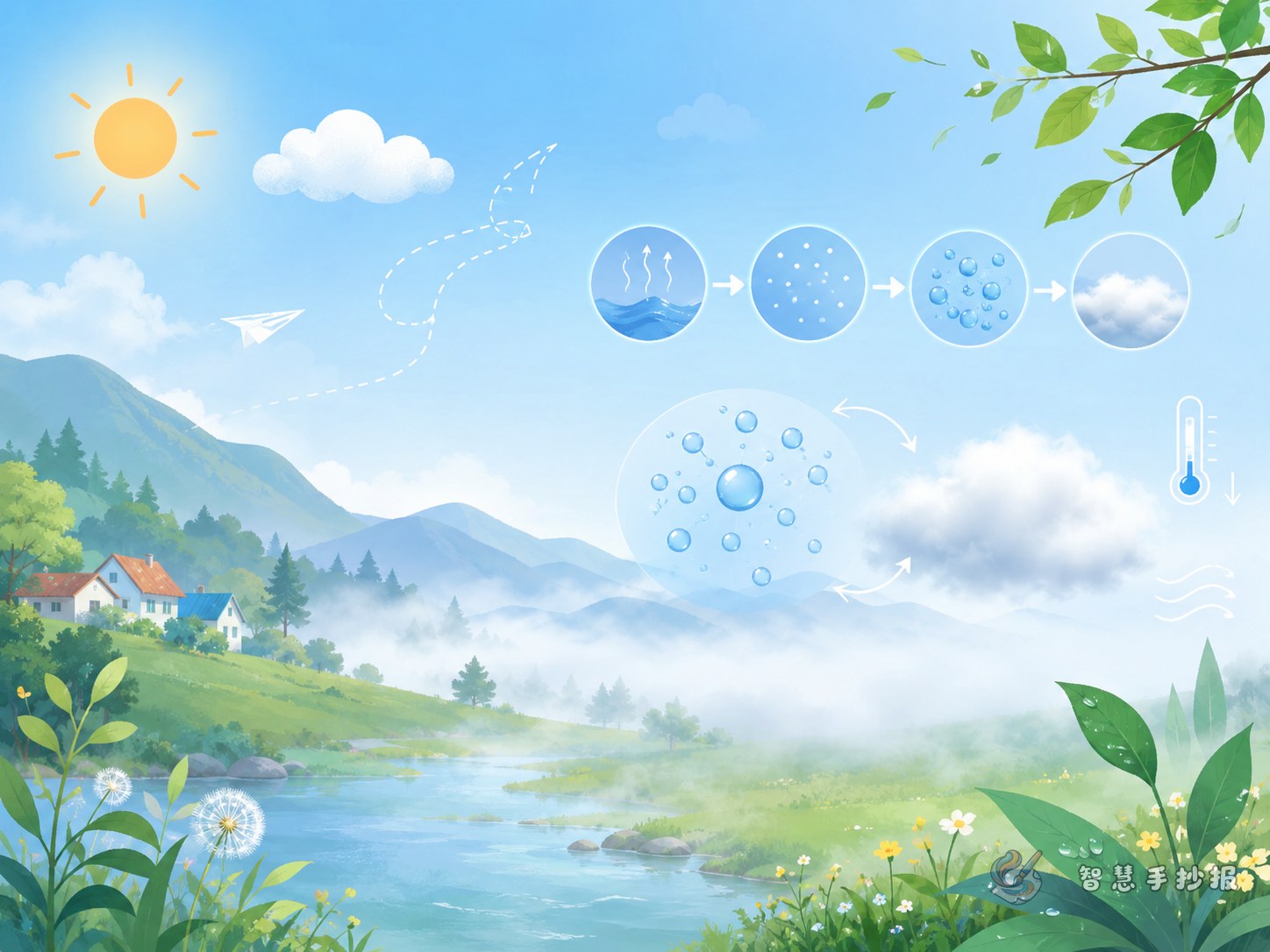
Fog usually appears when the air is moist and the temperature drops. Water vapor in the air cools and condenses into many tiny droplets. When these droplets stay close to the ground, fog forms.
2. The difference between fog and clouds
Fog and clouds are similar because both are made of tiny water droplets or ice crystals. The main difference is that clouds are higher in the sky, while fog stays near the ground. This comparison is easy for children to understand.
3. How fog affects daily life
- Visibility becomes lower, so walking and crossing roads require extra care.
- Drivers need to slow down and pay attention to safety.
- Heavy fog can affect flights, ships, and highway traffic.
4. Safety tips for foggy days
- Do not run or play on the way to school.
- Look carefully before crossing the road.
- Ride bicycles slowly and wear bright clothes if possible.
Good section ideas for the newspaper
This topic works well with a mix of science facts, observation, and safety reminders. You can divide your page into these small sections:
- Science Question: How does fog form?
- Knowledge Corner: Fog and cloud differences.
- Observation Notes: Where have I seen fog?
- Safety Tips: What should we do on foggy days?
If you still have space, add weather words like morning fog, mist, thick fog, and hazy air to make the page richer.
How to arrange the layout
A simple student-friendly layout is to place the main title in the center and arrange small content blocks around it. Soft blue, gray-white, and light purple can create a foggy feeling. You can decorate the border with clouds, water droplets, trees, hills, or blurry buildings.
- Put the title and one short introduction at the top.
- Place “How fog forms” and “Fog vs. clouds” on one side.
- Put “Effects of fog” and “Safety reminders” on the other side.
- Add “My observation” or “What I learned” at the bottom.
Do not make each block too full. Short paragraphs with simple drawings will make the handwritten newspaper look cleaner.
Ready-to-use short text materials
Sample 1: Fog forms when water vapor in the air cools and turns into tiny droplets near the ground. It makes distant objects look unclear.
Sample 2: Fog and clouds are very similar. Both are made of tiny droplets or ice crystals. The difference is that clouds are in the sky, while fog is close to the ground.
Sample 3: On foggy days, people should travel carefully. Pedestrians should watch the road, and cyclists and drivers should slow down.
Sample 4: Learning about weather helps us understand nature, plan daily activities, and improve safety awareness.
A simple ending for the page
You can end with a short sentence like this: Even a thin layer of fog contains interesting weather science, and careful observation helps us discover nature’s secrets.
If you want to continue polishing the layout and adding more sections, you can also use the Zhihui Shouchao Bao WeChat mini program to keep creating your handwritten newspaper.