Turn the Page into a Journey of Air
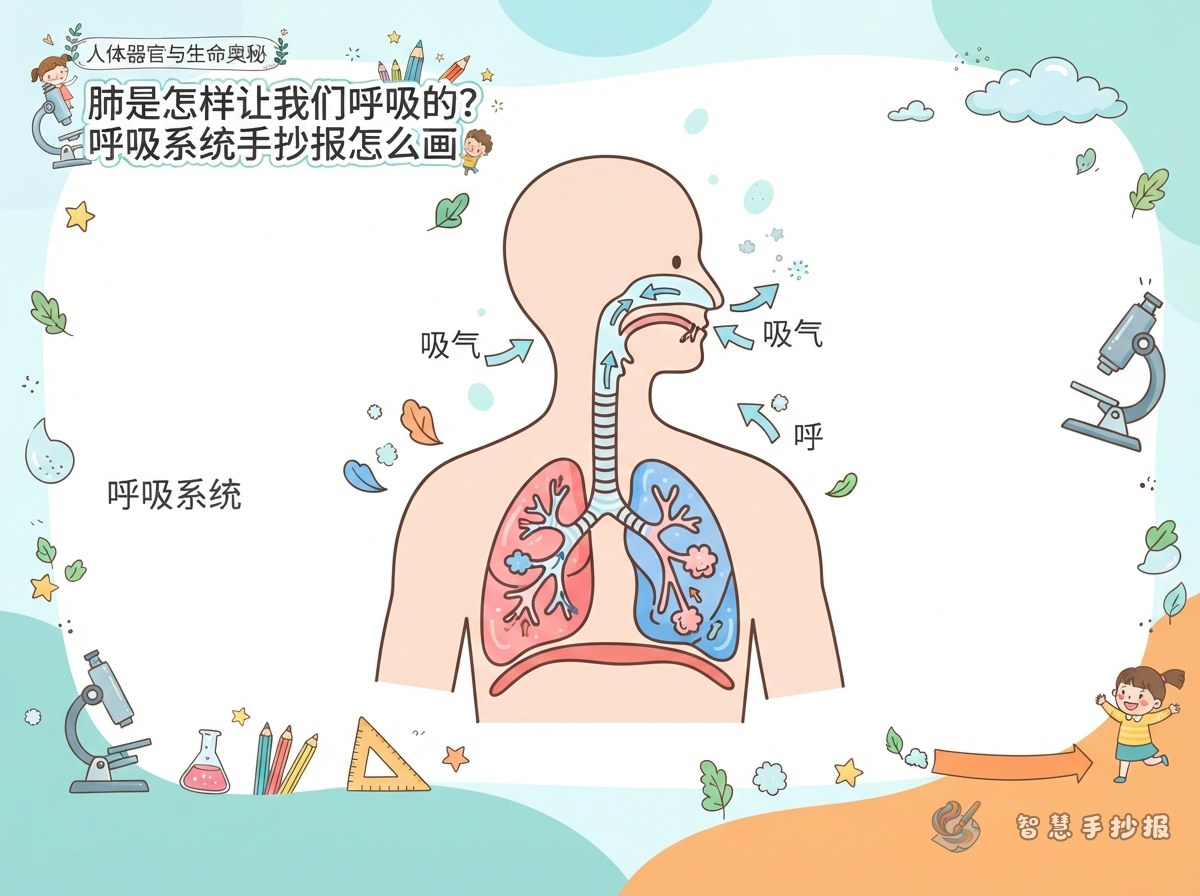
This poster can begin with one simple question: where does the air we breathe go? Using “the journey of air” as the main idea is more vivid than simply listing body parts, and it is easy for children to follow. Place the main title, How Do Our Lungs Help Us Breathe?, at the top, with a subtitle such as “Meet the Respiratory System” or “Every Breath Matters.”
Draw a simple pair of lungs in the center of the page. Add curved arrows to show the direction of airflow, creating a clear route through the nose, trachea, bronchi, and alveoli.
Organize the Science Along the Breathing Route
Nasal cavity: Air enters through the nose first. Nose hairs and mucus help catch some dust, while the nasal passage also warms and moistens the air.
Trachea and bronchi: Air travels through the trachea and then moves into the left and right bronchi, which branch like tree limbs and carry air to different parts of the lungs. Drawing the bronchi like branches makes the idea easier to understand.
Alveoli: The lungs contain many tiny air sacs called alveoli. They are important places for gas exchange. Oxygen from the air can enter the blood, while carbon dioxide in the blood leaves the body. Use two small arrows to label “oxygen enters the blood” and “carbon dioxide leaves the body.”
Add Three Small Sections
- Breathing facts: During inhalation, the chest expands and air enters the lungs. During exhalation, the chest becomes smaller and air leaves the body.
- Organ cards: Introduce the jobs of the nasal cavity, trachea, bronchi, lungs, and alveoli in one or two short sentences each.
- Protect your respiratory system: Suggest opening windows for fresh air, exercising moderately, staying away from smoke and dust, paying attention to air quality, and keeping good hygiene habits.
Keep each section to two or three sentences. Add small icons such as a mask, leaves, airflow lines, or a child exercising so the page does not become too text-heavy.
Use Colors to Show Inhaling and Exhaling
Use blue arrows for fresh air entering the body and orange or gray arrows for air leaving the body with more carbon dioxide. Color the lungs pink or coral, the trachea light blue, and the title dark blue or forest green for a fresh science-themed look.
A “large picture in the center with knowledge cards on both sides” layout works well. Place the respiratory diagram in the middle, the airflow route on the left, and alveoli facts and care tips on the right. Leave a strip at the bottom for “How I Will Protect My Lungs.” A border made of branches, air currents, or clouds can make the theme more recognizable.
Four Checks Before You Finish
- Lightly divide the page into a title area, main illustration area, and text areas with a pencil.
- Draw the organ outlines first, then add arrows, labels, and decorative details.
- Keep the wording short and clear, and highlight key terms with bold writing or colored pens.
- Check that the airflow route is connected and the labels are correct before adding the final colors.
If you want to decide on the sections and colors more quickly, you can first browse layout ideas in 智慧手抄报, then continue designing and adjusting in the WeChat mini program. This makes the “journey of air” easy to read as well as attractive.