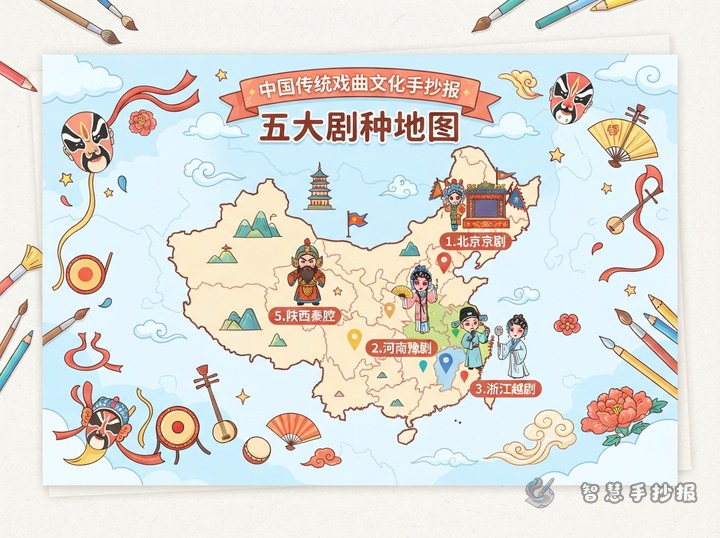
Start with a focused idea: tell Chinese opera through role types
If you want a handwritten newspaper about traditional Chinese opera that is easy to write and easy to understand, the theme of sheng, dan, jing, and chou is a strong choice. Instead of giving a broad introduction to opera, this topic lets you explain the art form through its classic stage roles.
Your title can be something like “The Beauty of Chinese Opera in Sheng, Dan, Jing, and Chou” or “A Quick Guide to Chinese Opera Role Types”. This makes the page feel focused and student-friendly.
A simple page plan that works well
This theme looks great in a center-and-four-corners layout. Place the main title in the middle, then build four small sections around it for sheng, dan, jing, and chou.
- Center: the main title with a stage-style decoration.
- Top left: sheng, the male role types.
- Top right: dan, the female role types.
- Bottom left: jing, the strong painted-face roles.
- Bottom right: chou, the lively comic roles.
If you still have space, add a small reflection box such as “What I learned about opera” or “Why traditional culture matters.”
Short text materials you can use directly
Sheng
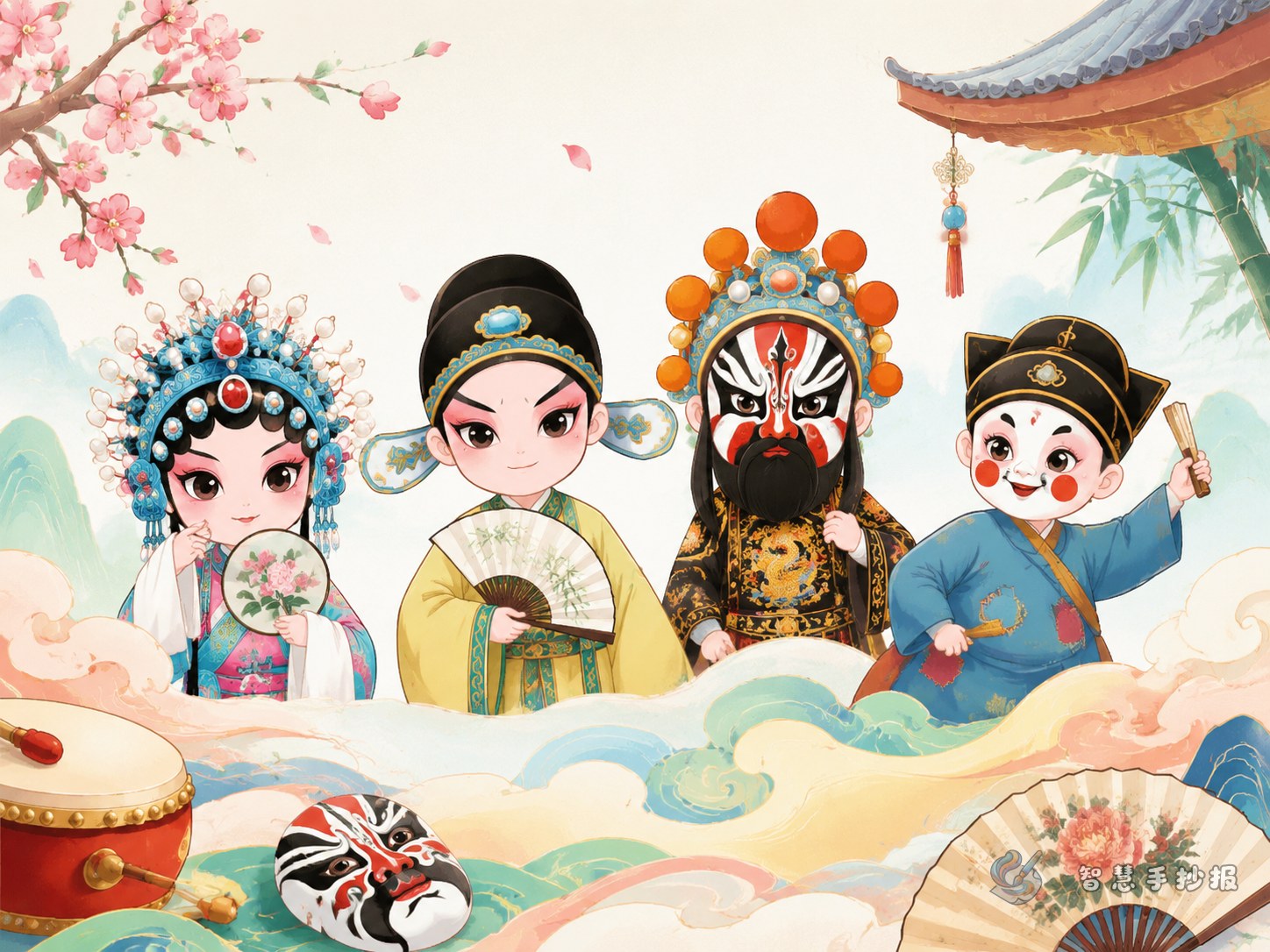
Sheng refers to male roles in Chinese opera. Different sheng types may show different ages, identities, and personalities, from calm and dignified to brave and energetic.
Dan
Dan refers to female roles. These roles often highlight graceful movements, delicate expression, and different character styles such as gentle, noble, or lively.
Jing
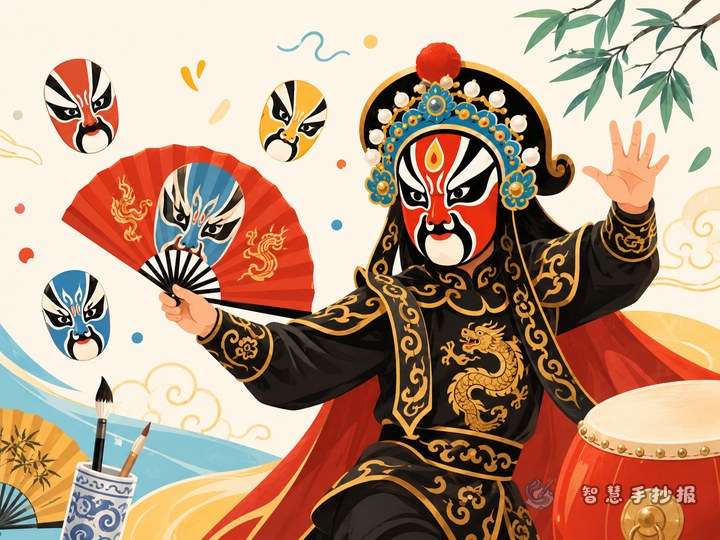
Jing is often known for bold painted faces and powerful stage presence. These roles usually leave a strong visual impression and bring energy to the performance.
Chou
Chou roles are often humorous, clever, and expressive. They help make the story more vivid and entertaining through lively performance.
Closing line
Sheng, dan, jing, and chou are important role types in traditional Chinese opera. Together they show the richness, beauty, and lasting charm of this classic art form.
Decorations that match the opera theme
You do not need too many drawings, but the right details can make the page feel special. Add stage curtains, rooflines, folding fans, drums, long sleeves, clouds, or costume patterns around the titles and borders.
- Suggested colors: red, gold, black, and blue.
- Border ideas: fan-shaped lines, cloud patterns, or stage curtain frames.
- Small icons: drums, gongs, opera hats, sleeves, and painted-face patterns.
- Writing tip: keep the title bold and the body text clean and readable.
Leave some blank space so the page does not feel crowded. A balanced layout often looks better than filling every corner.
Two extra mini sections if your page feels empty
Little facts about Chinese opera
You can write that Chinese opera is a traditional performing art that combines singing, speaking, acting, and movement to tell stories and express emotion.
My own thought
You can write that learning about sheng, dan, jing, and chou helped you understand the beauty of traditional Chinese opera and inspired you to appreciate Chinese culture more deeply.
If you want to keep improving your layout, wording, or color matching, you can continue planning your handwritten newspaper in the Zhihui Shouchaobao WeChat mini program.