Build the page around one clear message
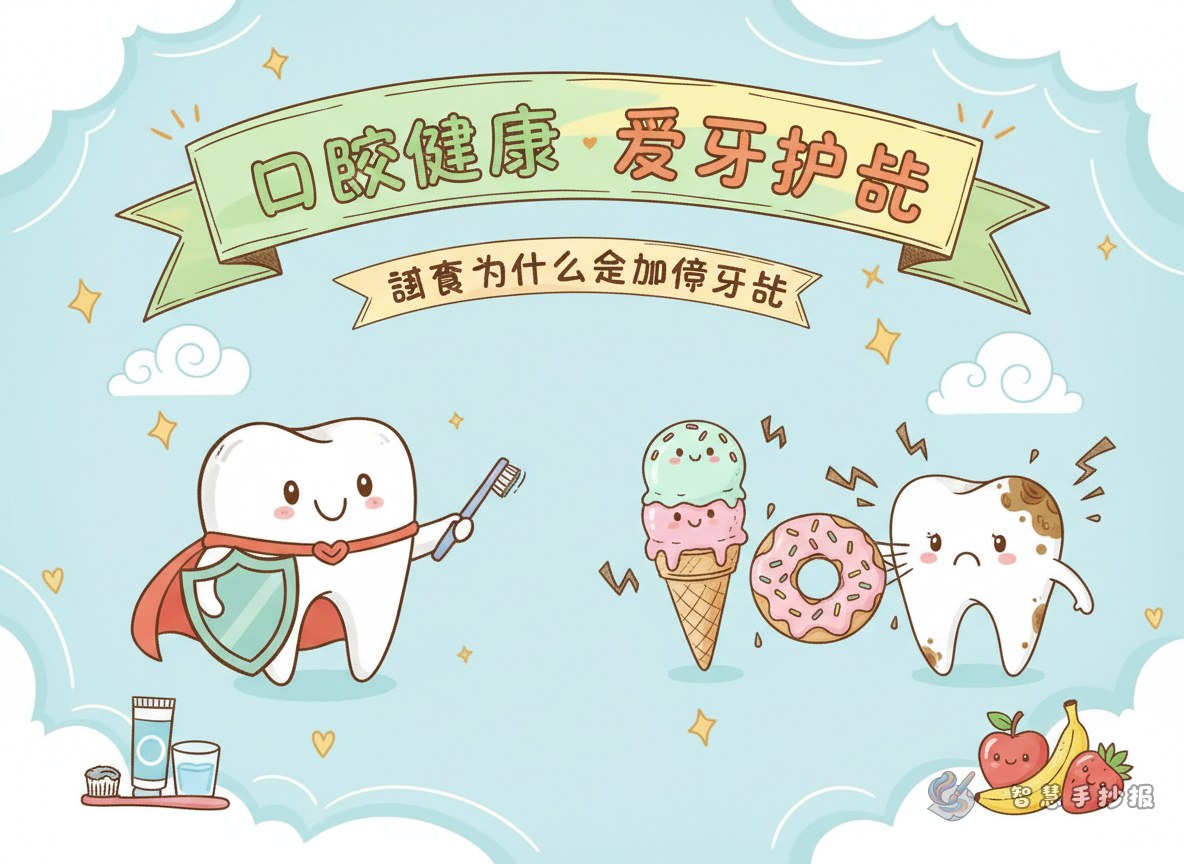
This handwritten newspaper can focus on one simple idea: why sugary foods can harm teeth. A useful central line is “eat sweets wisely, clean teeth in time, and protect your smile every day.” This keeps the page easy for children to understand and easy for teachers and parents to review.
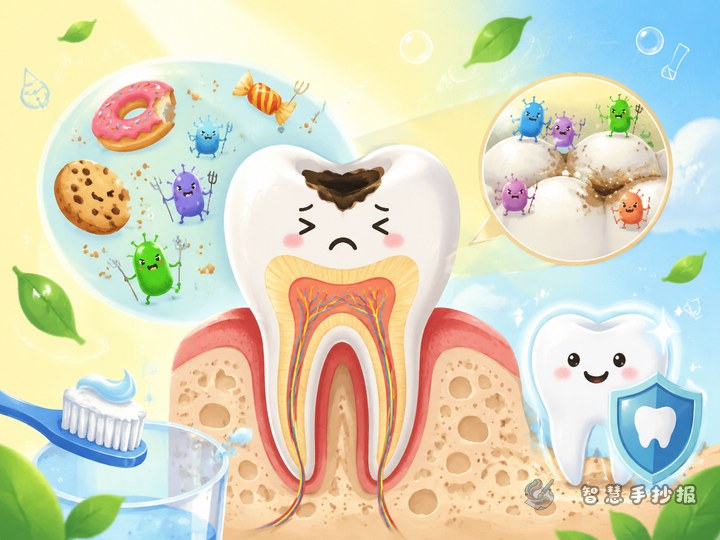
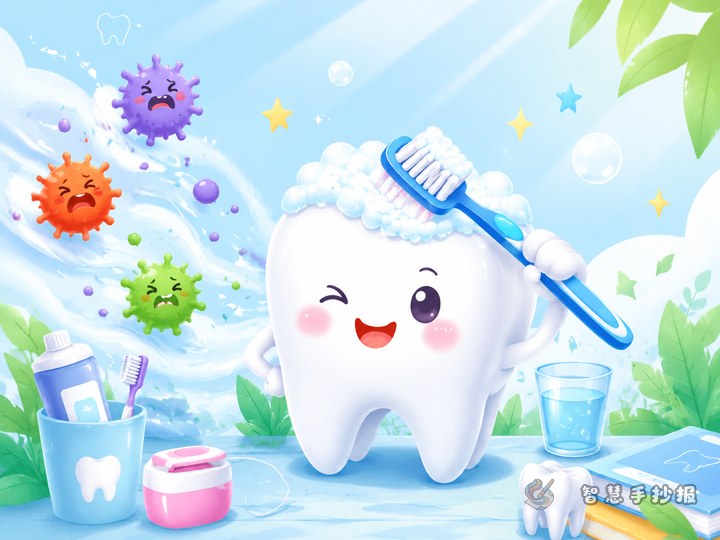
You do not need difficult scientific terms. Explain that sugar left on teeth can be used by bacteria in the mouth, which then produce acid. Over time, that acid can damage teeth and lead to pain, dark spots, or cavities.
Ready-to-use writing materials
A short paragraph for the main text
Many children enjoy candy, cake, and sweet drinks. But if they do not rinse their mouths or brush their teeth after eating, sugar may stay on the surface of the teeth. Bacteria in the mouth can turn that sugar into acid. The acid can slowly damage the protective outer layer of the teeth. After a long time, teeth may become weak, sensitive, or develop cavities. So protecting teeth means not only eating fewer sweets, but also keeping good cleaning habits every day.
Small facts for side sections
- Eating sugary foods too often may be worse than eating a little at one time.
- Eating sweets before bed and not brushing can be especially harmful.
- Sweet drinks that stay in the mouth for a long time can also affect teeth.
- Proper brushing helps remove food and plaque from teeth.
- Regular dental checks help find problems early.
Short slogans
- Less sugar, stronger teeth.
- Protect your teeth every day.
- Rinse after sweets.
- Brush in the morning and at night.
A lively layout idea
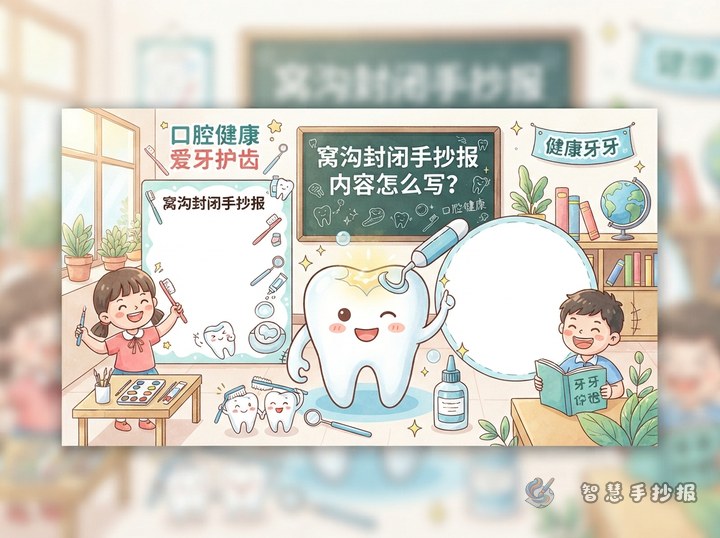
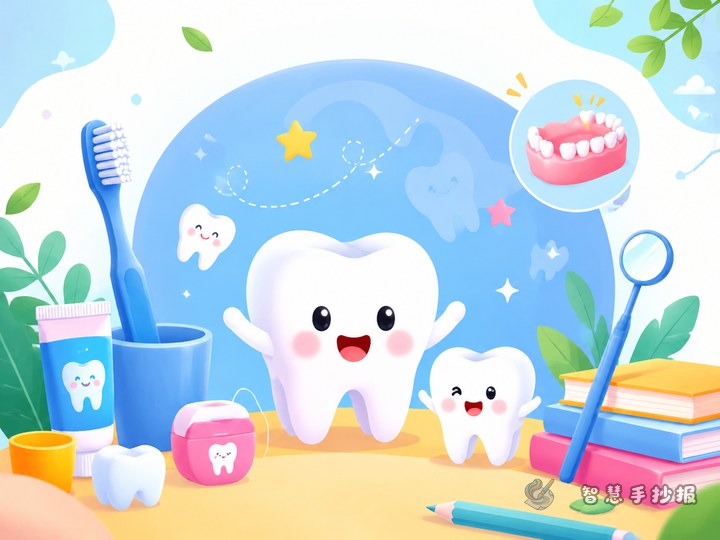
Instead of a plain two-column page, try a center-and-around design. Draw a big smiling tooth in the middle, then place four sections around it: “How sugar harms teeth,” “Good tooth-care habits,” “Better snack choices,” and “My dental care plan.” This makes the page bright and easy to read.
- Use a bold, friendly title with toothbrush and water-drop decorations.
- Put the reason sugary foods harm teeth in the top left.
- Add daily reminders in the top right, such as fewer sugary drinks.
- List tooth-care steps in the bottom left.
- Write a personal promise in the bottom right.
Make the content sound like a student wrote it
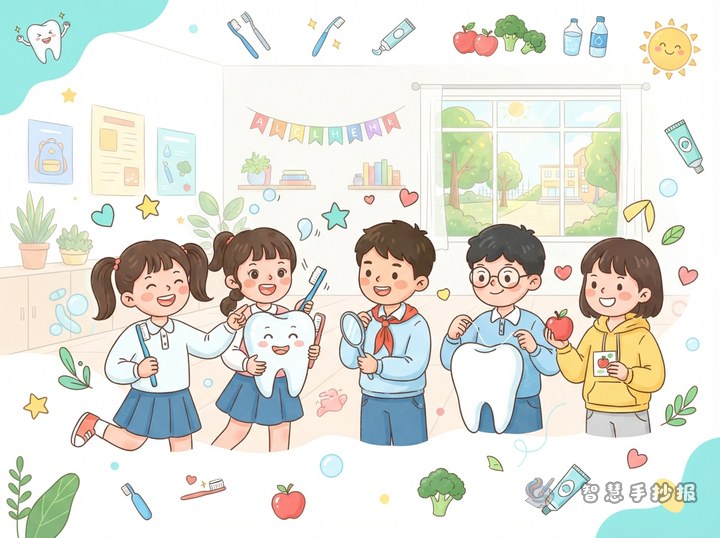
To make the work more natural, add simple life-based lines such as “I like candy, but now I know I should rinse my mouth after eating sweets” or “I will choose fruit more often instead of sticky candy.” These details make the page feel real and child-friendly.
You can also make a small comparison: children who care for their teeth can eat comfortably and smile with confidence, while poor dental habits may cause tooth pain and trouble eating. This is more effective than only writing slogans.
A better ending section
For the final part, create a section called My Tooth Protection Checklist. Write three to five actions, such as brushing twice a day, rinsing after snacks, drinking fewer sugary beverages, and visiting the dentist regularly. This fills the page well and gives the poster a complete ending.
If you want to keep improving the layout, choose a better title style, or add more ready-to-copy content, you can continue making your work in the Wisdom Handwritten Newspaper WeChat mini program.