You Do Not Need Advanced Drawing Skills
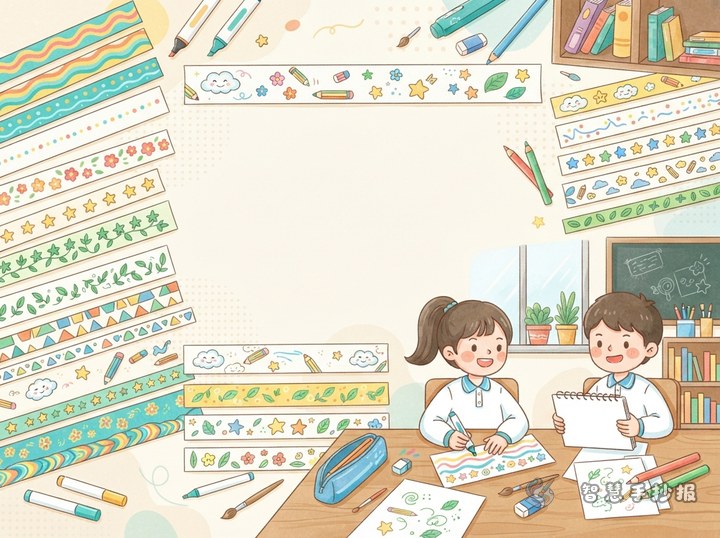
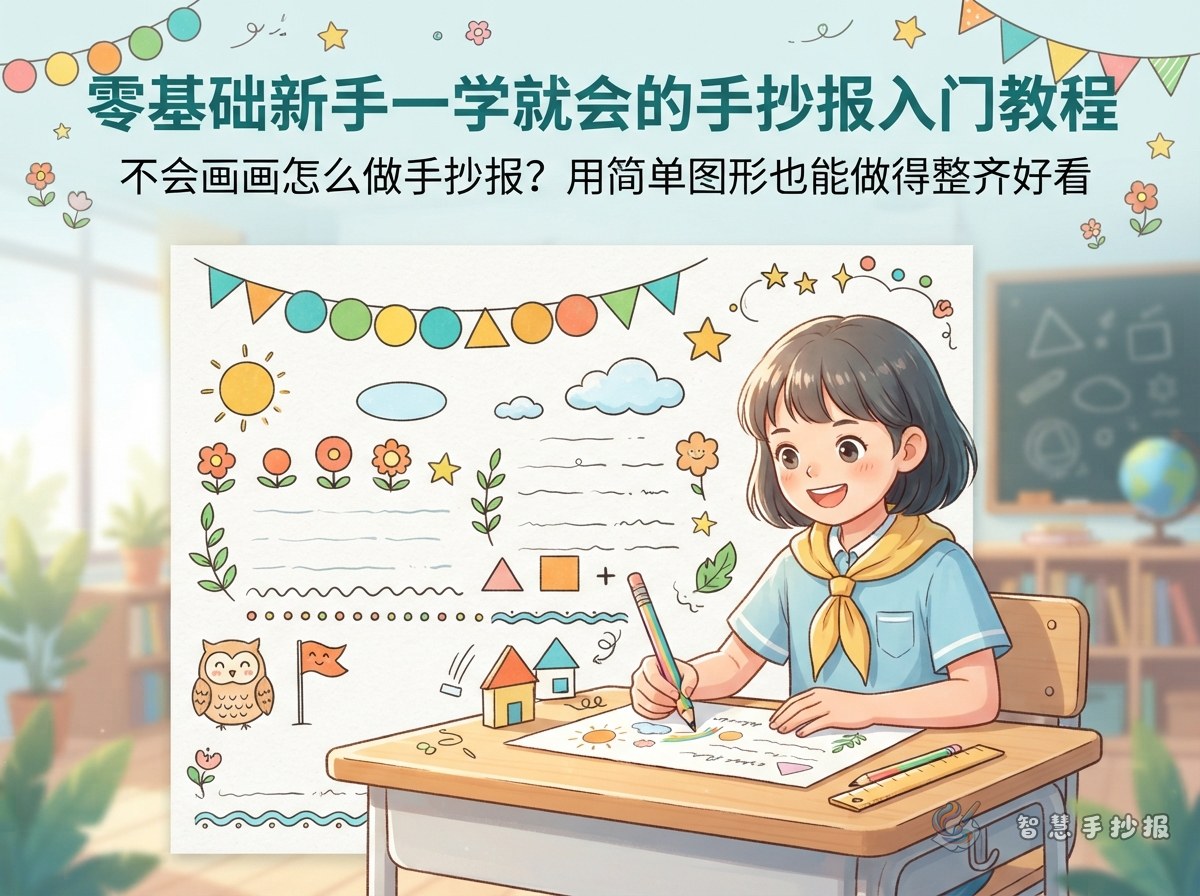
A clear handwritten poster depends more on a strong title, organized sections, and neat writing than on detailed illustrations. Beginners can decorate with circles, rectangles, wavy lines, leaves, and small flags. Repeating a few simple shapes also helps the page look consistent.
Choose a familiar topic such as school life, festivals, safety, reading, or environmental habits. A topic that is easy to explain will be much simpler to turn into short poster sections.
Build the Page with a Title and Four Content Cards
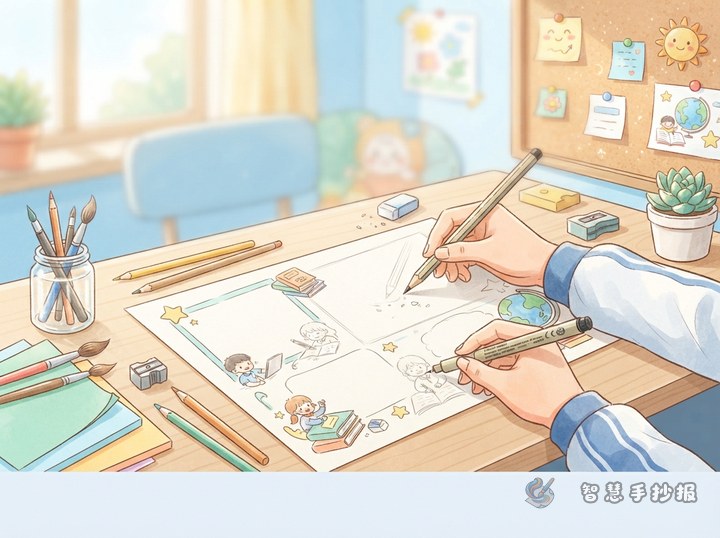
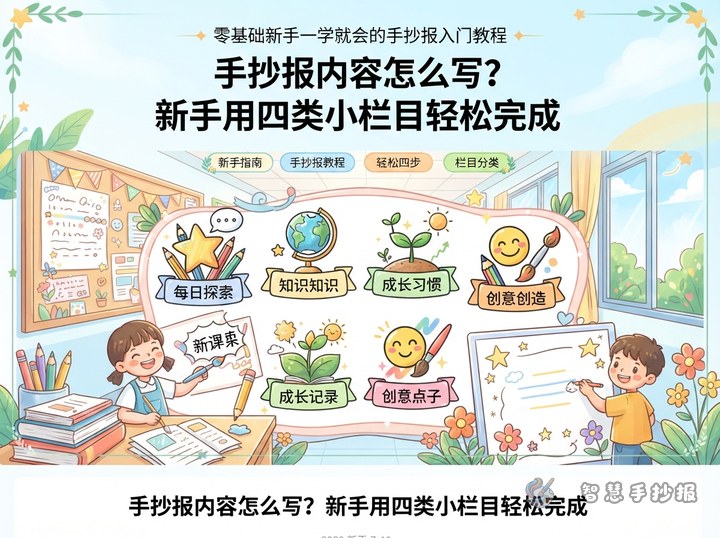
Reserve a wide title area at the top in pencil. Under it, draw four rounded rectangles of similar size. They may be slightly staggered, but each card needs enough space around it so that the writing does not feel crowded.
- Title area: Write the main topic and add one or two small symbols.
- Topic introduction: Explain the subject in two or three sentences.
- Useful facts: List three to five memorable points.
- Actions to take: Suggest practical things students can do.
- Closing message: Finish with one short and encouraging line.
Turn Basic Notes into Poster Text
Begin each section with one main sentence, then add two or three short details. For a water-saving poster, possible lines include: “Water is essential in daily life,” “Turn off the tap while soaping your hands,” “Tell an adult when you notice a leak,” and “Small daily choices can save water.”
For a reading poster, useful sections include “About the Book,” “My Favorite Character,” “A Memorable Line,” and “What I Learned.” Use your own wording whenever possible and avoid filling a box with one long paragraph.
Decorate with Shapes You Already Know
- Combine circles and short lines to make suns, flowers, or smiling faces.
- Use rectangles and triangles for books, pencils, and flags.
- Draw connected curves for clouds and wavy lines between sections.
- Choose one main color and one supporting color, with the title as the boldest element.
- Place decorations beside the title or in empty corners, never over the text.
Check the Poster Before and After Writing
Before using a dark pen, confirm that the title is large enough, every card has a purpose, and each section has room for its text. Light pencil guidelines can keep the writing straight. Add color only after the words are complete, then erase unnecessary pencil marks.
Finally, view the poster from a short distance. The topic should be visible first, the sections should be easy to distinguish, and the colors should feel balanced. For more topic materials and layout ideas, open the Smart Handwritten Poster WeChat Mini Program and continue creating your poster.