Choose a Border That Matches the Topic
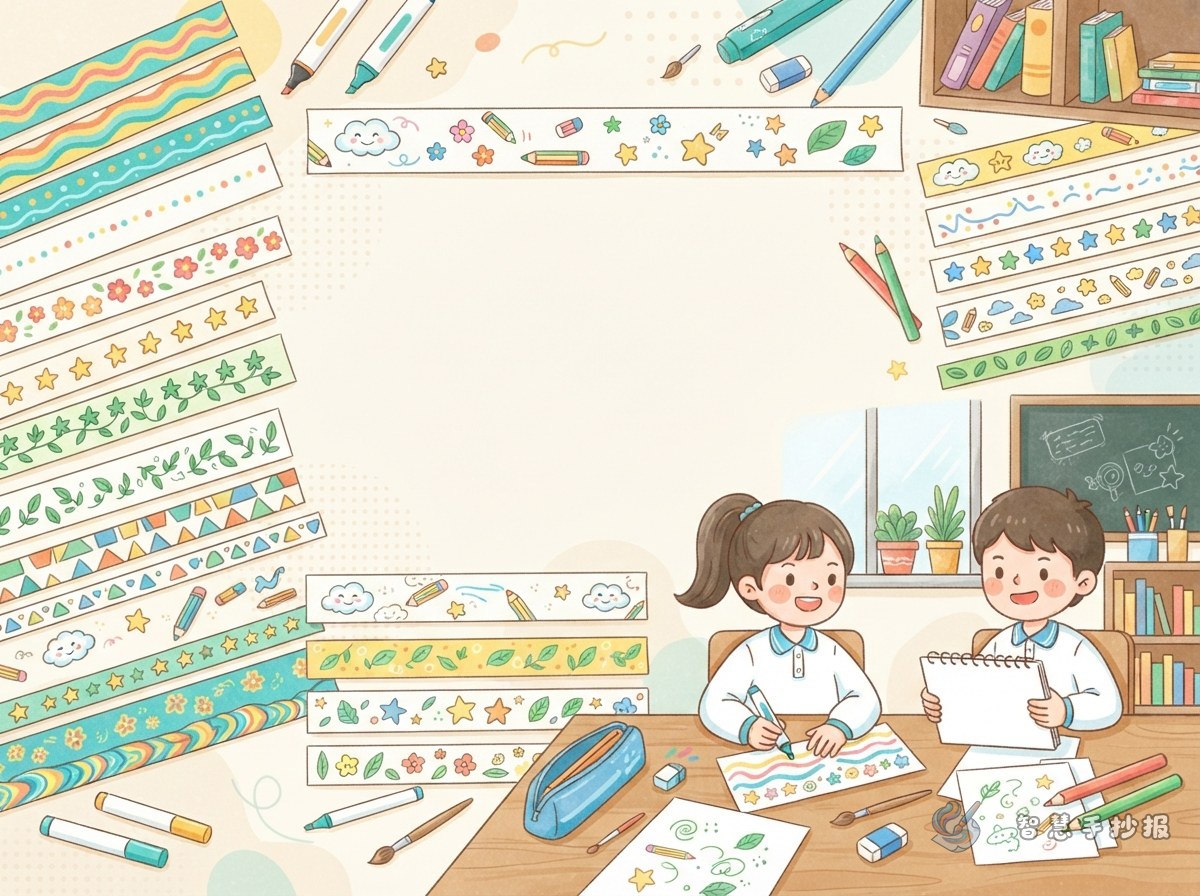
For a beginner poster, the border does not need to be complicated. It should simply match the topic. Use leaves, raindrops, and small trees for an environmental theme; books, pencils, and stars for a reading theme; or lanterns, flags, and flowers for a festival theme. Write down the topic first, then choose two or three easy shapes that can be repeated around the page.
Use One Main Border and Two Small Details
The easiest method is to draw one main border and add two matching decorations near the title and in an empty corner. The main border can be a wave line, dotted line, vine, or ribbon line around the paper. The four sides do not have to be identical. Keep the border fairly narrow so the writing area remains open and easy to read.
Easy Combinations for Beginners
- Wave lines and dots: Good for weather, ocean, and seasonal topics.
- Vines and leaves: Suitable for nature, environmental protection, and labor themes.
- Ribbon lines and small flags: Useful for festivals, school events, and celebrations.
Place the Content Inside the Border
After drawing the border, divide the poster into a title area, a knowledge area, and an action area. Put the title at the top or upper left with a short slogan. Use two or three small sections in the knowledge area, such as “Topic Facts,” “Good Habits I Know,” or “A Short Story.” At the bottom, add three simple actions readers can take. Even a small amount of writing will look complete when it is organized this way.
Ready-to-Use Text Ideas
For an environmental theme, write: “Care for the environment by turning off lights, saving water, and using fewer disposable products.” For a reading theme: “Read a few pages every day, understand one small question, and remember one good word.” For a labor theme: “Do your own tasks and be willing to help with small things at home.” These sentences can go below a section heading or be split into short lines beside the border.
Color the Border in a Clean Order
- Lightly mark the border and corner decorations with a pencil.
- Finish the title, section lines, and main writing before coloring.
- Color the border and illustrations last, using two to four colors.
- Trace the outer lines with a dark pen, then erase the pencil marks after everything is dry.
For a quicker start, browse a topic reference in the Zhihui Shouchaobao WeChat Mini Program, then adjust the border and sections to fit your paper. A border should organize the page rather than compete with the writing. Keep it simple, repeat a few shapes, and use matching details for a neat first poster.