Turn the topic into one clear question
Beginners often copy every fact they find, which creates a crowded poster with no clear focus. Start by turning the topic into a question. For an environmental poster, ask, “What can we do for the environment every day?” For a reading poster, ask, “How can we build a reading habit?” Every section can then help answer that question.
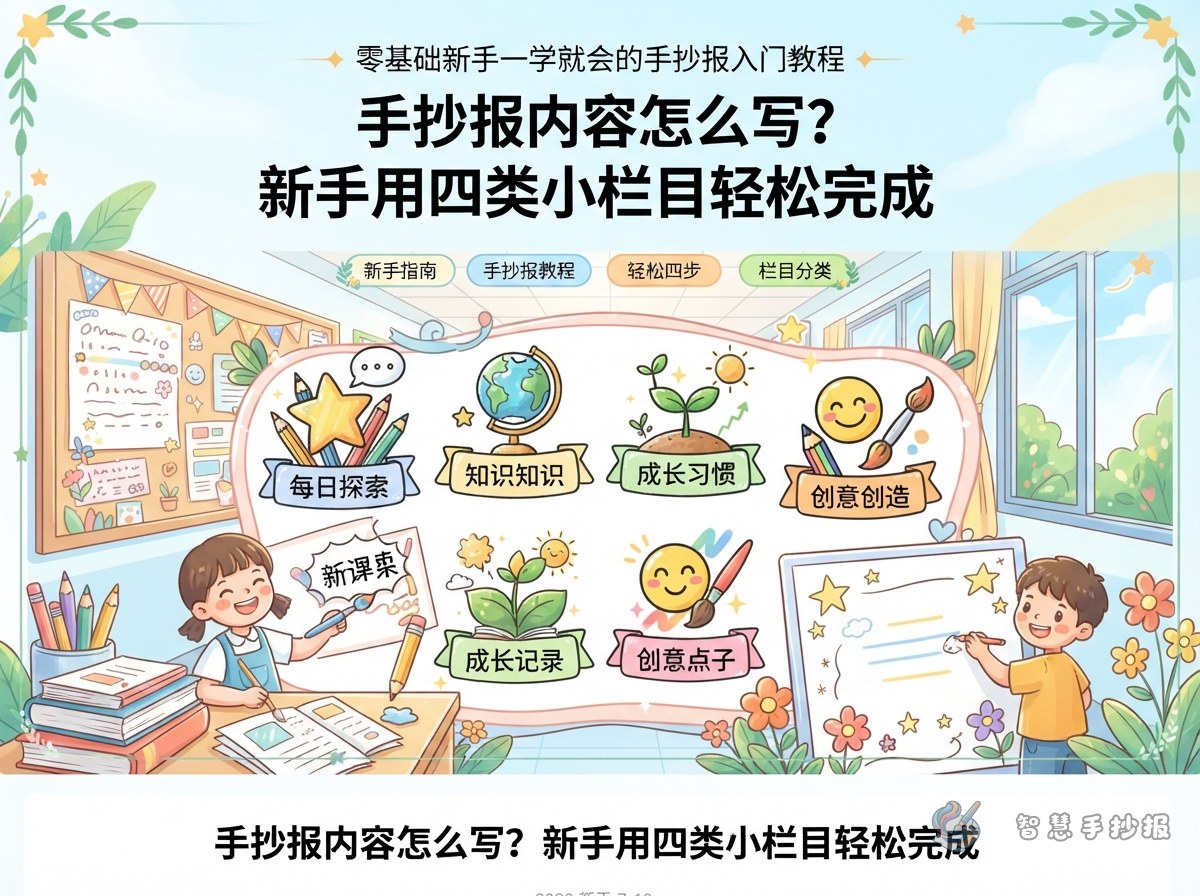
Build the poster with four useful content types
You do not need a long article. Choose three of the following four section types and write one short passage for each.
- Quick explanation:Define the topic in two or three simple sentences.
- Action list:Give three to five practical steps in a numbered or bulleted list.
- Friendly reminder:Add one brief caution or helpful reminder.
- My promise:Write one personal action in the first person.
A ready-to-follow writing example
For a water-saving poster, the explanation might say, “Water is essential in daily life, and saving it starts with small choices.” The action list could include turning taps off tightly, using a gentler flow when washing hands, and reporting leaks to an adult. A personal promise could be, “From today, I will avoid leaving water running and invite my family to save water with me.”
For another topic, keep the same flow of explanation, practical steps, and personal action, but replace the key ideas. This creates original text that is easy for elementary students to understand and copy.
Shorten research without losing the meaning
- Read the source material and mark only facts directly related to the topic.
- Remove repeated examples, unnecessary numbers, and difficult wording.
- Keep one main point in each paragraph and use two to four sentences.
- Turn a series of actions into a list instead of one dense paragraph.
- Check spelling, punctuation, and whether the wording matches your understanding.
If a sentence feels difficult to read in one breath, it can probably be shortened. A good handwritten poster should be easy to scan; it does not need to contain as many words as possible.
Make the writing fit the page
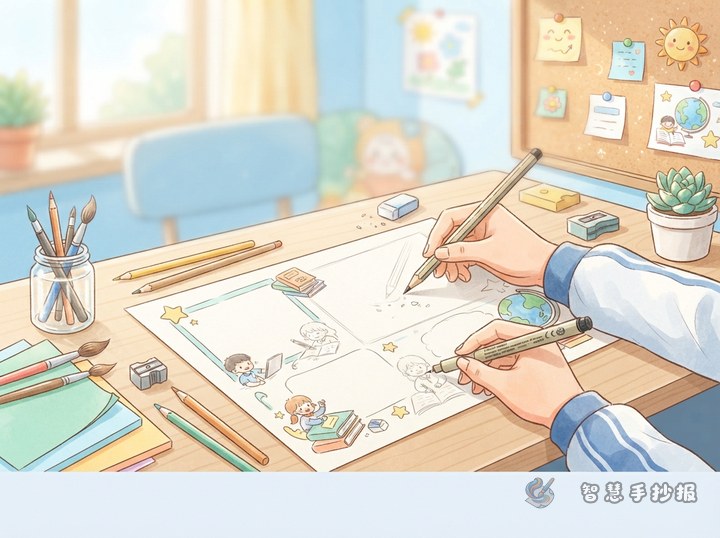
Place the main title at the top, use a larger central box for the explanation, and put the action list and personal promise beside or below it. Make section headings slightly larger than the body text, and keep body lettering and line spacing consistent. Sketch the boxes in pencil and estimate the number of lines before copying the final text. A slogan or small decoration can fill a corner, but some open space will make the page easier to read.
Use a three-minute final check
- Do the title and all sections stay focused on one topic?
- Does the poster include a fact, useful steps, and a personal action?
- Can readers find the main points quickly?
- Is there enough space between text boxes and borders?
- Have spelling mistakes, punctuation, and messy corrections been fixed?
If you still need help combining a title, short passages, and sections, open the Smart Handwritten Poster WeChat Mini Program to continue planning your poster, then adjust the result to match the assignment.