Begin with the “Broken Chopstick” Mystery
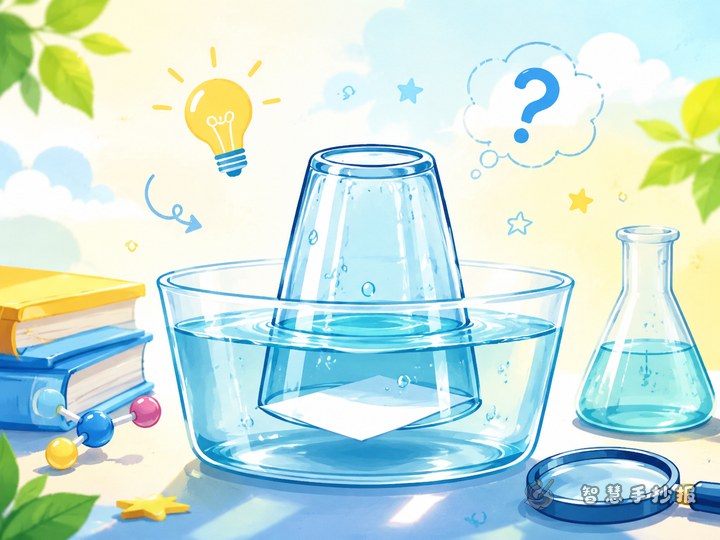
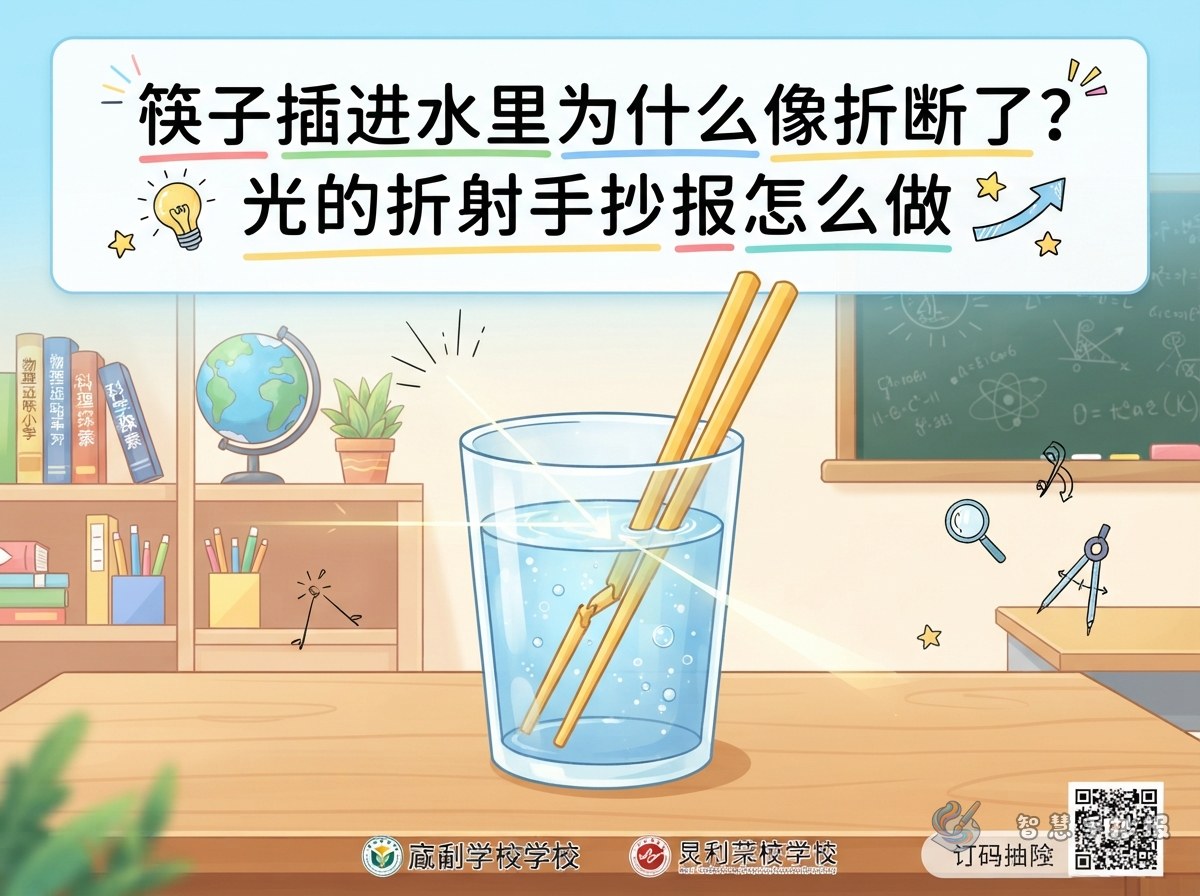
Place a straight chopstick at an angle in a clear cup of water. Viewed from the side, it seems to bend where it enters the water. A poster can follow three simple questions: What do we observe? Why does it happen? Where else can we see it? This approach turns a familiar surprise into an easy introduction to light refraction.
The Science in Child-Friendly Words
Light changes direction
We see the submerged chopstick because light reflected from it reaches our eyes. When that light travels at an angle from water into air, its direction changes. This is called refraction. Our eyes trace the arriving light back in a straight line, so the underwater part appears to be in a shifted position. As a result, the chopstick looks bent or broken at the surface.
The chopstick remains straight
When the chopstick is removed, it is still straight. Its shape did not change; only its apparent position changed. Viewing the cup from another angle may also change how strongly bent the chopstick appears.
Add a Simple Observation Activity
- Materials: a clear cup, water, and one straight chopstick.
- Method: observe the chopstick in air, place it diagonally in the water, and look through the side of the cup.
- Record: draw what you see and write, “The underwater section appears shifted.”
- Safety: keep the cup steady and wipe up spills. Younger children should work with an adult or teacher.
Use the phrase “appears bent” rather than saying that the water actually bends the chopstick.
Everyday Examples for a Fact Box
- A clear swimming pool may look shallower than it really is.
- A picture viewed through a glass of water can seem shifted or distorted.
- A fish may not be exactly where it appears to be when viewed from above the water.
- Magnifying glasses and eyeglass lenses also make use of refraction.
Build the Page Around Air, Water, and the Eye
Use a three-column layout. Put the observation scene and a question bubble on the left, a large labeled cup diagram in the center, and the explanation plus everyday examples on the right. Blue wave patterns can frame the title, while pale blue and yellow boxes separate facts from activities. Keep the diagram simple and clearly distinguish the chopstick’s real position from its apparent position.
After organizing the material, users can scan to open the 智慧手抄报 WeChat Mini Program and continue choosing a layout, adjusting sections, and creating a poster suited to their grade level.