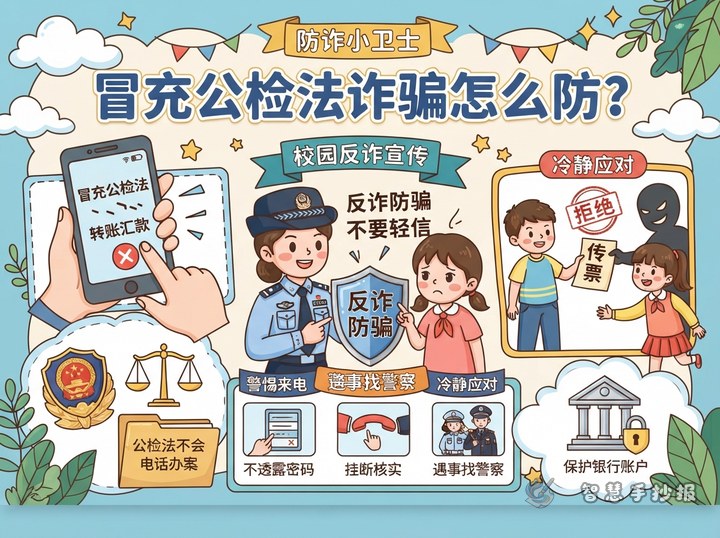
Start with a clear theme children can understand
This handwritten newspaper works best when it focuses on how primary school students can recognize common scams. There is no need to cover every type of fraud. A better approach is to explain a few everyday risky situations in simple language. The title should be eye-catching, and a subtitle can include short reminders such as “Do not click unknown links,” “Do not trust suspicious calls,” and “Check before sending money.”
For layout, divide the page into three areas: warning signs, scam examples, and self-protection steps. This makes the page practical instead of turning it into a list of slogans.
Four key content blocks to include
1. Common scam situations
- Pretending to be a friend or relative and asking for money online.
- Fake prize messages that ask for fees before you can claim a reward.
- Game scams that promise free skins, gifts, or top-ups.
- Unknown links that ask for personal information.
2. Short anti-fraud rhymes
- Do not trust strange calls when money is mentioned.
- Do not open unknown links or fill in private details.
- Before any transfer, stop and ask a parent or teacher.
3. Safety reminders
- Do not share your full name, home address, school, or verification codes.
- Tell a parent or teacher if you receive a suspicious message.
- Be careful with words like “limited time,” “claim now,” or “instant reward.”
4. Short slogans for the poster
- Stay alert and keep scams away.
- Protect personal information and avoid traps.
- More caution today, less loss tomorrow.
How to design useful sections
To make the page feel complete, add small sections with different functions. For example, create a “Red Flag List” with items like asking for verification codes, urging fast transfers, or sending unknown links. In the center, add a “What would you do?” mini quiz to make the page more interactive. On one side, include a “My Safe Choice” section with correct actions students can follow.
You can also add a short promise such as “I will check first, stay calm, and ask adults for help.” This makes the poster easy to read aloud and remember.
Layout and color ideas
An anti-fraud themed page does not have to look too serious. A clean school-style design works well. Try blue, red, and yellow as the main colors: blue for calm thinking, red for warning, and yellow for key reminders. Make the title larger and highlight important words like “unknown call,” “verification code,” and “money transfer” in bold.
Leave enough blank space and avoid filling every corner with text. Keep each section to a few short lines and add simple decorative ideas such as a phone, shield, lock, or exclamation mark to strengthen the theme.
A simple ending that completes the page
Finish with a short conclusion such as: anti-fraud awareness is not only about memorizing slogans, but also about staying calm, checking facts, asking for help, and protecting private information. This gives the handwritten newspaper a stronger ending and makes it suitable for class display.
If you want to improve the layout, try another title style, or continue turning your draft into a more polished handwritten newspaper, you can explore more ideas in the Zhihui Shouchao Bao WeChat mini program.