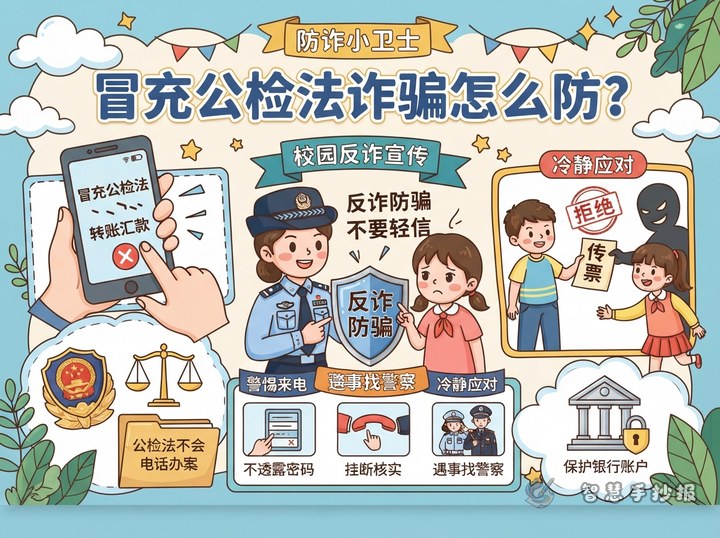
Turn the Topic into a Clear Warning
A good anti-fraud handwritten newspaper should not only look bright and neat, but also help readers remember what to do. For fake prize scam calls, the main message can be: a sudden prize is suspicious, and asking for money first is a danger sign. This keeps the theme simple for children and useful for school display.
You can write a main title such as Don’t Believe Surprise Prize Calls or Stay Calm When a Stranger Says You Won. A subtitle can explain that many scam callers use excitement and urgency to trick people into giving away money or personal details.
What Content to Write in Each Section
1. Common Tricks Used by Scammers
- They say you won a big prize or gift.
- They ask you to pay a handling fee, tax, or deposit first.
- They rush you and say the prize will expire soon.
- They ask for your name, address, bank card number, or verification code.
2. Warning Signs Students Can Remember
- Real rewards do not usually require secret urgent payments.
- Strangers should not ask children for family information.
- If the message sounds too lucky, check it carefully before believing it.
3. Safe Actions to Take
- Hang up or stop replying.
- Tell a parent, teacher, or trusted adult.
- Do not click, pay, or share personal information.
- Verify the message through official channels if needed.
Useful Short Text for the Poster
You can place short and readable lines around the page so the handwritten newspaper feels lively and practical. Here are some examples:
- No payment before a prize.
- Unknown calls, careful check.
- Do not panic, do not believe, do not transfer money.
- Protect personal information from strangers.
- Ask adults before making any decision.
You may also add a small dialogue scene, such as a caller saying, “You won a special reward today,” and a student answering, “I will check with my family first.” This makes the safety lesson easier to understand.
Layout Ideas That Match This Theme
Instead of using a common square layout, try a phone-call pathway design. Put a large phone shape in the center, then extend several sections outward like signals. Each section can show one part: scam words, danger signs, correct actions, and safety slogans.
- Use red or orange for warning areas.
- Use blue or green for correct actions and calm responses.
- Draw small gift boxes, telephones, and warning icons, but keep the page clean.
- Leave enough blank space so the handwriting remains easy to read.
How to Make It More Suitable for School Display
For primary school readers, keep each paragraph short and avoid difficult financial terms. Teachers and parents can guide children to write with simple examples from daily life. The poster should help students remember one key habit: when something sounds too good to be true, pause and ask an adult.
If you already have the topic and text, you can continue arranging sections, colors, and decorative elements in the Smart Handwritten Newspaper WeChat mini program to make the final page more complete and classroom-ready.