Choose a Route from Danger to Safety
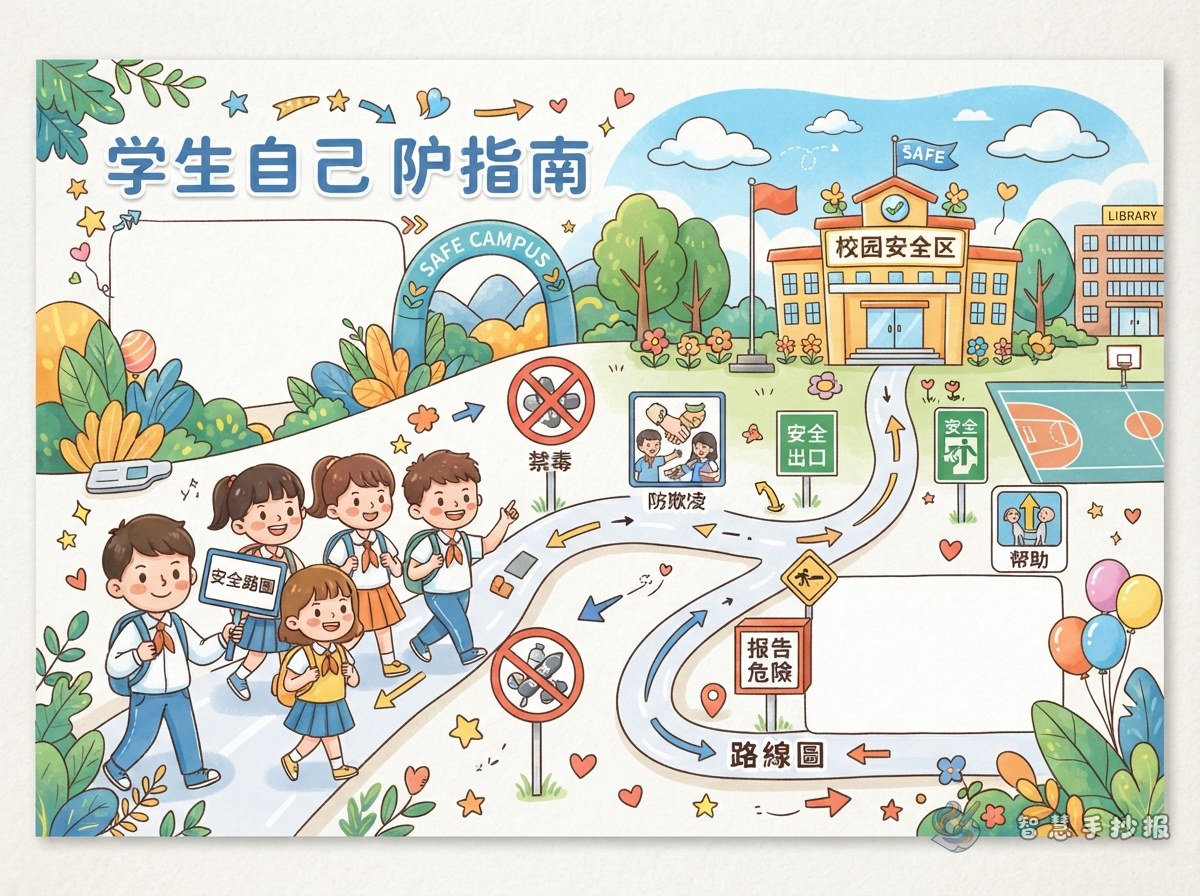
Instead of arranging the page as ordinary information blocks, imagine it as a school safety route map. The path can begin at “recognize warning signs” in the upper left, pass through “reject harmful substances” and “protect yourself from bullying,” and finish at “reach a trusted adult” in the lower right.
A title such as “Stay Safe and Find Your Way” can be placed above the route. A subtitle like “Recognize risks, stay away from harm, and protect yourself” can make the message clear. Blue, green, and orange work well as the main colors because they suggest calmness, hope, and caution.
Turn the Three Themes into Safety Stops
Stop One: Walk Away from Unknown Temptations
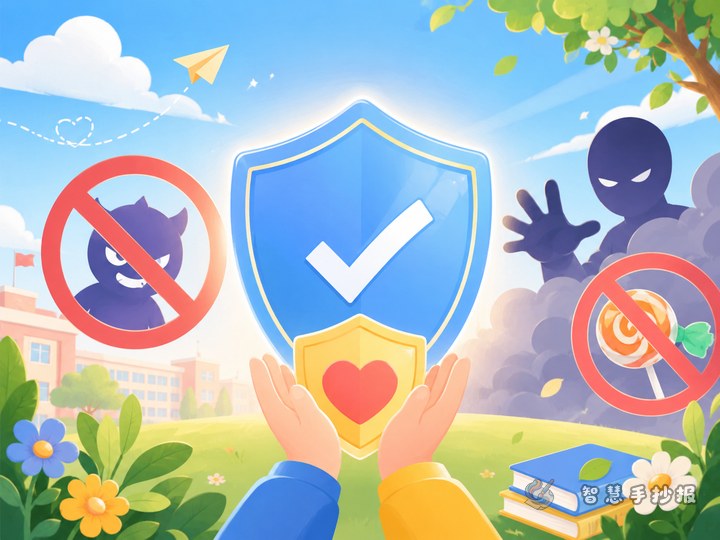
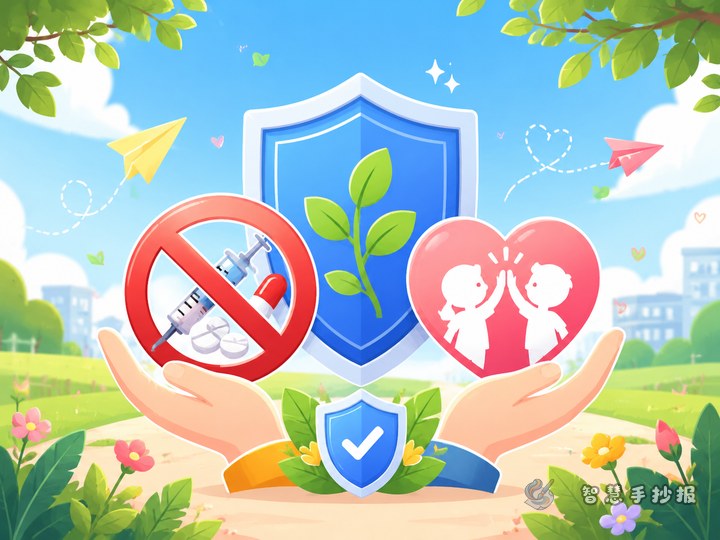
Draw a sign or small building with a drug-prevention message: do not accept unknown items, do not try something just because you are curious, and do not carry suspicious objects for someone else. Keep the wording simple and focus on “do not eat, touch, or take away anything you do not understand.”
Stop Two: Leave a Bullying Situation
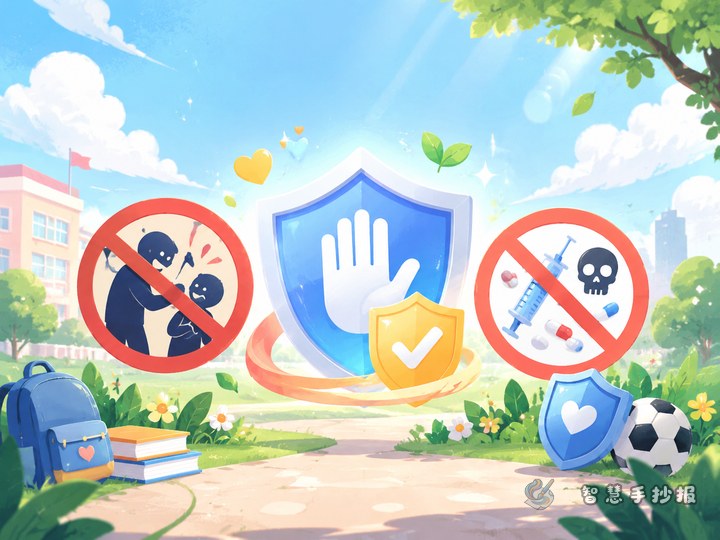
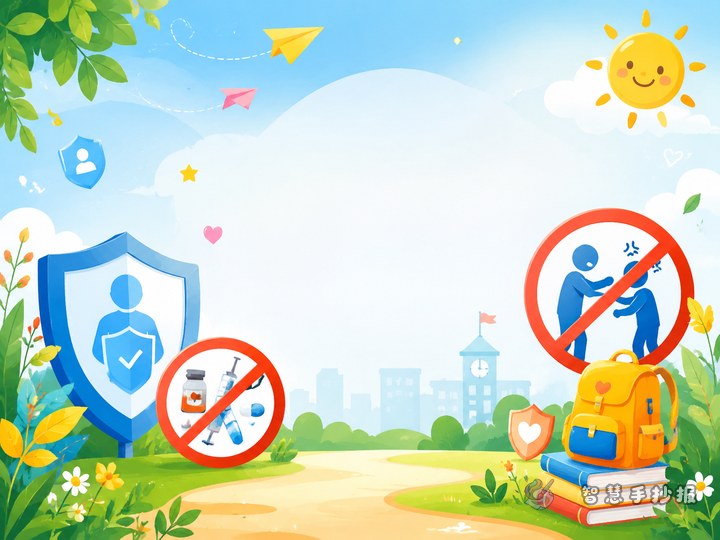
This stop can show a playground, hallway, or school gate. Add reminders such as “keep your distance,” “do not keep arguing or fighting,” and “do not cheer or gather around.” Explain that protecting yourself is not weakness. Move toward a place where teachers, classmates, or other adults are present.
Stop Three: Asking for Help Is a Brave Choice
Draw a bright “safe place” at the end of the route, with a parent, teacher, or school staff member inside. Add: “Explain the time, place, people, and events,” “keep important clues,” and “if the danger is urgent, call for help and leave first.” These details turn the page into an action guide rather than a collection of slogans.
Short Text You Can Copy onto the Page
- Drug prevention: Treasure life and stay away from drugs. Do not try unknown substances.
- Anti-bullying: Do not hurt others or watch silently. Tell a trusted adult when someone is being harmed.
- Safety reminder: Leave first, ask for help, explain clearly, and put safety first.
- Kindness message: Respect differences and solve disagreements with friendly words.
Keep each text block between one and three lines. Place the words inside road signs, speech bubbles, or note-shaped boxes. Students can choose the most useful sentences instead of filling every empty space.
Make the Route Easy to Read
A diagonal composition works well: put the title and starting point in the upper left, connect the three stops with a wide path through the center, and place “How I Protect Myself” in a summary box at the lower right. Small shields, footprints, traffic lights, school gates, and hearts can decorate the road without covering the text.
Use the largest lettering for the title, matching borders for the three stops, and bright colors for words such as “avoid,” “reject,” and “ask for help.” Divide the page first, write the text second, and color it last. This order keeps the layout neat and reduces corrections.
Check the Safety Message Before Finishing
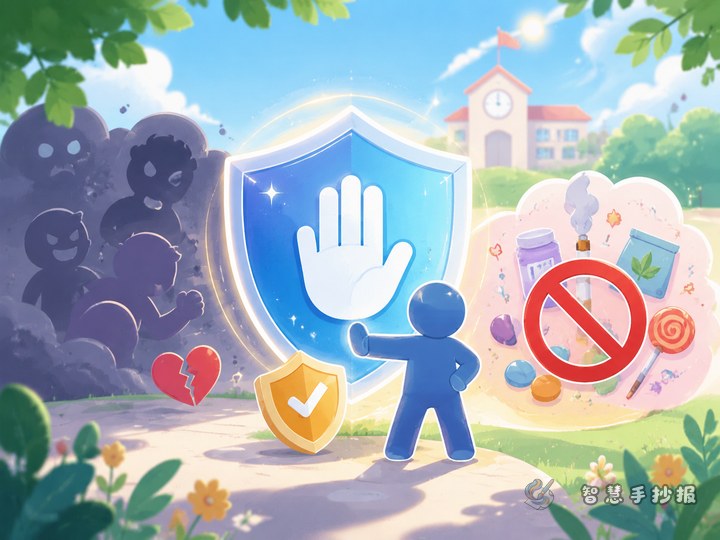
- Make sure the page includes drug prevention, anti-bullying, and self-protection.
- Use positive and accurate reminders instead of frightening images or unnecessary details.
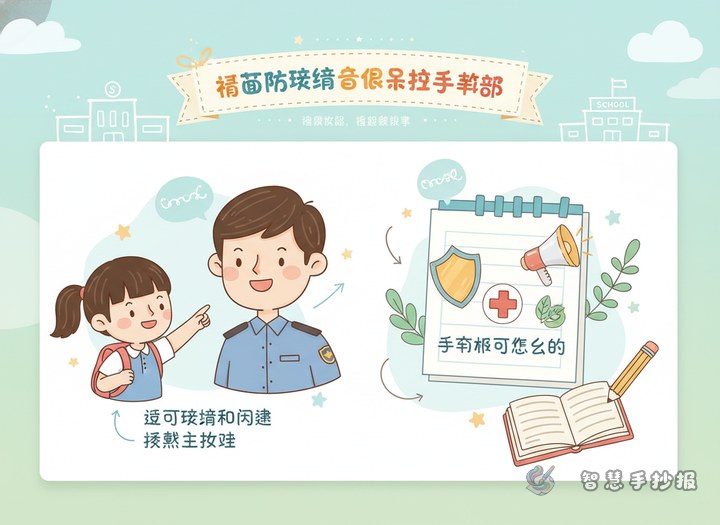
- Name clear sources of help, such as parents, teachers, and trusted adults.
- Check that the route flows from the starting point to the final safe destination.
For help organizing the title, sections, and layout, continue creating your page in the Wisdom Handwritten Newspaper WeChat Mini Program and adjust the text to fit your paper size.