Start with one main idea: follow the map to a cup of tea
The biggest risk with a regional tea page is a list of facts that reads like a photocopy. Try treating the whole sheet as a small map. Draw a simple outline of China or a winding tea route in the middle, then place cards around it, each one about a place and its way of drinking tea. Titles like A Cup for Every Land or Follow the Map to Tea make the theme obvious at a glance.
Keep it to four or five cards. Each card answers just four questions: where, what tea, how guests are served, and one special detail.
Five tea custom cards you can copy straight onto the page
Mongolian milk tea
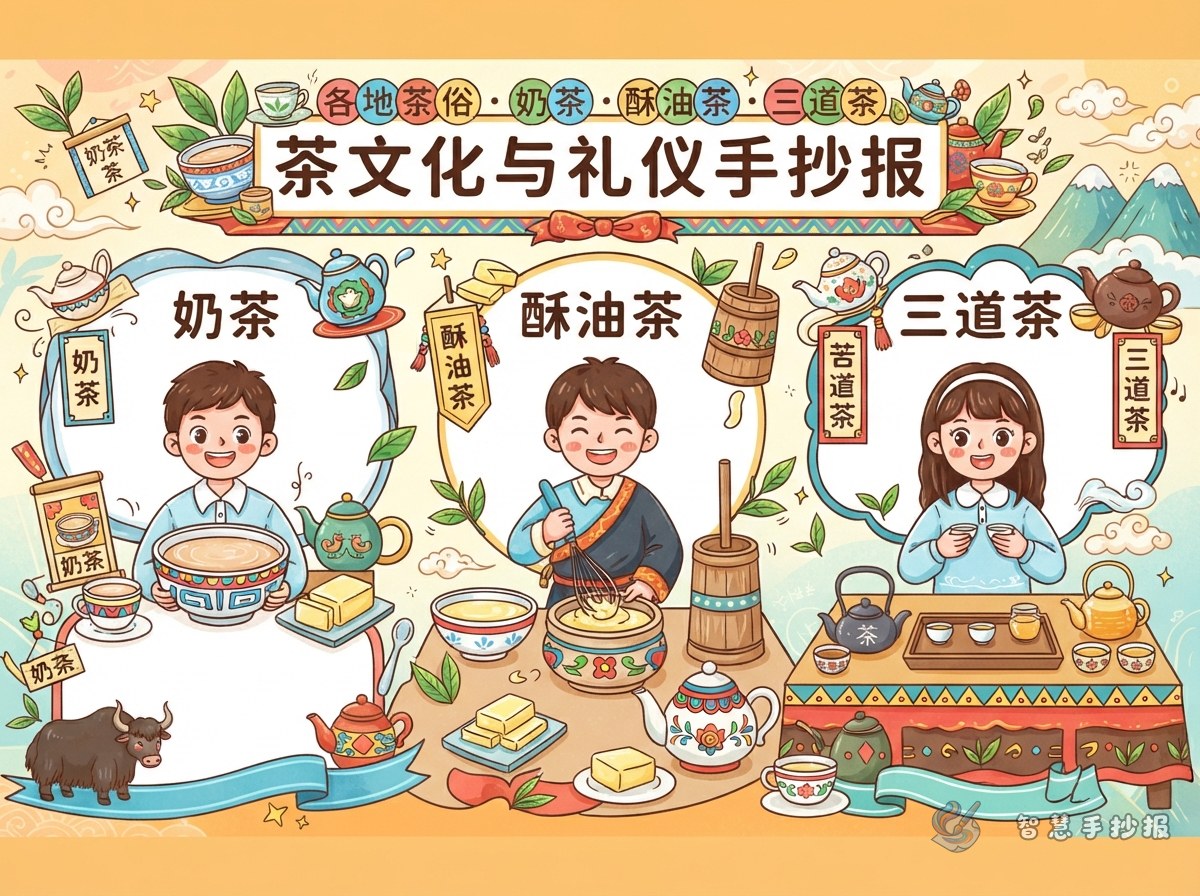
On the grasslands, brick tea is boiled, mixed with fresh milk, and lightly salted for a warm, savoury drink. A bowl of hot milk tea is the first thing handed to a guest, often with fried millet and dried milk curds. A good line for the card: One hot bowl of tea warms a guest's hands first.
Tibetan butter tea
Strong tea is blended with butter and salt in a wooden churn until smooth. The host keeps topping up the guest's cup, so it is rarely empty; the refilling itself is the welcome.
Bai three-course tea
The three courses go bitter, then sweet, then long in aftertaste. A simple personal note works well here: something bitter first, something sweet after, just like sticking with a hard task.
Chaozhou gongfu tea
Small pot, small cups, and water just off the boil. The host pours in a slow circular motion so every cup tastes the same, then drips the last drops out. Offering the first cup to an elder or guest is the usual courtesy.
A tea from your own home
Add one familiar tea: jasmine tea, a big bowl of tea from a street stall, or whatever your family brews. Writing "the tea we serve at home is..." gives the whole page a lived-in feeling.
Etiquette details that make the page feel real
"Be polite" says nothing. Concrete actions say a lot, so put a few in a small tips box:
- Two hands: support the cup properly when passing it, rather than using one hand.
- Seven-tenths full: leave space at the top so the cup is not too hot to hold.
- Refill quietly: top up a guest's cup when it runs low, without making a fuss.
- Guests and elders first: serve them before you pour your own.
- Say thank you: steady the cup with one hand when you receive it and give a quick thanks.
A layout that stays tidy: title, map, cards, tips box
Give the top third to a large title and one opening line, such as "One cup of tea holds the warmth of many places." In the middle, draw a simplified map or tea route with small dots marking each region. Arrange the tea cards around it, using small rectangles or teacup outlines as borders. Save a corner box for "Tea Serving Tips." Tea green, cream, and light brown keep it calm; use thicker letters for headings and thinner strokes for body text, and leave more white space than you think you need.
Words and short lines worth copying
- Words: welcoming with tea, guests first, seven-tenths full, bitter then sweet, a long aftertaste.
- Lines: One plain cup, one honest welcome. / Fragrance in the room, courtesy in the cup. / Bitter first, sweet after, that is the aftertaste.
Before you pick up the pen
Use words like many, often, and usually so no single habit is described as universal. Read each card aloud; if a sentence runs long, split it in two. If you want neat headings, borders, and card boxes without drawing them from scratch, open the 智慧手抄报 mini programme in WeChat, choose a tea-themed layout, and paste your text in. A quick edit gives you a finished handwritten newspaper.