Begin with an Earth exploration story
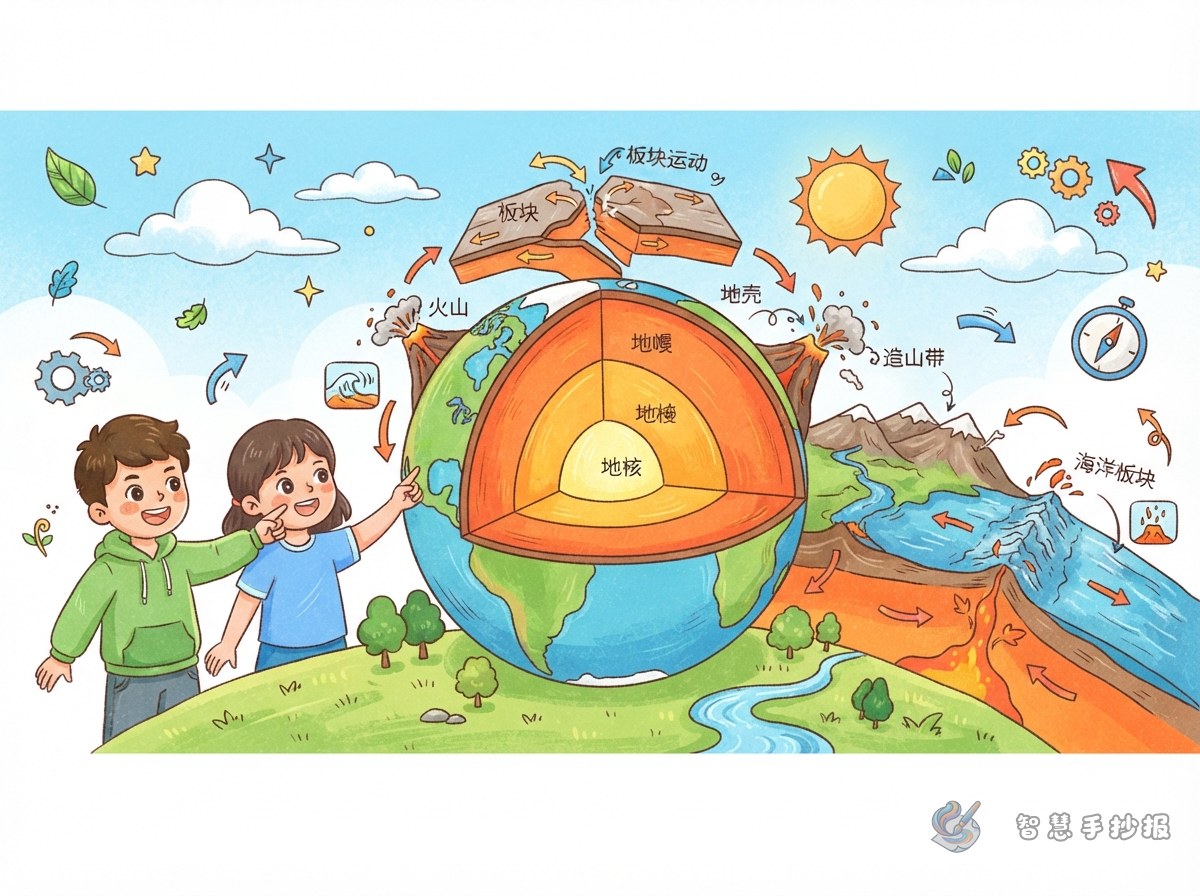
Build the poster around one engaging question: why is Earth more than a motionless rock beneath our feet? Place a cutaway Earth in the center and guide the reader along an exploration path from the crust to the mantle, then to the hot, high-pressure core, before returning to the surface and connecting the journey with plate motion, volcanoes, and earthquakes.
Use “Why Does Earth Move?” as the main title and add “Exploring Earth’s Interior and Plate Motion” as a subtitle. This gives the poster a story-like focus while keeping every section connected to one question.
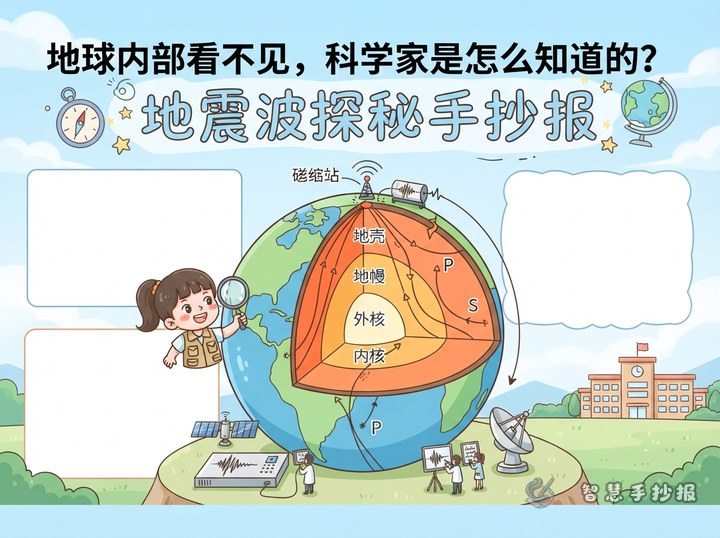
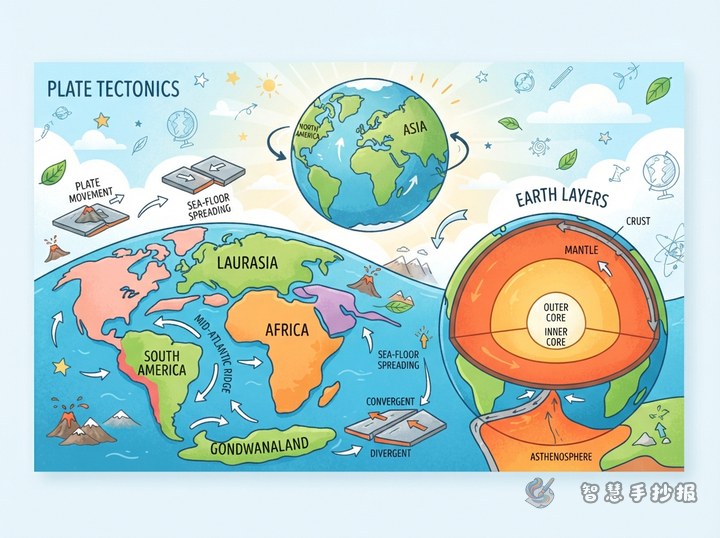
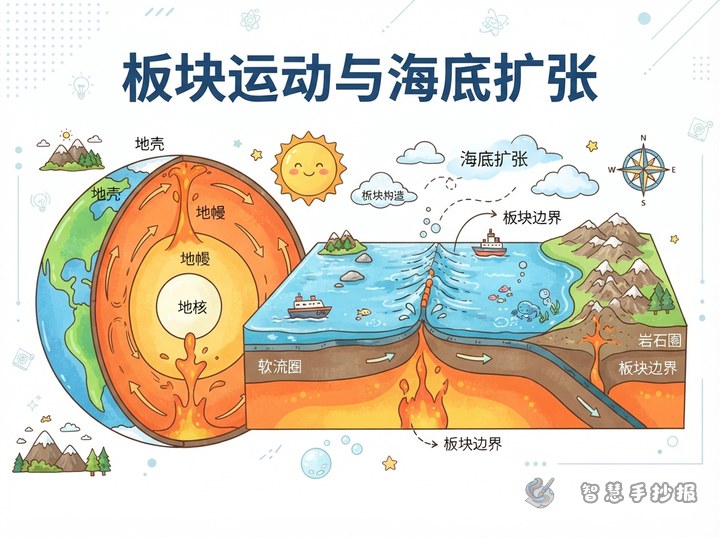
Cut Earth open and label its layers
A set of colored concentric circles can show the interior from the outside inward. Short labels and clear colors work better than long paragraphs on a school poster.
The crust: the thin outer shell
The crust is Earth’s outermost layer and the place where people live. It includes continental crust and oceanic crust. It may look thick in a drawing, but compared with the whole planet it is a relatively thin shell. Add a note such as “Mountains, oceans, and cities are found here.”
The mantle: a hot layer that moves slowly
The mantle lies below the crust. Its rocks are extremely hot and can flow very slowly over long periods of time. Heat moving through the mantle is one important part of the system that drives plate motion. Use orange-red wavy lines and upward arrows, while noting that the movement is very slow.
The core: Earth’s deepest center
The core is the innermost part of Earth and is commonly divided into the outer core and inner core. The outer core is liquid, while the inner core is solid because of the immense pressure. Two simple labels—“outer core: liquid” and “inner core: solid”—are enough for a primary school poster.
Show plates moving like giant puzzle pieces
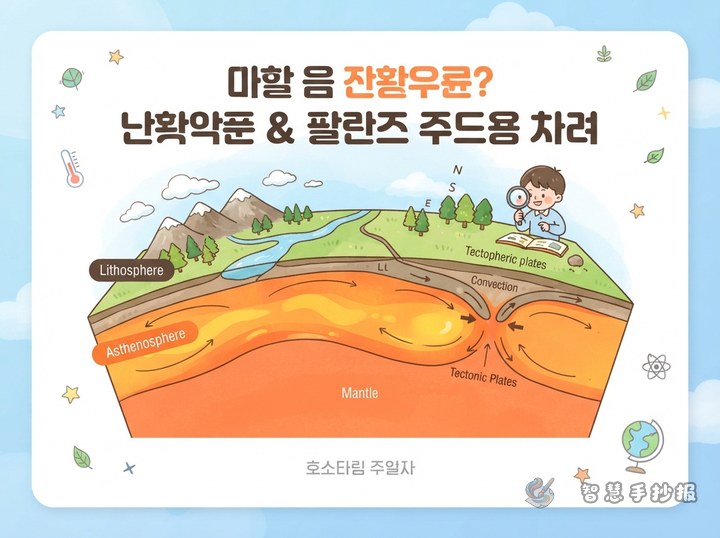
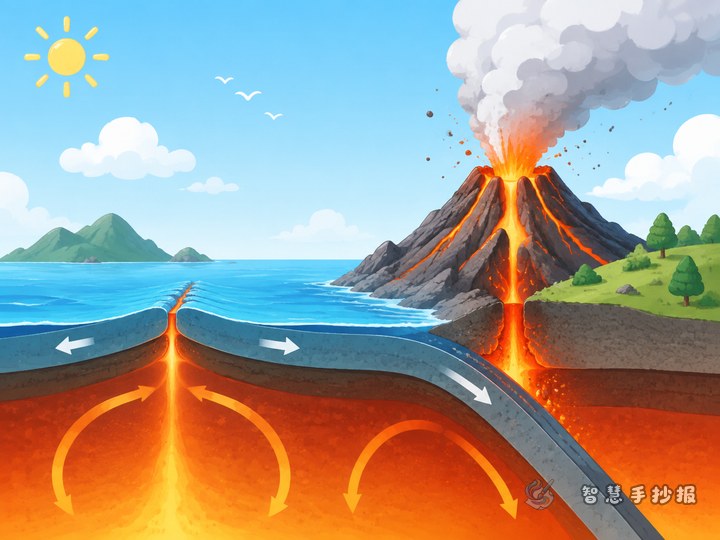
Earth’s rocky outer shell is divided into many enormous plates. They fit together like puzzle pieces, yet they move slowly over time. People usually cannot feel this movement, but over very long periods it reshapes oceans and continents.
- Moving apart: two plates travel away from each other, and new crust may form between them.
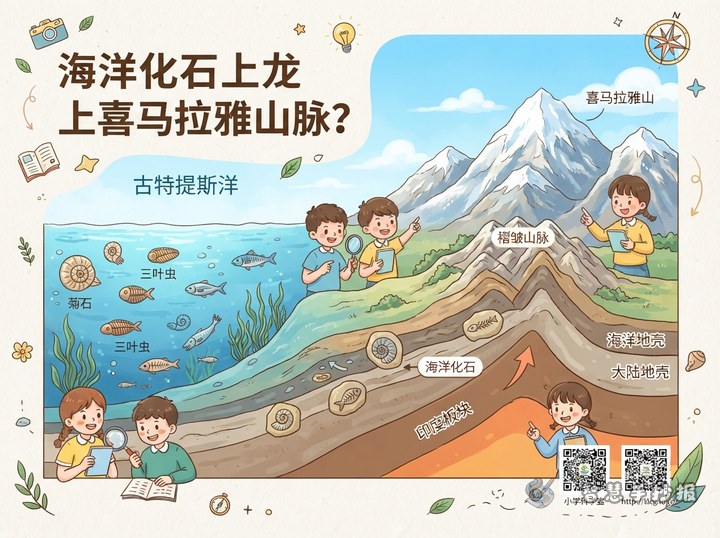
- Moving together: two plates approach each other, which can help form mountains or deep ocean trenches and may be linked with earthquakes and volcanic activity.
- Sliding past: two plates move horizontally in opposite directions along a boundary. If stored energy is released suddenly, an earthquake may occur.
Draw three sets of arrows: arrows pointing outward for separation, arrows pointing inward for collision, and parallel arrows moving in opposite directions for sliding. A visual explanation will be easier to understand than definitions alone.
Turn natural events into small science panels
Next to the plate diagram, create a section called “What can plate motion cause?” Connect the science to familiar natural features. Compression may bend rocks and help form mountains, while earthquakes and volcanic activity are common near some plate boundaries. Movement beneath the seafloor can also affect ocean landscapes.
Make three small cards labeled “Mountain Building,” “Earthquakes,” and “Volcanoes.” Give each card a simple icon and one short explanation. Add a science reminder: learning about plate motion is not meant to create fear. It helps us understand Earth and learn how to respond safely to natural hazards. Keep the wording accurate instead of linking every earthquake to exactly the same type of movement.
Design the page around a cutaway diagram and arrows
- Place the main title at the top and draw a small Earth or compass beside it to create an exploration mood.
- Put the largest cutaway Earth in the center, using blue, orange, and red to distinguish the crust, mantle, and core.
- Use the left side for the three interior layers, explaining them from the outside inward.
- Use the right side for the three kinds of plate motion, showing each as a simple action with arrows.
- Finish with a small box at the bottom: “Earth has layers, its plates move slowly, and these changes create a diverse planet.”
Keep all arrows consistent in direction and do not let text boxes cover the boundaries in the cutaway drawing. A pale blue background can make the page feel fresh, while orange or red highlights can emphasize key ideas. Sketch first, outline with a dark pen, and color last.
End with a small scientific discovery
For the closing paragraph, write: “The ground beneath us may seem still, but Earth’s interior stores heat and its plates move slowly over immense spans of time. Understanding Earth’s structure helps us make sense of mountains, oceans, volcanoes, and earthquakes.” If you want to refine the column sizes, colors, and text placement, you can continue designing the project in the 智慧手抄报 WeChat Mini Program.