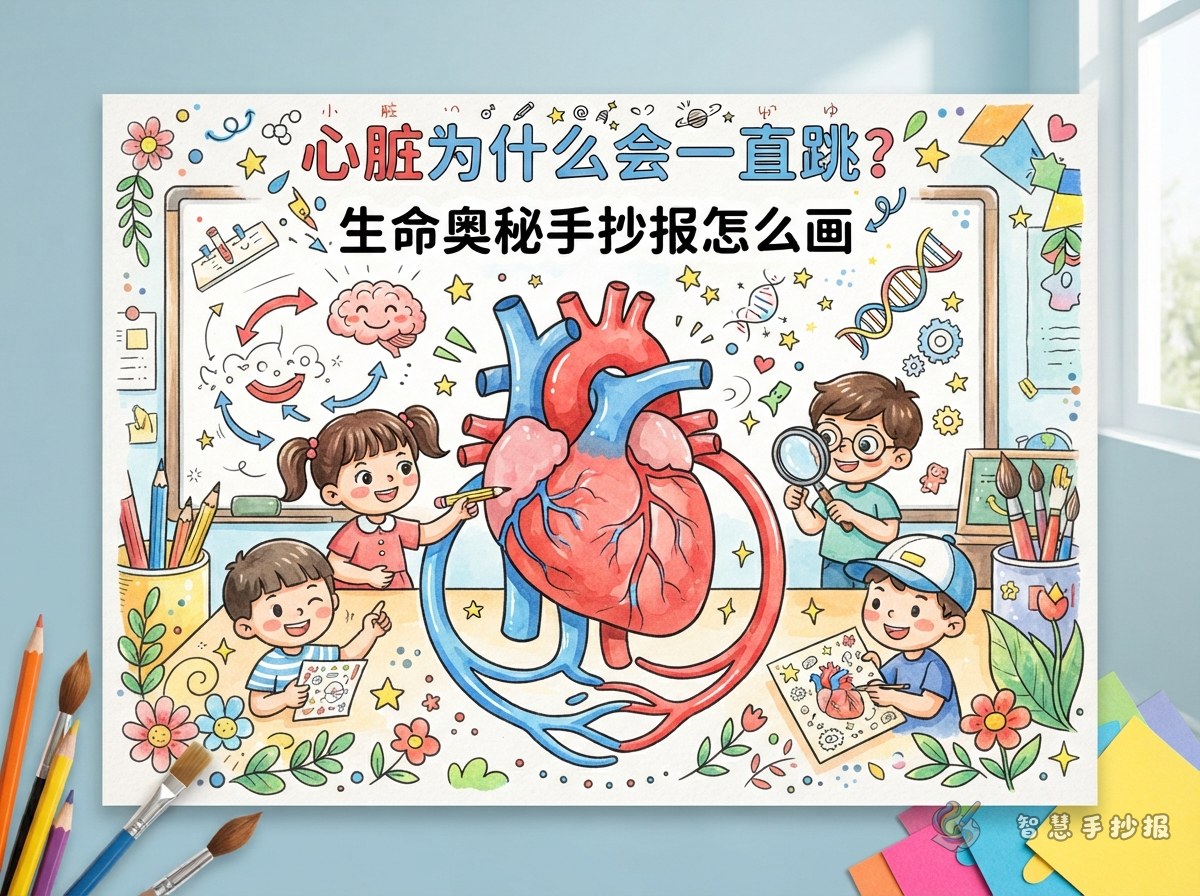
Build the newspaper around one big question
This handwritten newspaper can explore why the heart keeps beating. Present the heart as a small life-supporting pump that works day and night. A title such as Why Does the Heart Keep Beating? or The Beating Engine of Life can create curiosity, followed by a subtitle about the heart and blood circulation.
The introduction can stay simple: the heart is an important organ located in the chest. By contracting and relaxing in a regular rhythm, it sends blood around the body, delivers oxygen and nutrients to cells, and helps carry away some waste.
Explain the secret of a heartbeat in three steps
1. Where does the beat begin?
The heart has an internal system that sends electrical signals. After a signal is released, the heart muscle contracts and relaxes in sequence, creating the heartbeat we can feel. Draw a simple lightning line beside the words Electrical signals give the command, and the muscle works to a rhythm.
2. How does blood complete its journey?
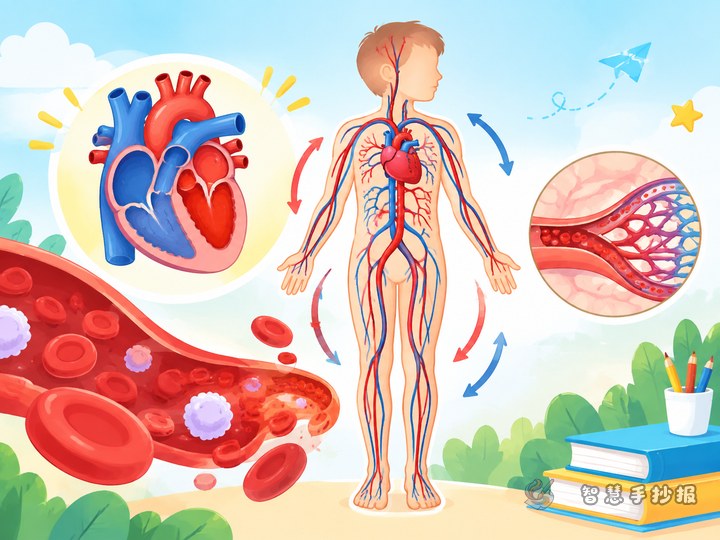
- Blood with less oxygen returns from the body to the right side of the heart.
- The right side sends it to the lungs, where it receives oxygen.
- Oxygen-rich blood returns to the left side of the heart and is sent to the whole body.
- After delivering oxygen and nutrients, the blood travels back to the heart.
Use blue arrows for blood with less oxygen and red arrows for oxygen-rich blood. A route connecting the heart, lungs, arms, and legs will help younger readers understand the circulation more easily than a long paragraph.
Short text ideas for the newspaper columns
Heart fact file: The heart is a strong muscle located near the center of the chest, slightly toward the left. Its rhythm can change with exercise, emotions, and rest.
A one-minute observation: After exercising, gently place your fingers on your wrist to feel your pulse. A pulse is the rhythmic movement made when blood travels through a blood vessel with each heartbeat. Observe gently and do not press hard.
Life question: Why does the heart beat faster after running? During exercise, the body needs more oxygen and energy. The heart works faster to send blood where it is needed. After resting for a while, the heartbeat usually becomes steadier again.
Make the layout look like a moving circulation route
- Place a large heart illustration in the center and leave clear paths for the arrows.
- Put a Heartbeat Code section in the upper-left corner, using lightning marks, rhythm lines, or dots to show electrical signals and beats.
- Create a Blood Journey section in the upper-right corner, using red and blue shapes for different directions.
- Use the lower part for Heart Care Tips, such as regular sleep, suitable exercise, balanced meals, and a cheerful mood.
- Add small decorations such as a stethoscope, blood vessels, or oxygen bubbles in the corners without covering the explanations.
Red, blue, and light yellow make a clear color plan. Red can highlight the heart and oxygen-rich blood, blue can show the returning route, and yellow can mark titles and key reminders. Rounded lines are friendly for elementary school students and easy to draw with colored pencils.
Use accurate and careful wording
Do not present the heart as a decoration that only moves mechanically, and do not say that its speed never changes. A more accurate explanation is that the heart adjusts its rhythm according to the body’s needs. This newspaper is for learning about organs, not for judging anyone’s health. If someone feels unwell, they should tell a parent and seek professional help.
After finishing the text and sketch, you can open the WeChat Mini Program智慧手抄报 to continue arranging the columns, colors, and page layout, making the newspaper about the beating heart more complete and easier to read.