Make the Bystander the Main Character
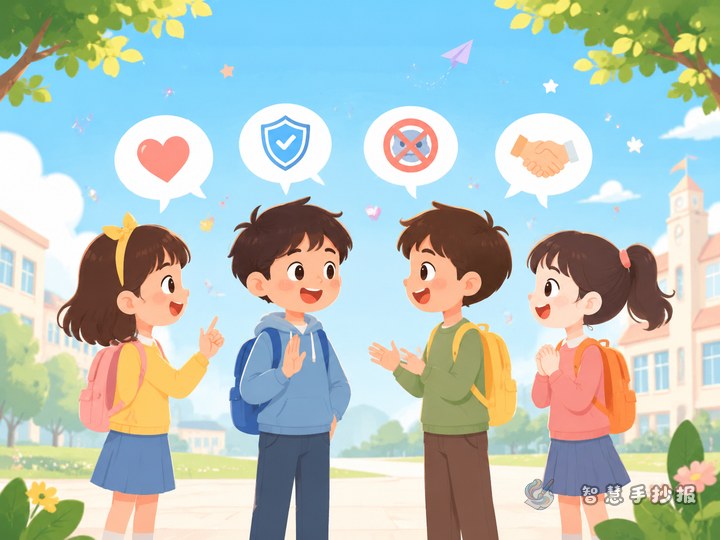
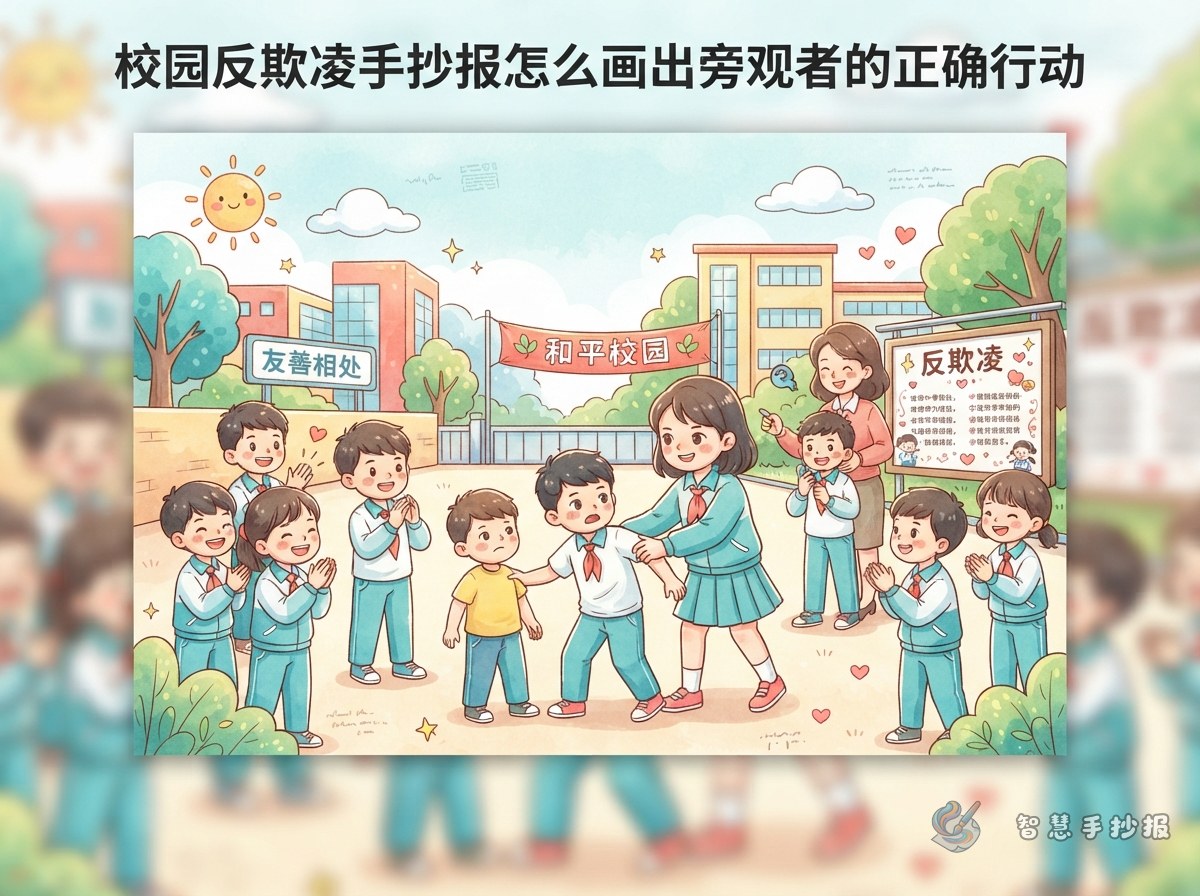
A school anti-bullying poster does not have to focus only on what a targeted student should do. It can also show how classmates who witness unkind behavior can respond. A bystander should not cheer, record, share, or treat the situation as entertainment. Instead, the poster should encourage safe and caring action.
Main message: When you see unkind behavior, choose safe support instead of watching from the sidelines.
Build a Three-Stop Action Route
Design the center of the poster as a path running from left to right or from top to bottom. Connect three circles, footprints, or signposts so readers can quickly understand what a bystander can do.
- Stop one: Check safety. Do not rush into an argument or try to fight back in the same way. If the situation feels dangerous, move away and look for a teacher, parent, or another trusted adult.
- Stop two: Offer support. Walk with the student to a safer place and say, “I can go with you to tell a teacher” or “This is not your fault.” You can also ask other classmates to help find an adult.
- Stop three: Ask for help. Calmly tell a homeroom teacher, duty teacher, parent, or school staff member what you saw. Do not exaggerate or spread unconfirmed messages; let adults who can handle the situation step in.
Words That Fit Small Poster Sections
Short Titles and Slogans
- Do not cheer for bullying; be a safe helper
- See bullying? Speak to a trusted adult
- One kind message can help someone feel less alone
- Kindness is more than watching—it takes action
A Bystander’s Message
If a classmate is mocked, excluded, pushed, or targeted by hurtful photos and messages, do not laugh, record, or post about it in a group chat. Protect yourself first, stay with the student when it is safe, and tell a trusted adult. One caring choice from each classmate can make the classroom feel safer.
Use the Layout to Make the Steps Obvious
- Center area: Draw a curved path or three colorful arrows labeled “Check safety,” “Give support,” and “Find an adult.”
- Left section: Use small cards to list what bystanders should not do: cheer, record, repost, or seek revenge.
- Right section: Add “What I can say” cards, such as “Let’s go find a teacher” and “Would you like me to walk with you?” These are friendly phrases, not dramatic confrontation scenes.
- Color plan: Use light blue, green, and yellow for safety, hope, and warmth. Reserve orange or red for a few warning words so the whole poster does not feel tense.
Four Checks Before You Finish
Make sure the poster is easy to understand, remember, and follow. The action steps should be clear rather than limited to slogans. Advice should match a child’s safety needs and never encourage a student to face danger alone. Drawings should emphasize kindness instead of making bullying look funny or dramatic. Leave a clear reminder to ask a trusted adult for help. After the wording is ready, you can continue arranging the sections in the 智慧手抄报 WeChat mini program for a cleaner final layout.