Why Warning Colors Make a Strong Poster Theme
Weather posters often repeat the same ideas: clouds, rain, rainbows. Rainstorm warning colors are different. The four colors give you ready-made decoration, and they connect to real daily choices, so the poster can answer a simple question: when the weather changes, what should we do?
What Each Color Tells You
Put them in order first
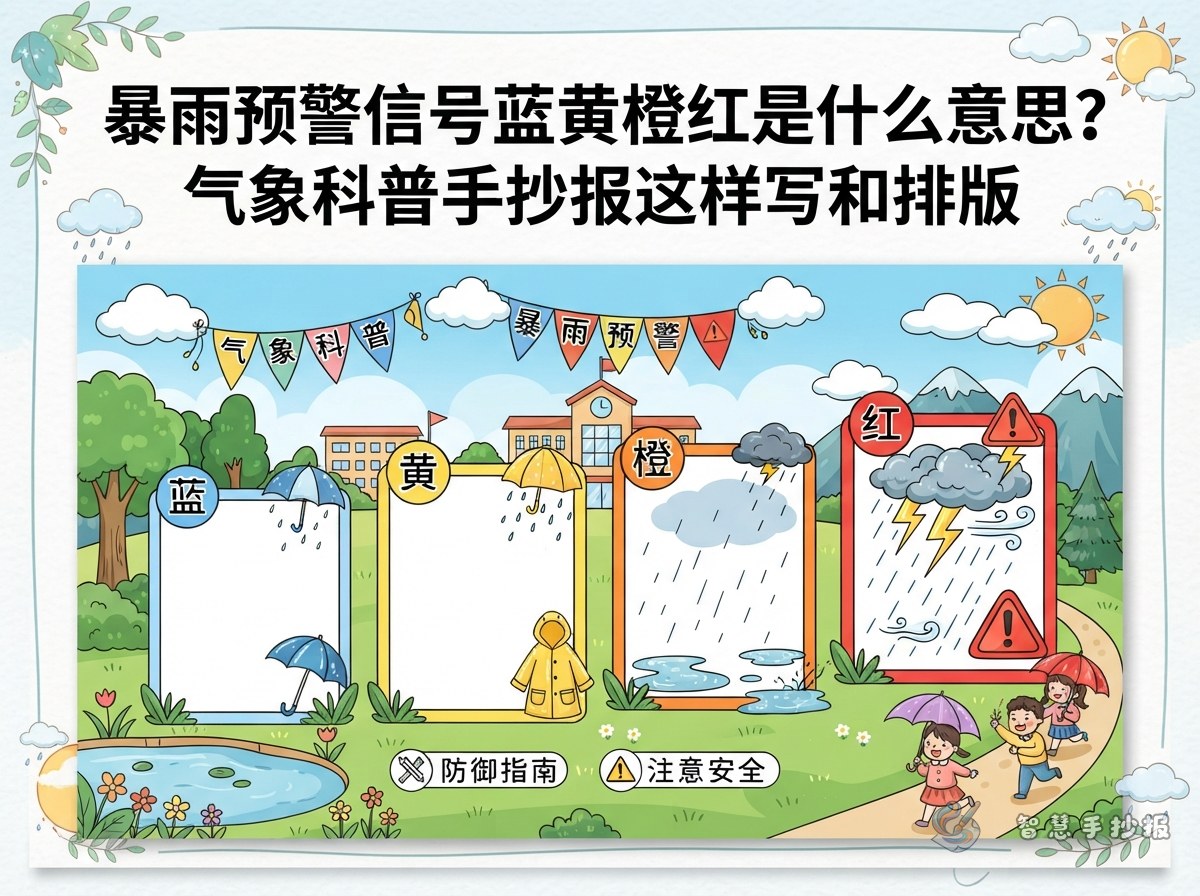
The order is blue, yellow, orange, then red. Blue is a reminder, yellow means pay attention, orange means be careful, and red means take it seriously. Keep that order so readers can follow the rising level.
Explain the changing weather
Start with one clear line: warning signals are messages that tell people the weather may turn dangerous. Then add that deeper colors mean the rain may come faster, harder, or last longer.
Add actions people can take
- Blue and yellow: bring in laundry, carry rain gear, check that windows and doors are closed.
- Orange: stay indoors when you can, avoid walking through flooded spots or low roads.
- Red: go out as little as possible, follow instructions from parents and school, and keep away from poles, billboards, and large trees.
Always remind readers to check official local weather information for the latest level.
Columns Worth Adding to the Page
- What a weather warning is: two or three sentences about why warnings exist.
- Color level chart: four rows, four colors, one level per row.
- Heavy rain safety tips: three to five short lines.
- How warnings reach us: phone messages, radio, TV, and school notices.
- My rain observation: a note about the sky and ground during one rainy day.
Layout Idea: Build a Color Staircase
Draw a vertical or horizontal staircase of four blocks along the left side or bottom of the page, going from blue up to red, each block a little higher than the last. Write one line beside each step, and let the colors carry the design.
- Put a big title across the top, with a two-color outline.
- Split the body in two: the staircase and chart on one side, the safety tips on the other.
- Leave a small empty area for raindrops, clouds, or an umbrella so the page does not feel crowded.
Short Lines You Can Copy
- "Read the color, read the weather."
- "Blue, yellow, orange, red: one step at a time."
- "Weather changes. Be prepared."
- "Heavy rain? Stay safe inside."
Small Tips Before You Start
- Sketch the boxes in pencil first, write the text, then color last.
- Use only one or two colors per section so the page stays clear.
- Do not invent numbers or news. A line telling readers to follow official updates is enough.
- If you would rather skip drawing boxes, open the Smart Handwritten Newspaper mini program, pick a weather science template, and add your own observation notes.