Turn Two-Sided Paper Use into the Main Story
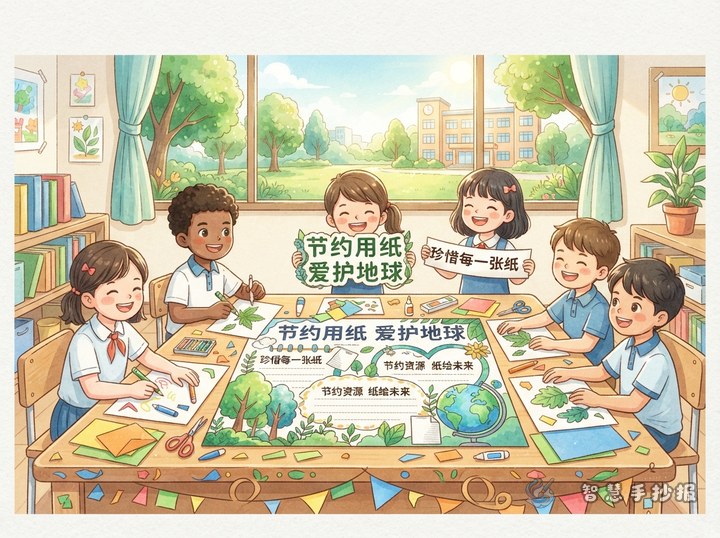
This handwritten poster can begin with familiar school scenes: printed worksheets, draft paper, corrected homework, notices, and drawing practice. Instead of only saying “use less paper,” the poster can show the second life of one sheet of paper. When the front side is used, the back side can still help us learn.
For the title area, use short phrases such as “Flip the Paper, Save Resources” or “Use Both Sides, Start with Me.” Add a simple drawing of an open sheet of paper: one side for homework and the other side for draft work. The picture is easy to draw and makes the theme clear.
Useful Text Materials for the Poster
Paper-Saving Actions at School
- Check files before printing to avoid wrong or repeated copies.
- Use double-sided printing whenever possible.
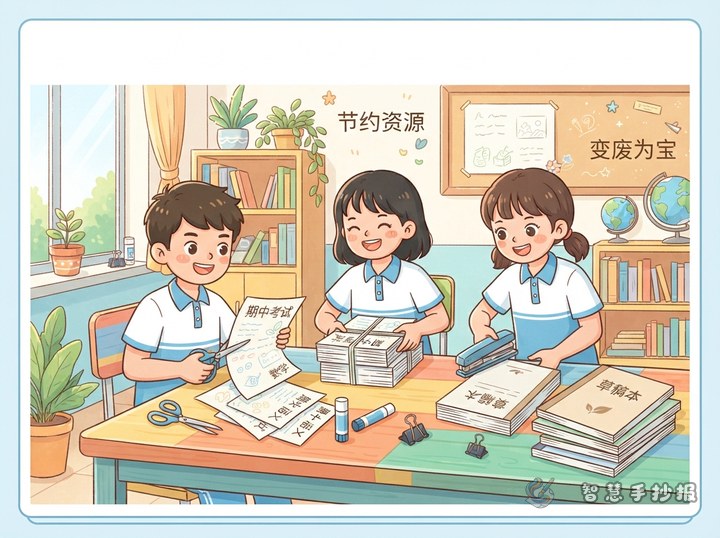
- Use the blank side of old test papers or notices for math drafts, spelling practice, or sketches.
- Set up a “paper reuse corner” in the classroom for paper that can still be used.
- Plan the poster layout with pencil first to reduce wasted drawing paper.
Short Slogans to Copy
- Saving one sheet of paper means caring for green resources.
- Give paper one more use and give the campus more freshness.
- Do not throw away blank-backed paper; it can still help us study.
- Saving resources is a way to show respect for nature.
Make the Sections Feel Like a Campus Action Plan
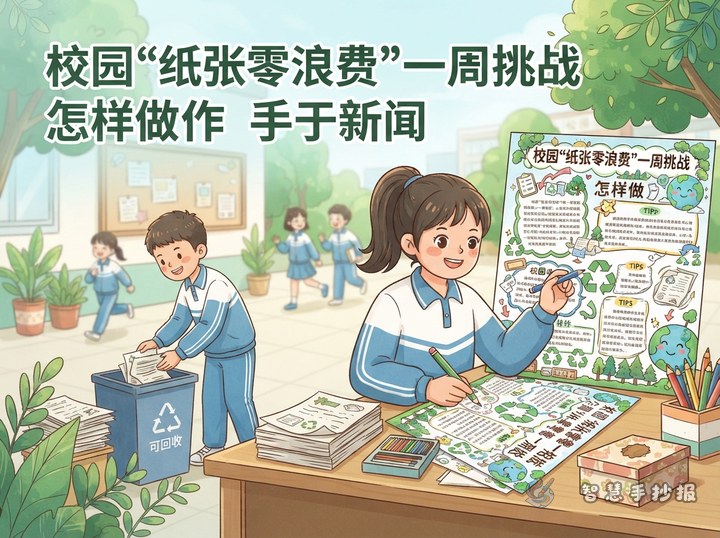
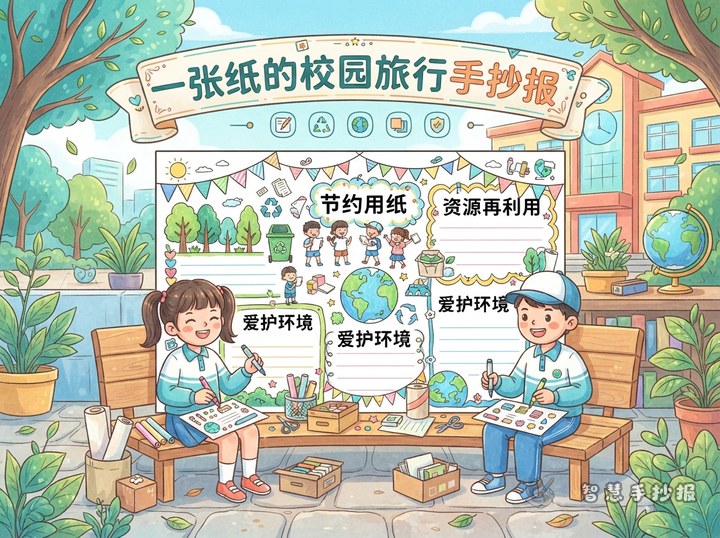
The poster can include four lively sections. The first section, “Where Paper Comes From,” briefly explains that paper is connected with trees, water, and energy. The second section, “I Can Use Both Sides,” lists everyday paper-saving habits. The third section, “New Uses for Old Paper,” introduces draft notebooks, bookmarks, labels, and simple paper decorations. The fourth section, “Our Class Paper-Saving Promise,” can include three to five pledges.
For younger students, use fewer long paragraphs and more icons, such as a printer, recycling bin, draft paper, leaves, and pencils. Older students can add a small “My Paper-Saving Record” table to show what actions they completed during the week.
A Layout That Looks Full but Not Messy
A “paper cycle route” layout works well: draw a small tree in the upper left corner, then show the paper moving from printing to writing, flipping to reuse, and finally recycling. Use green arrows to connect the steps. This makes the poster decorative and easy to understand.
- Colors: Use green, light blue, and warm white to create an eco-friendly feeling.
- Borders: Try torn-paper edges, paper clips, sticky notes, or leaf shapes.
- Illustrations: Draw students sorting used paper, printing on both sides, or binding old paper into a draft notebook.
- Text: Keep each section to three to six lines and highlight key words with colored pens.
Small Tips Before You Start
Sketch the section positions on draft paper before drawing on the final sheet. Make the title clear, leave enough space between lines, and avoid filling the whole page with slogans only. Mix action lists with reuse ideas to make the poster more practical. If you want more title ideas, borders, and layouts, you can continue creating in the 智慧手抄报 WeChat mini program and then add your own words.