Start with the idea: five colors can tell a cultural story
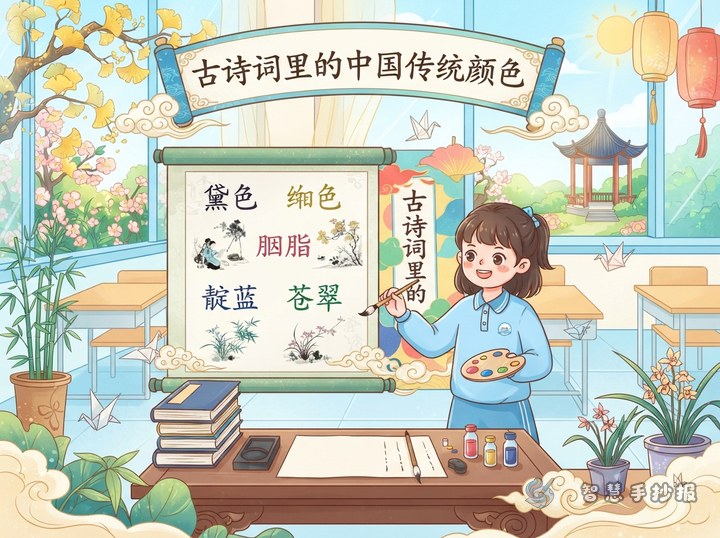
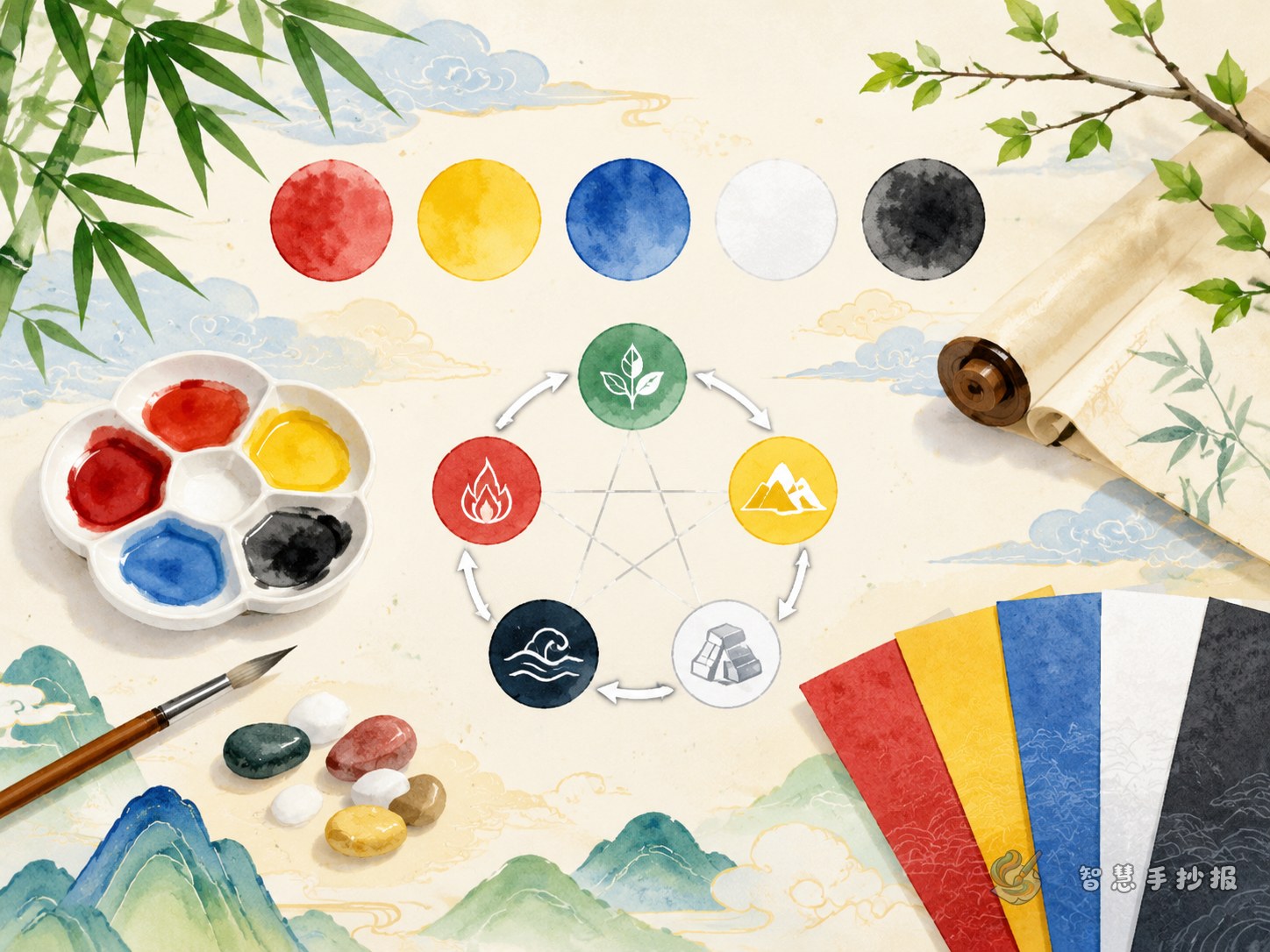
This handwritten newspaper can focus on the five traditional Chinese colors: qing, red, yellow, white, and black. They are often connected with nature, seasons, directions, and traditional ways of understanding the world. For students, the key is not to write a difficult history lesson, but to show how colors can carry beauty and meaning.
Possible titles include “The Beauty of Five Traditional Colors,” “A Color Story of Qing, Red, Yellow, White and Black,” or “Traditional Chinese Five-Color Culture.” Add five color blocks, a scroll shape, cloud patterns, or simple landscape lines near the title to make the topic clear at first glance.
What to write in the five color sections
- Qing: It may remind readers of green mountains, spring grass, or celadon. It can stand for growth, freshness, and hope.
- Red: It is linked with the sun, lanterns, and festive doors. It can express joy, warmth, and courage.
- Yellow: It may connect with earth, wheat, and palace walls. It suggests harvest, dignity, and brightness.
- White: It can remind us of clouds, jade, and snow. It feels clean, simple, and pure.
- Black: It is close to ink, the night sky, and old roof tiles. It shows calmness, depth, and strength.
A simple writing pattern is “color name + natural image + meaning.” This makes the content easy to copy and suitable for a school display.
Try a five-color wheel or a booklet layout
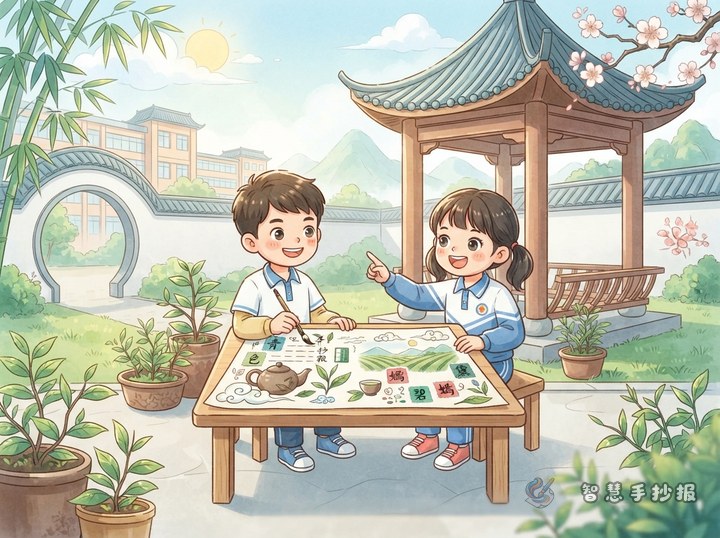
For a neat page, divide the paper into five areas. Use one main color for each area and add a matching border. Put the main title in the center and arrange the five color sections around it to create a five-color wheel.
Another choice is a booklet-style layout. Place five small cards in a row. Each card introduces one color and includes a small drawing, such as green mountains, a red lantern, yellow wheat, white clouds, or black bamboo. This layout is friendly for younger students because it keeps both drawings and text organized.
Make the palette elegant with enough white space
A traditional-color poster should not be filled with heavy colors everywhere. Use off-white or light beige as the background, and let the five colors appear as highlights. Black can be used for titles and outlines, red for key accents, yellow for borders or seal shapes, and qing for plants or landscape elements.
- Write the title in black or deep qing, then add a small red seal-like decoration.
- Use light text boxes so the writing stays easy to read.
- Choose simple patterns such as clouds, bamboo leaves, scroll lines, or lucky motifs.
- Limit each section to two or three colors to keep the page unified.
Short text students can use
Opening: Traditional Chinese colors are not only beautiful shades. They also show how people understood nature, daily life, and good wishes. The five colors—qing, red, yellow, white, and black—open a bright window into traditional color culture.
Section text: Qing reminds us of spring and mountains. Red brings joy and celebration. Yellow connects with earth and harvest. White shows cleanness and simplicity. Black is calm and powerful like ink. When these colors are used carefully in a handwritten newspaper, the page becomes traditional, fresh, and pleasant to read.
Ending: Learning about the five traditional colors is more than remembering color names. It helps us observe nature and feel the beauty of culture. We can also use these colors to decorate our school life and bring traditional beauty into our own handwritten newspaper.
Before you start drawing
Sketch the layout on scrap paper first, then decide what each color section will say. Parents and teachers can help students shorten long information into clear sentences. If you want more layout ideas for this theme, you can continue designing in the Zhihui Handwritten Newspaper WeChat mini program.