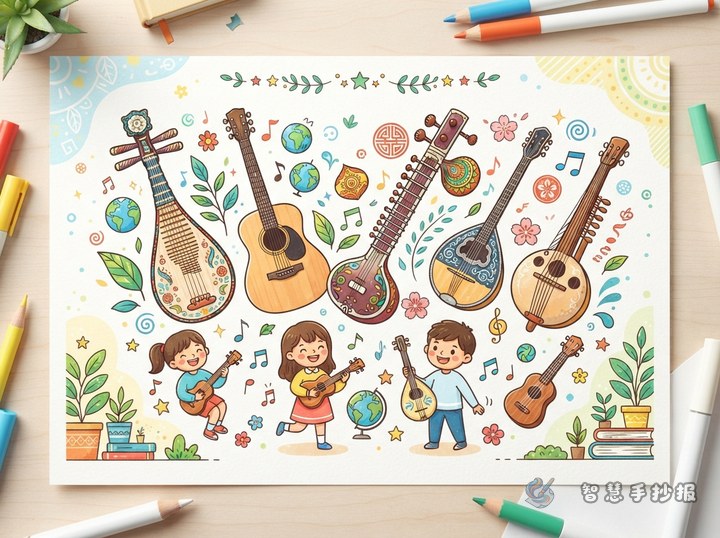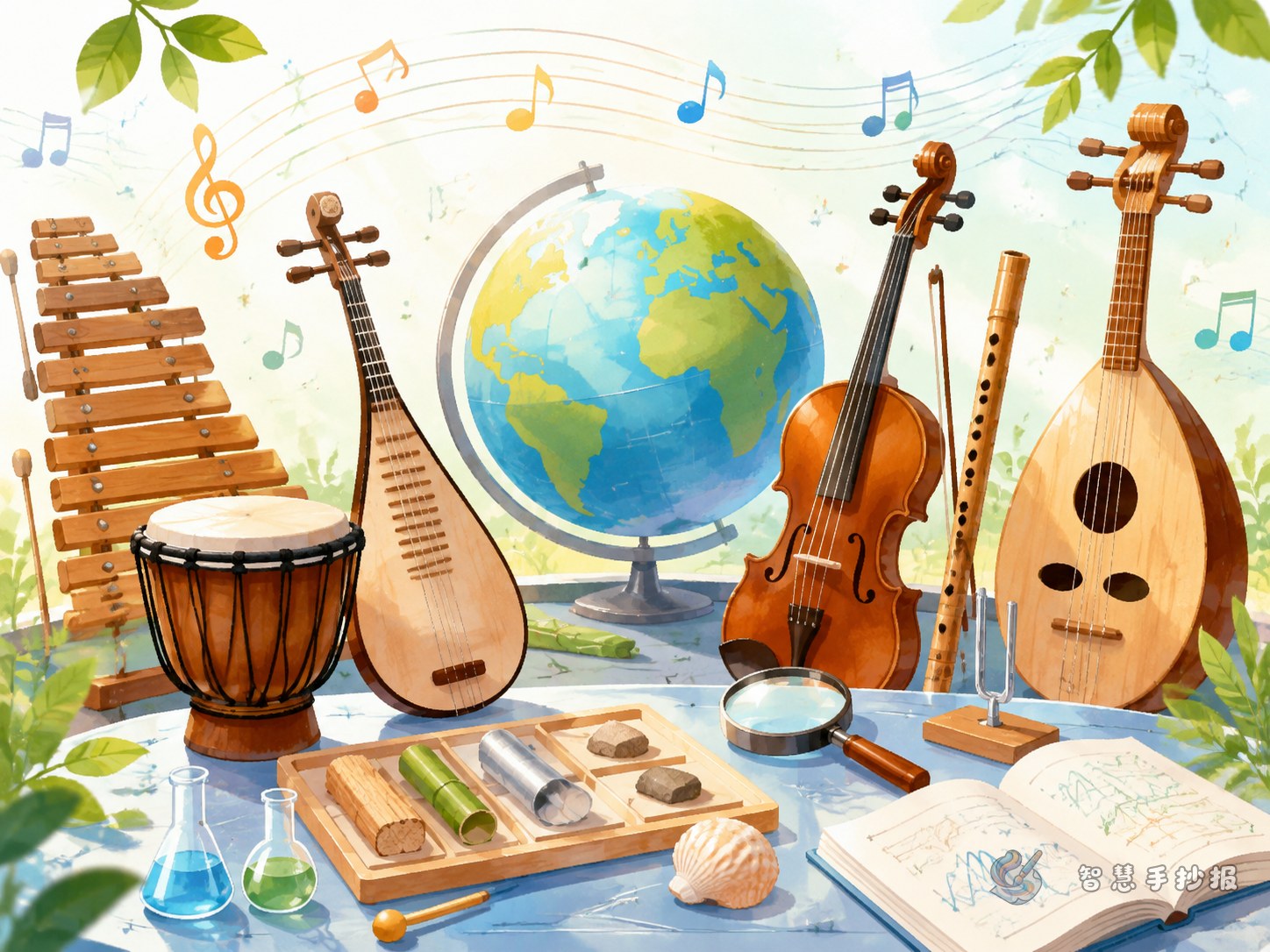
Turn the Poster into a Sound Materials Lab
Instead of listing instruments by country, organize this poster around materials such as wood, bamboo, metal, membranes, and natural shells. Show how each material responds when an instrument is blown, struck, or shaken. Place the title in the center and add small magnifying glasses, music notes, texture samples, and observation labels.
Create Four Instrument Observation Cards
Breathing Through Bamboo and Wood
Wind instruments such as bamboo flutes and panpipes make music when air vibrates inside their tubes. Tube length, width, and playing technique can affect pitch and tone. Draw tubes of different lengths and use arrows to show airflow.
Letting Metal Ring
Gongs, bells, and steelpans vibrate after being struck. Their size, shape, and thickness help give each instrument its own sound. Curved lines around the drawings can suggest bright ringing tones or long echoes.
Making a Membrane Move
Many drums have a hollow body and a tightly stretched head. When the drumhead is struck, it vibrates and moves the surrounding air, producing a strong beat. Drum shapes, decorations, and playing customs vary among musical cultures.
Finding Rhythm in Natural Shells
Shaken instruments such as maracas may be made with gourds, shells, wood, or other materials. Small pieces inside hit one another and the outer shell to create a rustling rhythm. This is a useful example of how natural materials can inspire music.
Short Text Ready for the Poster
Where does sound begin? An instrument needs movement before it can make music. Blowing, striking, plucking, or shaking causes air, strings, metal, wood, or a drumhead to vibrate. Those vibrations travel through the air to our ears. People around the world have used available materials to create instruments and distinctive musical traditions.
Materials and culture: One material can be used for many instruments, and similar instruments may be made from different materials. When learning about world instruments, look at how sound is produced while also respecting each instrument's traditions, purposes, and playing practices.
Arrange the Page Like a Lab Notebook
- Use the top quarter of the page for the main title, an ear, music notes, and a magnifying glass.
- Place four staggered observation cards in the center for bamboo and wood, metal, membranes, and natural shells.
- Add a wide strip at the bottom to illustrate the sequence of action, vibration, and sound.
- Decorate the border with wood grain, metallic dots, drum patterns, and seed-like marks without covering the writing.
- Keep each paragraph to three to five lines and highlight key terms with one consistent color.
Match Sounds with Colors Before Drawing
- Choose four materials and one instrument example for each, keeping only one main fact per card.
- Try brown for wood, blue-gray for metal, orange-red for drumbeats, and yellow-green for natural shells.
- Sketch the sections lightly in pencil, add headings and text, and finish with small instrument drawings.
- Check that each instrument matches its material and sound method, and avoid presenting one local practice as universal.
To combine decorative headings, section frames, and instrument illustrations more quickly, continue your project in the 智慧手抄报 WeChat Mini Program and adjust the design to fit your paper.