Build the theme around both manners and affection
A good handwritten newspaper on family letter culture should not be only about rules, and it should not be only sentimental writing either. The best approach is to connect letter etiquette with the warmth of family communication, so the page feels both educational and heartfelt.
You may choose a title such as “The Warmth of Family Letters” or “Family Letters: Respect and Love on Paper.” A short subtitle can explain the focus, such as learning polite writing while understanding the value of family traditions.
Useful sections you can place on the page
- What is a family letter: explain that it is a letter shared among family members to send care, advice, and love.
- Basic letter structure: greeting, opening words, main message, good wishes, signature, and date.
- Letter etiquette tips: use proper forms of address, polite tone, honest content, and neat handwriting.
- Feelings inside family letters: peace, care, encouragement, and hope.
- Past and present communication: compare old letters with phone calls, text messages, and email.
- A sentence to my family: create a small interactive corner for personal expression.
Ready-to-use wording for students
Short etiquette lines
- Start a letter with respect and kindness.
- Use the right greeting and a sincere tone.
- A family letter may be short, but its feelings can be deep.
- Good writing carries love, manners, and responsibility.
A short paragraph on family letter culture
Family letters are a warm part of traditional culture. In earlier times, when travel and communication were slow, letters carried greetings, concern, and important advice across long distances. Even today, although messages travel much faster, sincere expression and respectful communication are still worth learning and keeping.
Polite writing suggestions
- Begin with a respectful greeting.
- Write clearly and honestly.
- Keep the handwriting neat and readable.
- Add thanks, care, and good wishes.
Try a layout shaped like unfolded stationery
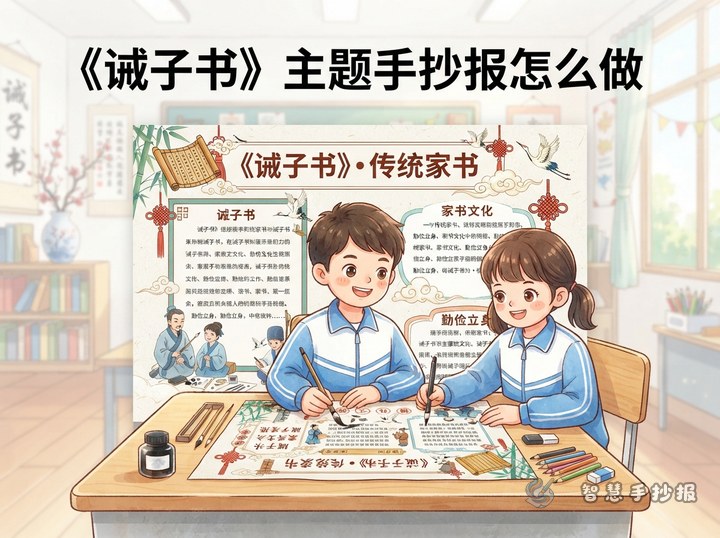
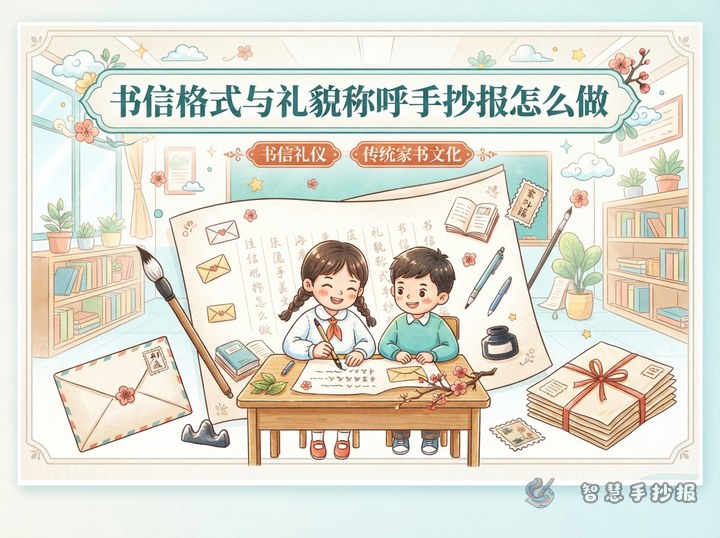
This theme works especially well with a page that looks like an opened letter. The center can be the main text area, while the sides can look like envelope edges, stamps, or folded paper corners.
- Title area: top center with small stamp or postmark decorations.
- Knowledge area: one side for letter format and etiquette points.
- Culture area: the other side for the meaning of family letters.
- Interactive area: bottom section for a message to parents or grandparents.
Soft cream, light brown, pale red, and light blue are suitable colors because they feel calm, warm, and paper-like.
Decorations that support the topic without taking over
The decorations do not need to be complicated. Small, clear illustrations are enough to strengthen the letter theme.
- Stamp-style frames around small sections.
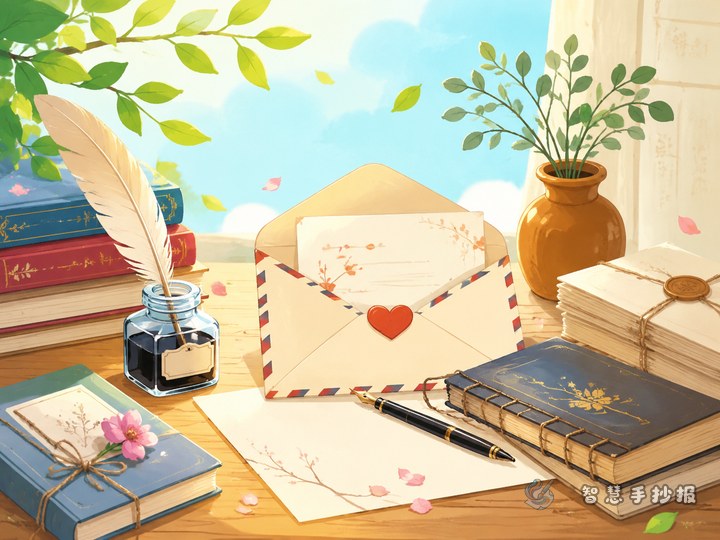
- Envelopes and hearts for family feeling.
- Feather pens and ink bottles for a traditional touch.
- Postmarks and date seals for a mailing effect.
- Simple ruled lines to make the text area look like stationery.
If the arrangement still feels difficult, students and parents can continue refining the layout, spacing, and modules in the WeChat mini program to make the final handwritten newspaper cleaner and easier to read.
End with a sentence that lifts the whole theme
The closing part can be brief but meaningful. A line such as “A family letter carries not only words, but also respect, care, and family values.” works well as a final note.
Before finishing, check three things: whether the topic is clear, whether the sections are well organized, and whether the text is easy to read. If both manners and affection are presented clearly, this handwritten newspaper theme will feel complete and memorable.