Build the Story Around One Breath
Organize the poster as an air-travel story: air enters through the nose, moves down the airway, reaches the lungs, and leaves again when we breathe out. This gives the page a clear storyline instead of a collection of separate facts, making it easier for children to understand and draw.
Possible titles include Our Breathing Guardians, The Journey of One Breath, and How Do Our Lungs Work?. A short subtitle such as Learning about the respiratory system and caring for our lungs can make the theme immediately clear.
Put a Simple Breathing Diagram in the Middle
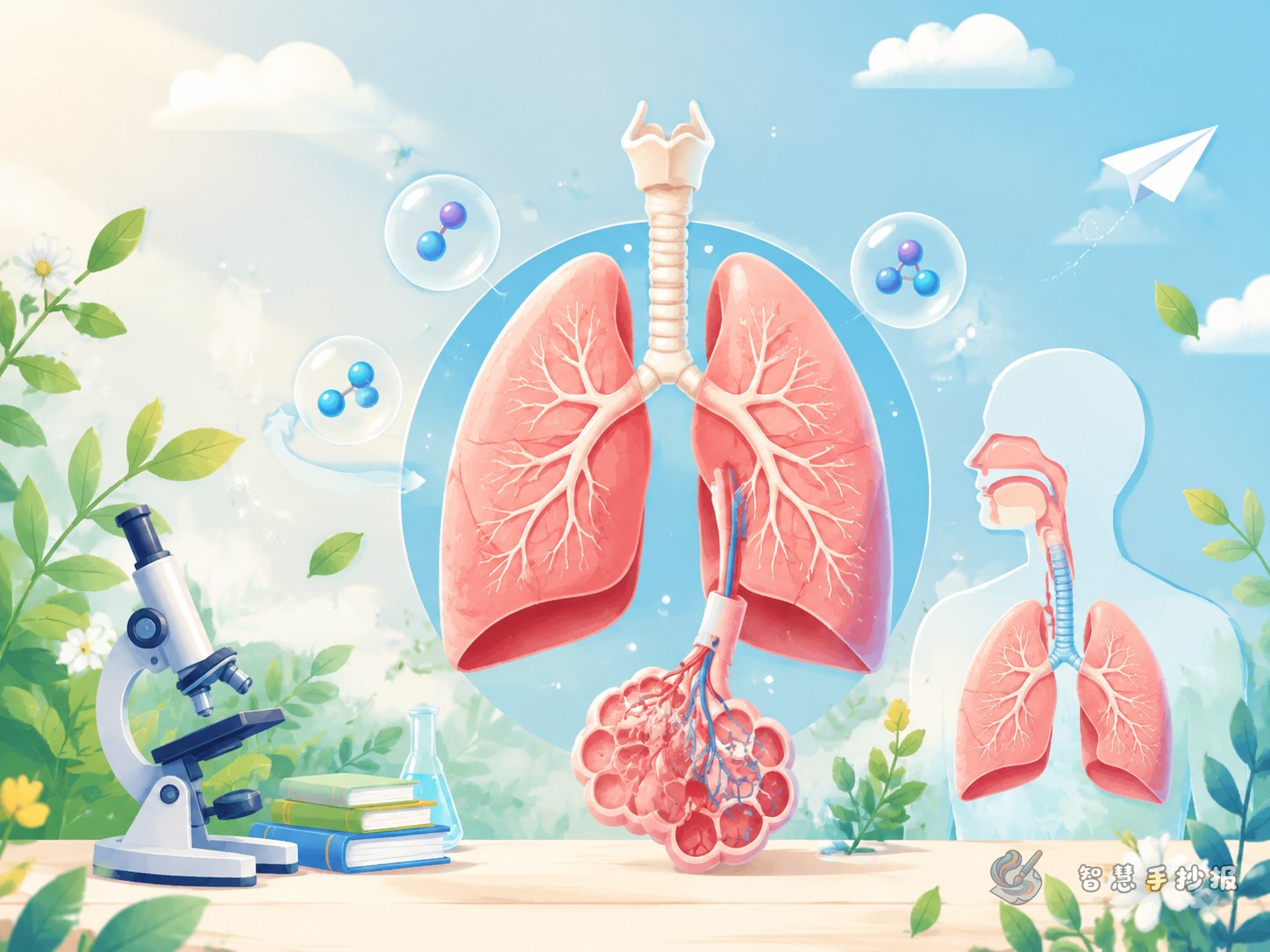
Draw a bright pair of lungs near the center of the page, connected to the windpipe and bronchi. Curved arrows can show the direction of air. Label the nose, windpipe, bronchi, lungs, alveoli, and diaphragm without adding too many tiny details. The main goal is for readers to understand the route at a glance.
- Use blue or green arrows for air moving into the body.
- Use orange arrows for air moving out.
- Draw a few small air sacs beside one lung and label them alveoli.
- Add a curved line below the lungs for the diaphragm, with up-and-down arrows to show its movement.
Explain Inhaling and Exhaling in Two Short Sentences
When we inhale, the diaphragm moves downward and the chest has more room, so air enters the lungs. When we exhale, the diaphragm relaxes and moves upward, the chest has less room, and air moves out. A small text box with these sentences can connect the diagram to the science.
Use Fact Cards to Fill the Page with Meaning
- Organ profile: Give the nose, windpipe, lungs, and diaphragm one or two short lines about their jobs.
- Air route: Show the path from the nose to the throat, windpipe, bronchi, and lungs with a colorful line.
- Alveoli lesson: Compare alveoli to many tiny air sacs and explain that oxygen enters the body there while carbon dioxide leaves when we breathe out.
- Lung-care actions: Suggest fresh air, staying away from smoke, regular exercise, good hygiene, and sensible protection in crowded places.
Make the Layout Feel Like a Breathing Map
Place the main lung drawing slightly to the right of the center. Let the air route begin in the upper-left corner and lead toward the lungs, then continue toward the lower-right corner. Put organ facts on the left, a breathing quiz on the right, and lung-care ideas along the bottom. Small bubbles, leaves, and clouds can decorate the empty spaces without covering the words.
Try pink for the lungs, light blue for air, and green for healthy habits. Rounded boxes, alveoli-shaped labels, and cloud-shaped notes can make the page playful. Keep the boxes balanced and leave some blank space so the poster remains easy to read.
Check the Science Before You Finish
Make sure the organ labels and air arrows are clear, rewrite each fact in short sentences, and check that every part of the page relates to breathing. After making a draft, you can continue arranging the colors and layout in the 智慧手抄报 WeChat Mini Program to complete your handwritten science newspaper.