Choose a Clear Focus for the Poster
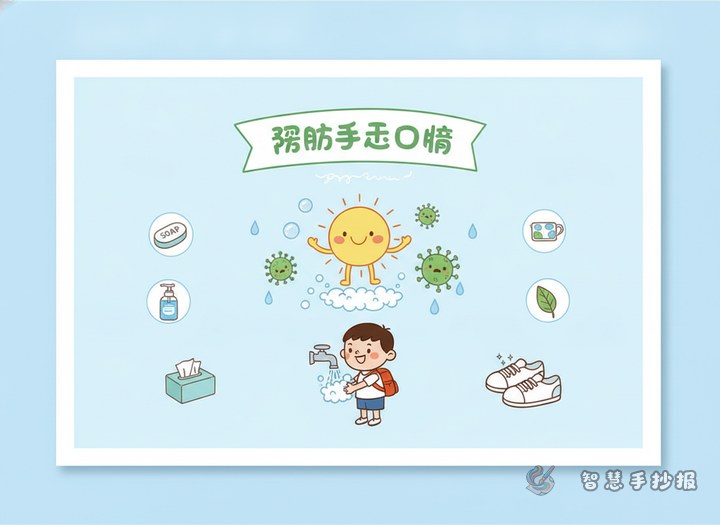
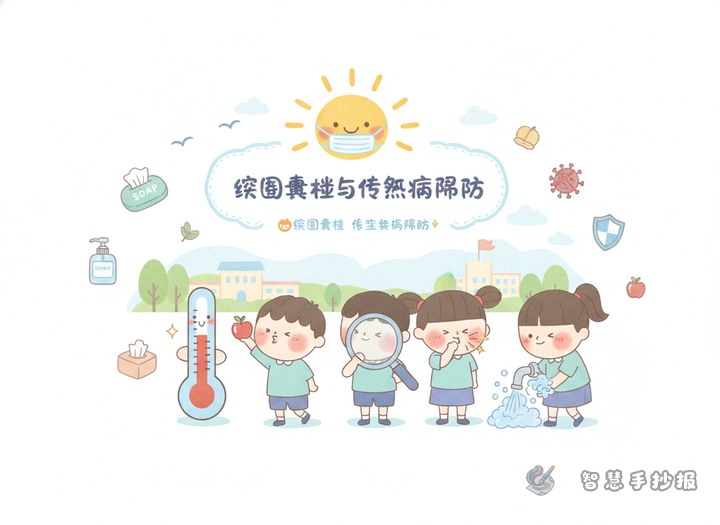
Build the poster around “Clean Meals, Healthy School”. Use the school cafeteria, water station, and lunchtime as familiar scenes. Instead of listing many disease names, explain three simple stages: getting ready before eating, behaving safely during the meal, and cleaning up afterward. This makes the connection between cafeteria hygiene and infection prevention easy to understand.
Draw a plate or a clean table in the center. Around it, add small symbols for handwashing, orderly lines, shared utensils, safe food choices, and sorting waste after lunch. A title such as “Clean Tables, Healthy Campus” gives the page a clear visual focus.
Four Useful Sections to Include
One Minute Before Eating
Write short reminders: wash your hands before eating and after using the restroom; clean your hands after touching shared objects; do not put fingers, stationery, or other objects in your mouth; cover coughs and sneezes with a tissue or your elbow.
Queue Up and Eat Politely
Students should line up, keep a reasonable distance, and avoid pushing or shouting. Take only what you need, and take smaller portions when possible to reduce food waste. Do not touch another person's utensils or food.
Smart Rules at the Table
Eat food that has been properly heated, and avoid food with an unusual smell or signs of spoilage. Drink clean water and use or place tableware according to school rules. Tell a teacher or parent when you feel unwell.
Clean Up After Lunch
Put leftover food in the designated place, return tableware to the correct area, wipe the table, and keep the floor clean. Sorting waste and avoiding litter help improve the environment and reduce opportunities for germs to spread.
Present Prevention as “Notice, Report, Rest”
Add a “Health Reminder” section at the bottom to make the poster more connected to school life. You can write: if you have a fever, vomiting, diarrhea, a strong cough, or unusual skin symptoms, do not force yourself to attend school or stay close to classmates. Tell a parent and teacher promptly and rest according to medical advice. Follow school arrangements before returning to class.
Emphasize that reporting symptoms is a responsible health action, not something to hide. The poster should not diagnose classmates or promote unverified remedies. Keep the focus on healthy habits, timely communication, and cooperation with school guidance.
A Kid-Friendly Page Layout
Try a layout with the title at the top, a cafeteria scene in the center, action sections on both sides, and a health reminder along the bottom. Use a warm color for preparation before eating and a fresh color for cleaning up. Connect the two sides with a large plate illustration. Keep each section to two or three sentences so the page remains open and easy to read.
- Title area: Use a short phrase such as “Eat Well, Stay Healthy” in large lettering.
- Picture area: Draw handwashing, lining up, clean utensils, and waste sorting.
- Information area: Number the three stages: before, during, and after the meal.
- Decoration area: Add plates, spoons, cups, and simple leaves while keeping enough white space.
Final Checklist
- Does the poster stay focused on cafeteria hygiene and school health?
- Does it cover the stages before, during, and after eating?
- Is the wording short and clear rather than written like a medical textbook?
- Are the illustrations and sections separated well enough to remain readable from a distance?
After preparing the text and rough sketch, open the Zhihui Handwritten Newspaper WeChat Mini Program to organize sections, adjust the layout, and refine the colors for classroom display.