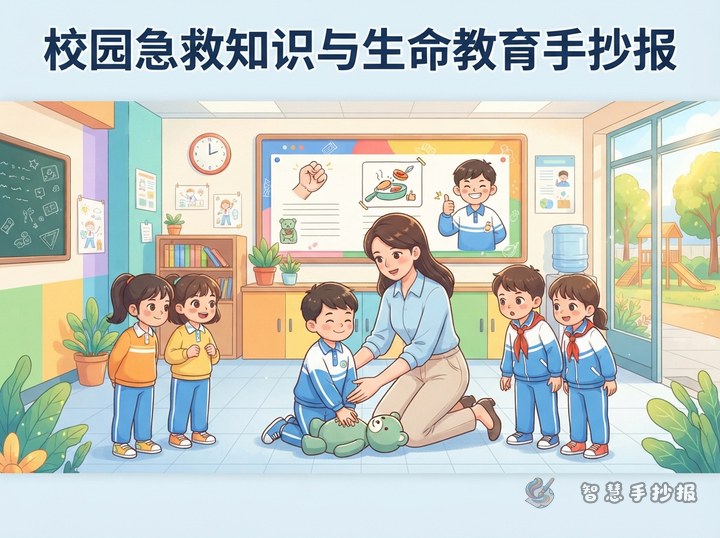
Turn “Knowing How to Ask for Help” into the First Aid Theme
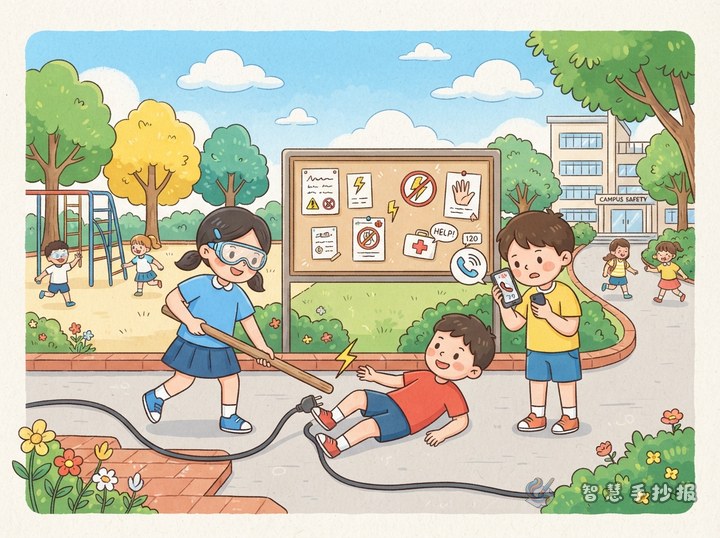
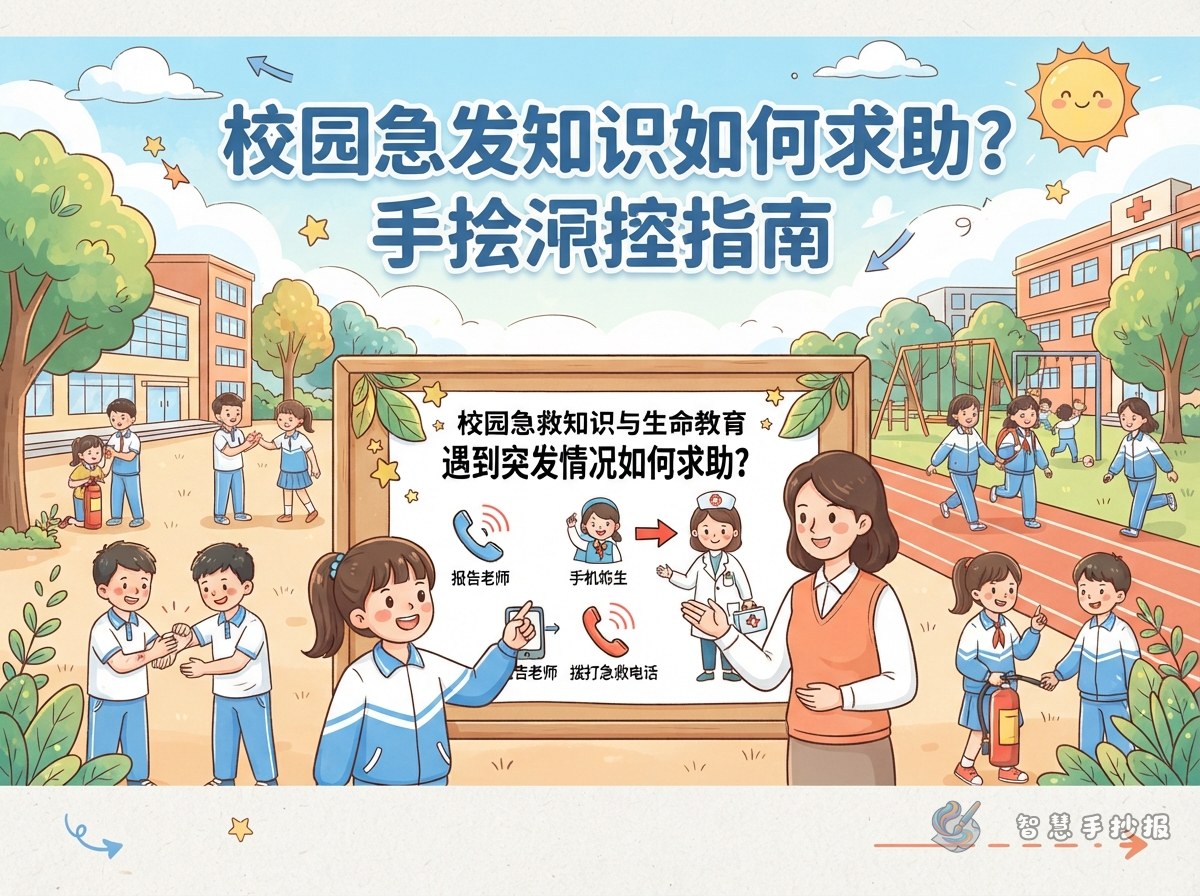
This handwritten newspaper can focus on the idea that students should stay calm and find an adult when something unexpected happens at school. Instead of describing one specific injury, it highlights safe help-seeking. The opening can say that when a classmate suddenly collapses, has trouble breathing, shows signs of a serious allergic reaction, or faces another emergency, students should protect themselves first and immediately tell a teacher, school nurse, or trusted adult.
A suitable slogan is “Report Quickly and Ask for Help Clearly.” You may also write, “I protect myself, I explain clearly, and I wait calmly.” These short sentences fit a primary school life-safety theme.
What Information Should the Poster Explain?
- Who to tell: Tell the class teacher, subject teacher, school nurse, duty teacher, or another reliable adult nearby.
- What to say: Explain what happened, where it happened, what the person looks like now, and whether danger is still present.
- What to remember: Give the school name, building, floor, classroom, playground area, or another clear location.
- What to do next: Follow instructions, avoid crowding or pushing, and do not move an injured or unconscious person without proper guidance.
A small information box may explain that 120 is used for professional medical emergencies, 119 for fires and other fire-service emergencies, and 110 for public-security dangers. Children should not call emergency numbers for practice or fun. In a real emergency, they should seek an adult’s help, stay on the line, and answer the operator’s questions truthfully.
A Four-Sentence Help-Seeking Box
- Where am I? Give the school, building, floor, and exact location.
- What happened? Describe the event briefly.
- How is the person now? Say whether the person is conscious, breathing normally, or facing an obvious danger.
- What help is needed? Ask a teacher, nurse, or emergency responder to come and give the clearest location possible.
Add a reminder: do not exaggerate or guess. If you are unsure, say so honestly and follow the instructions of adults or trained professionals.
Design the Page as a Help-Seeking Route
Try a left-to-right route layout. Draw a student noticing a problem on the left, a speech bubble for reporting to a teacher in the middle, and three steps on the right: “Confirm the Location,” “Explain the Situation,” and “Wait for Help.” Put the main title at the top and a bordered “Safety Reminders” section at the bottom.
Red, orange, and blue work well as the main colors. Red can mark urgent reminders, orange can highlight action steps, and blue can represent calmness and order. Emergency numbers should remain clear and should not be covered by decorations. Keep each section short and leave enough white space for neat handwriting.
Add Warmth to the Life-Education Message
The closing sentence could be: “Protecting yourself and reporting quickly are both forms of courage.” Do not present first aid as a daring challenge or encourage children to handle situations beyond their ability. After preparing the text and sketch, you can use the WeChat mini program Zhihui Shouchaobao to continue arranging the page and make the campus safety theme easier to read and display.