Begin with a Question That Sparks Curiosity
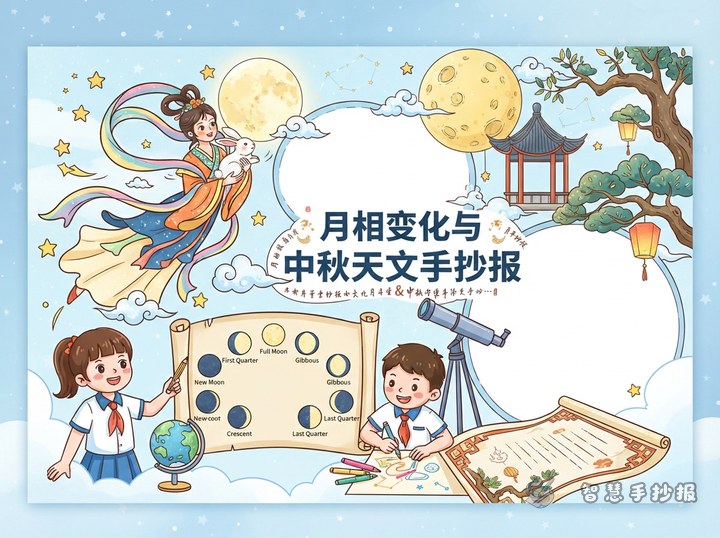
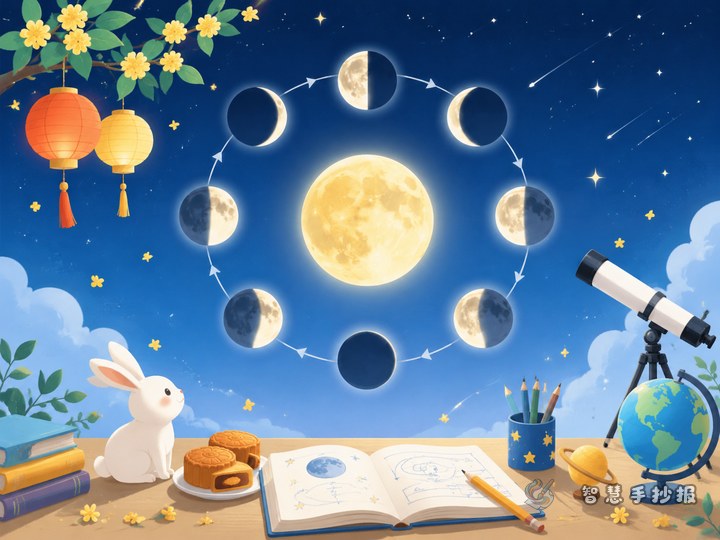
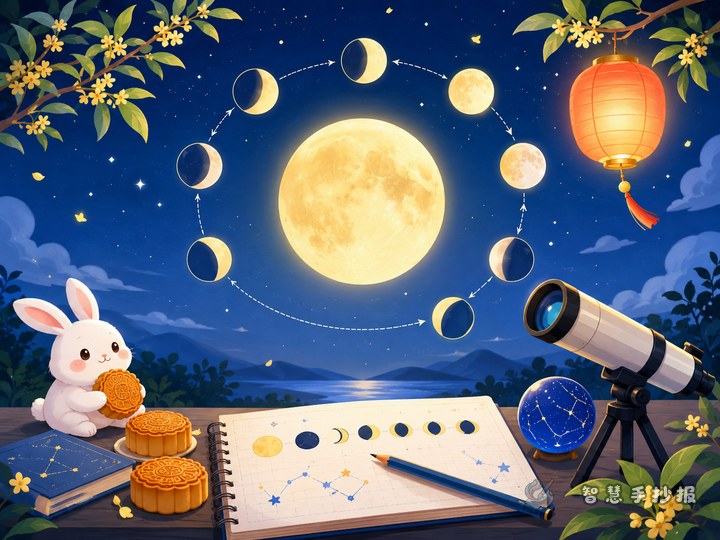
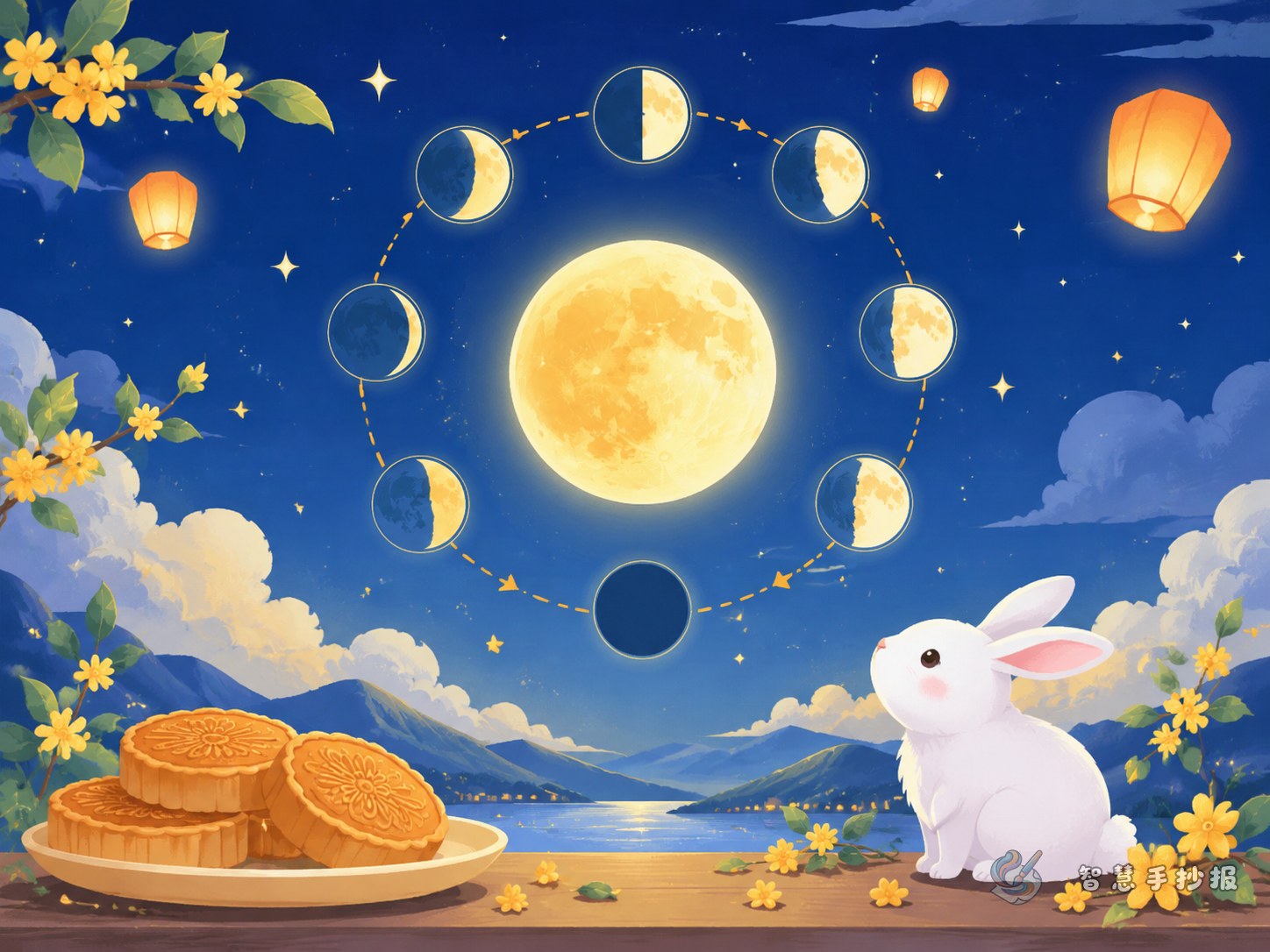
Place “Is the Moon Always Full on the Fifteenth Day?” near the center of the page. Surround it with a sequence of moon shapes that grow from a crescent to a full circle and then shrink again. This gives the poster a clear scientific focus while preserving the festive atmosphere of the Mid-Autumn Festival.
Explain the Date and the Full-Moon Moment
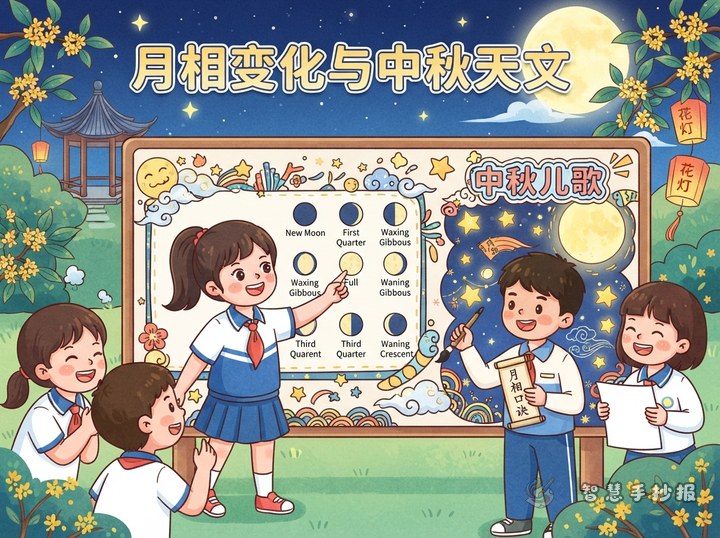
Around the first day of a lunar month, the Moon is roughly between Earth and the Sun, so very little of its illuminated half is visible from Earth. The visible bright portion then grows through the waxing crescent, first quarter, and waxing gibbous phases.
A full moon occurs near the time when Earth is roughly between the Sun and the Moon, allowing us to see almost the entire illuminated side. However, a full moon is a precise astronomical moment, while the fifteenth day of a lunar month lasts for a whole day. Because the Moon does not travel at exactly the same speed throughout its orbit, the fullest moment may occur on the fifteenth or the sixteenth lunar day.
Build a Moon-Phase Timeline
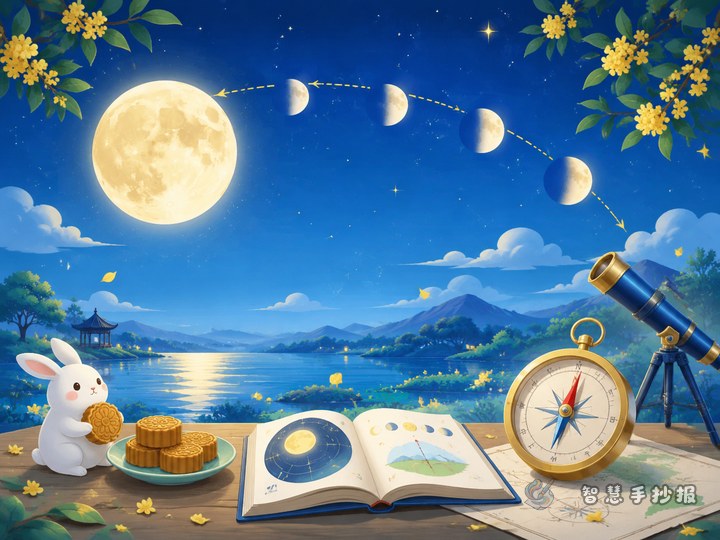
- Near day one: Show a mostly dark disk and label it “near new moon.”
- Around days seven and eight: Draw the first-quarter Moon with about half of its visible face illuminated.
- Around days fifteen and sixteen: Draw a nearly complete circle and note that the exact full-moon moment can fall on either date.
- Around days twenty-two and twenty-three: Add the last-quarter Moon.
- Near the end of the month: Make the illuminated portion narrow again as the next new moon approaches.
Connect the phases with arrows so the sequence is easy to follow. The illustrations only need to show changes in the illuminated shape; they do not need elaborate surface details.
Mix Festival Culture with Astronomy
- Astronomy question: Why can the Moon be fullest on the sixteenth lunar day?
- Moon phases in one minute: Give short explanations of the new moon, first quarter, full moon, and last quarter.
- Moon-watching notes: Record the date, time, weather, and observed shape.
- Festival corner: Add one or two familiar moon poems with small osmanthus, rabbit, or cloud decorations.
Create a Balanced, Moonlit Layout
Try a three-column design. Put the phase timeline on the left, the title and a large full moon in the center, and the date-versus-moment explanation on the right. Add a small observation table at the bottom with spaces for the date, time, predicted phase, and actual observation.
Dark blue, warm yellow, and moonlight white make a clear color palette. Keep text panels pale and uncluttered so stars and clouds do not cover important information. After choosing the sections, users can scan the code to open the Smart Handwritten Newspaper WeChat Mini Program and continue creating the poster.