Why a Moon Phase Rhyme Belongs on a Mid-Autumn Astronomy Page
Moon phases are easier to remember when they are grouped into a short, rhythmic verse. A handwritten newspaper can use that verse as both a science note and a layout feature: it is quick to copy, fun to read aloud, and helpful for younger students who are still learning the eight phase names.
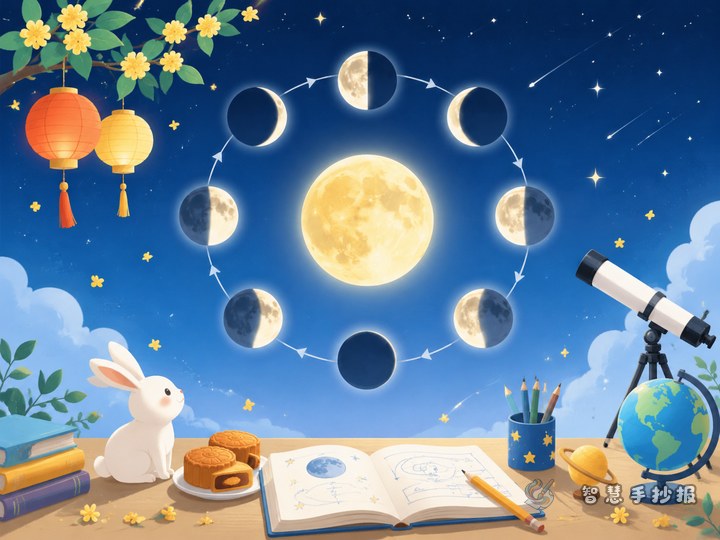
- New Moon: around the first day of the lunar month; the Moon is almost invisible.
- Waxing Crescent: a thin curved Moon in the western evening sky.
- First Quarter: the right half is lit and visible in the evening.
- Waxing Gibbous: the Moon grows rounder night by night.
- Full Moon: bright and round, often around the fifteenth or sixteenth day.
- Waning Gibbous: the Moon begins to shrink after full Moon.
- Last Quarter: the left half is lit and best seen after midnight or at dawn.
- Waning Crescent: a thin crescent before sunrise near the end of the lunar month.
A rhyme gives the page a rhythm
Place the rhyme in the center or near the top, then let the fact boxes and drawings support it. Readers can enjoy the verse first and then explore the details.
Rhyme Lines and Moon Phase Facts You Can Copy
Here is a simple rhyme for a Moon Phase Song column. You can write it as four lines and draw a small Moon beside each line.
Example rhyme: New Moon hides at the start of the month; a thin crescent follows soon. First Quarter shows half a face; the Full Moon shines in roundest grace.
Add a mini fact file beside the rhyme so the page is not just decorative.
- Best viewing time: first quarter in the evening, last quarter before dawn.
- Bright side: first quarter is lit on the right; last quarter is lit on the left.
- Mid-Autumn note: the Mid-Autumn Festival falls on the fifteenth day of the eighth lunar month, when the Moon is usually close to full, but not always exactly full on that date.
Where the Mid-Autumn Moon fits in
You can add a festival line: “On Mid-Autumn night, the round Moon watches over family reunions.” This connects astronomy with the holiday mood without losing the moon phase theme.
Four Sections That Keep the Layout Clear
A good handwritten newspaper does not need too many boxes. Four main sections can cover the topic neatly.
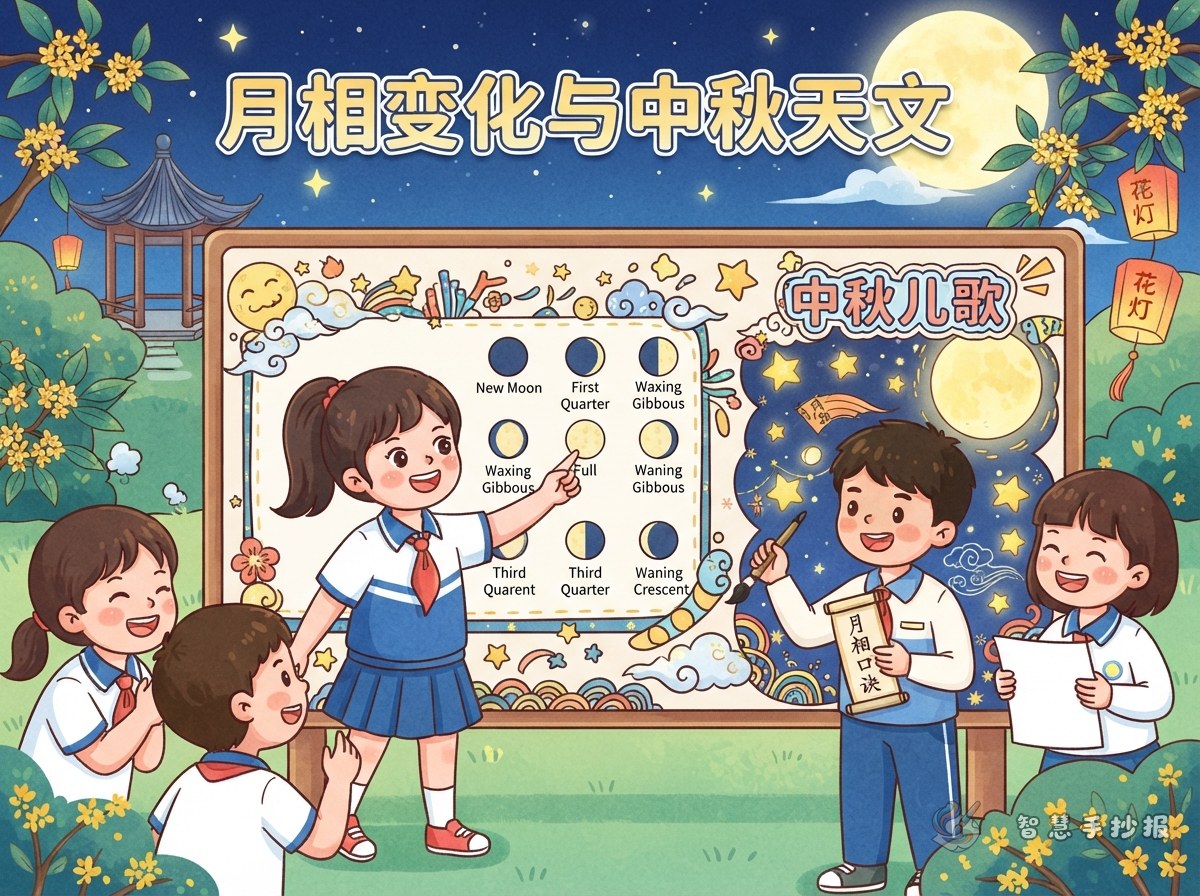
- Moon Phase Song: the full rhyme in the largest handwriting, placed at the top or center.
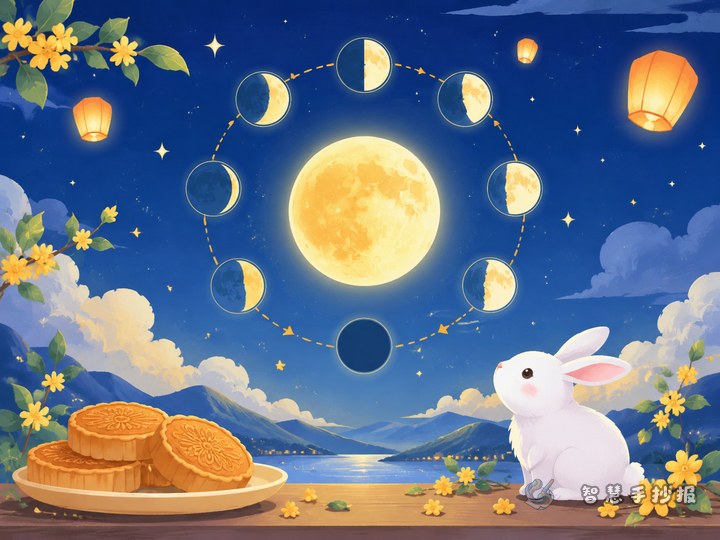
- Eight Phase Cards: eight small circles in a curved row, each showing one phase with its name and time.
- Rhyme Breakdown: small cards explaining words such as new Moon, crescent, quarter, gibbous, and full Moon.
- Mid-Autumn Questions: short questions like “Why does the Mid-Autumn Moon look so round?” or “Is the full Moon always on the fifteenth day?”
Title and decoration ideas
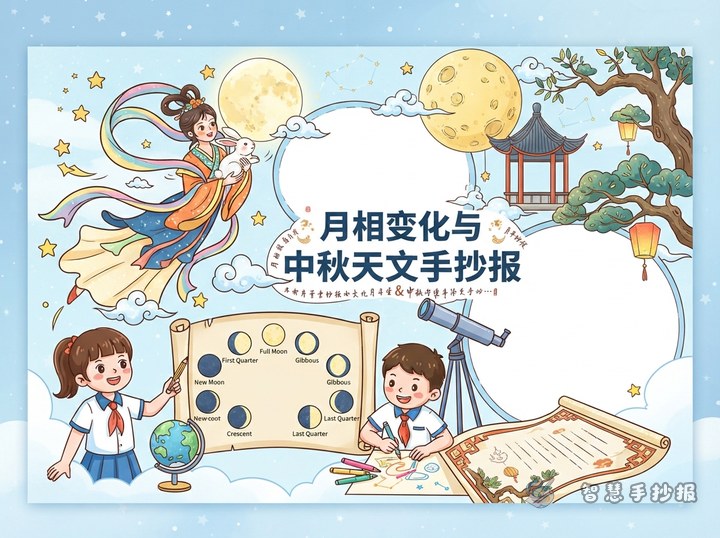
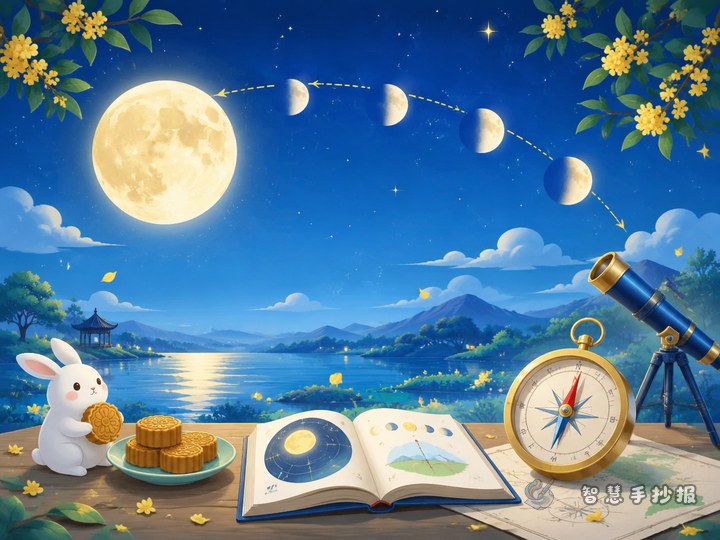
Use titles such as “Moon Phase Classroom,” “Mid-Autumn Moon,” or “Learn Moon Phases with a Rhyme.” Draw small osmanthus flowers, stars, clouds, rabbits, and mooncakes in the corners, but leave enough white space for clear text boxes.
Drawing Tips That Make the Rhyme Easy to Remember
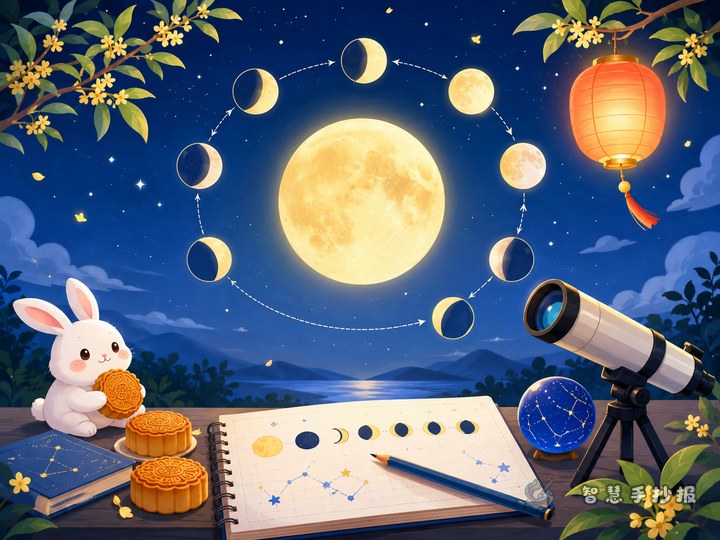
The most useful visual on a moon phase page is a sequence of circles. Arrange eight circles along a gentle arc to show the Moon growing from crescent to full and then shrinking again.
- Background: deep blue, purple, and pale yellow suggest night sky and moonlight.
- Text boxes: place black text on white or light yellow so it stays readable.
- Moon drawings: shade only the lit part of each circle instead of coloring the whole shape.
- Key lines: outline important dates and phase names in orange or gold.
Simple version and advanced version
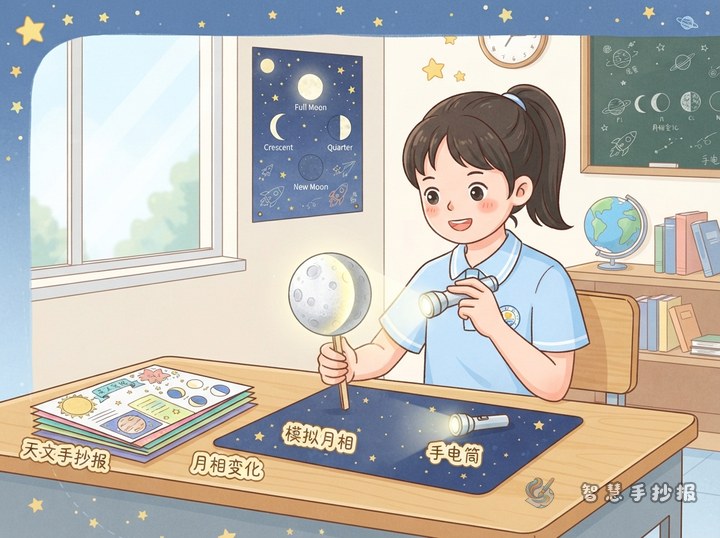
Younger students can draw the Moon circles and copy a short rhyme. Older students can add a small diagram of the Sun, Earth, and Moon, explain why phases change, and include a Mid-Autumn observation record.
From Draft to Finished Handwritten Newspaper
Start by dividing the paper into three areas: title and rhyme at the top, eight phase cards in the middle, and questions or observation notes at the bottom. After copying the text, add different shades of blue in the background and small yellow dots for stars and moonlight. The page will look layered and lively.
For more moon phase diagrams, Mid-Autumn borders, and layout references, open the “Smart Handwritten Newspaper” WeChat mini program and continue making your project.