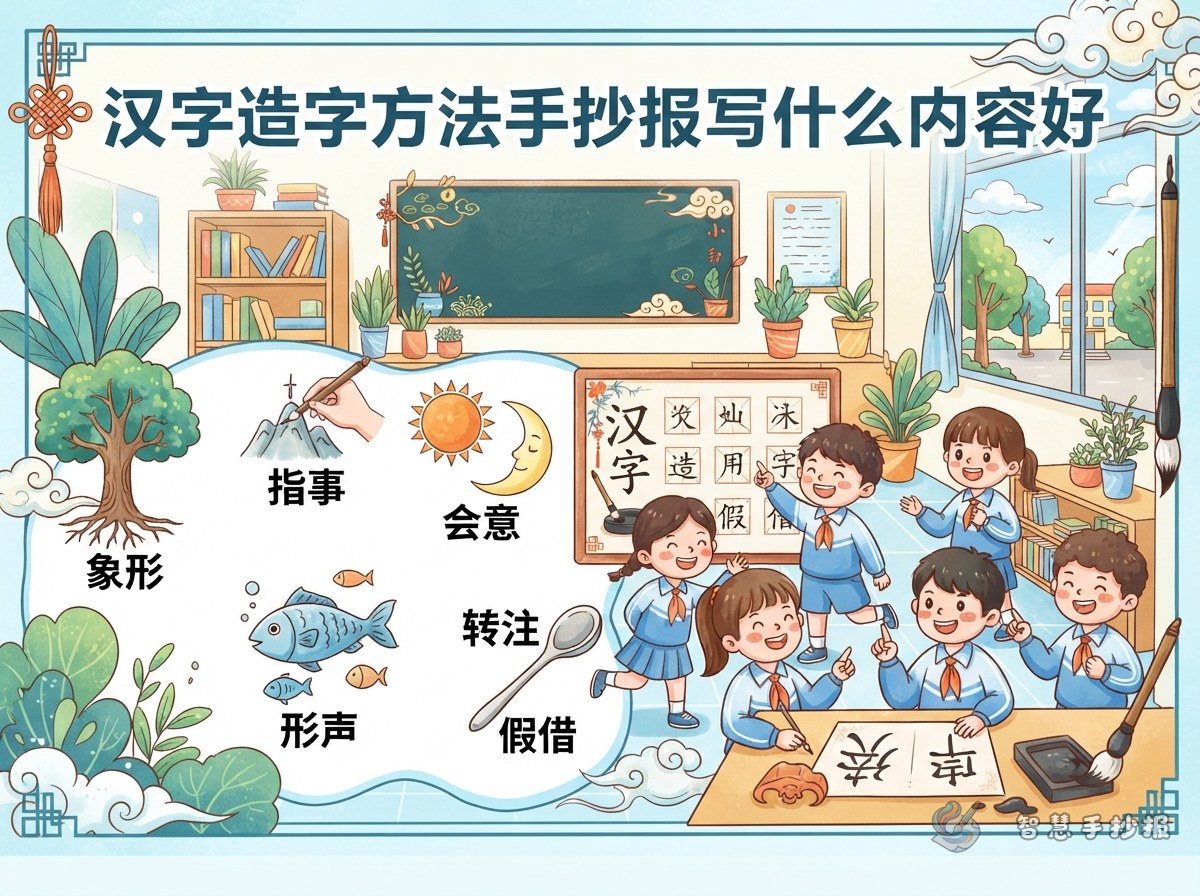
Begin with a Character Puzzle
Why does the character “休” combine a person with a tree, while “刃” adds a small mark near the blade of a knife? A character-formation poster can begin with questions like these. Place one simple visual puzzle near the title so readers immediately understand that the page explores how Chinese characters express shape, meaning, and sound.
Four Ways Characters Are Commonly Formed
Pictographs: Drawing the Shape of an Object
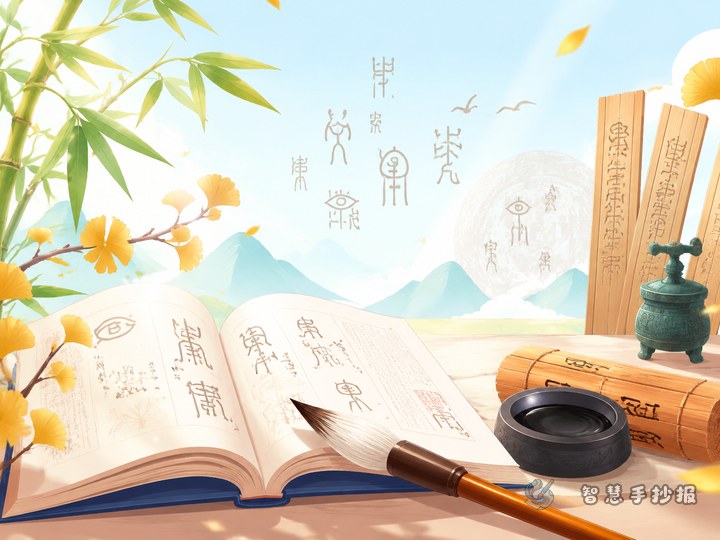
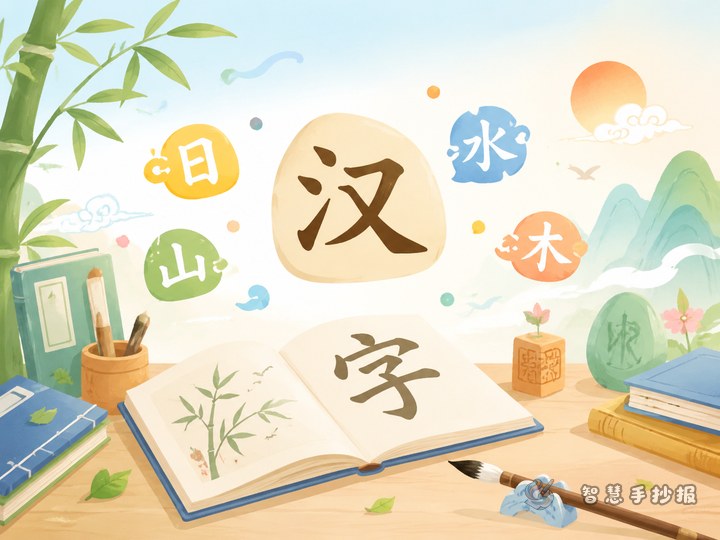
Pictographs began as simplified representations of visible things. For example, “日” represents the sun, “山” resembles mountain peaks, and “木” resembles a tree with branches and roots. Display an early form beside the modern character, but keep this section brief so the poster stays focused on character formation.
Indicatives: Pointing to an Idea
Indicative characters use simple marks to express positions or abstract ideas. “上” and “下” show relative position, while the extra stroke at the bottom of “木” in “本” points to the root and supports the meaning of origin or foundation.
Compound Ideographs: Combining Meanings
These characters combine meaningful parts. “休” can be understood as a person resting against a tree, and “林” uses two trees to suggest a grove. Use careful wording such as “can be understood as,” because a playful character breakdown is not always a complete historical explanation.
Phono-semantic Compounds: Meaning Plus Sound
These characters usually contain one part related to meaning and another that suggests pronunciation. In “清,” “晴,” and “情,” the component “青” provides a sound clue, while the other component points toward water, weather, or emotion. Turn this idea into a character-family matching activity.
Build Interactive Content Blocks
- Picture-to-character quiz: Draw the sun, moon, mountains, or trees and ask readers to identify the character.
- Character detective: Break down examples such as “休,” “林,” “本,” and “刃,” then label the role of each part.
- Character family: Group “清,” “晴,” “情,” and “请” around “青” and compare their meaning components.
- My discovery: Add two or three sentences about what the student noticed while comparing the characters.
Arrange the Page Like a Character Workshop
Place the main title across the top and divide the center into four areas for pictographs, indicatives, compound ideographs, and phono-semantic compounds. Put a quiz on one side, a character family on the other, and a short reflection along the bottom. Grid-paper lines, brushes, bamboo slips, and seal motifs make suitable decorations. Limit the palette to three or four colors and keep body text dark and easy to read.
Check the Content Before Inking
- Choose one or two clear examples for each formation method and verify every explanation.
- Sketch the sections in pencil, leaving enough space between text and illustrations.
- Write the main content before adding decorative details.
- Check characters, punctuation, spacing, and letter size before highlighting key terms.
To test different section arrangements quickly, continue the project in the 智慧手抄报 WeChat Mini Program and adjust the layout for the student's grade level and paper size.