Turn Shared School Items into Friendly Characters
Instead of presenting only formal rules, draw desks, books, windows, sports equipment, and plants as friendly campus characters. A title such as Care for What We Share or School Property Is Everyone’s Responsibility makes the purpose clear while keeping the poster welcoming.
Build the Page Around a School Property Map
Place a simple school scene in the center, then connect each area to a practical care tip. This creates a visual route through the poster.
- Classroom:Do not carve or draw on desks, open doors gently, and return cleaning tools after use.
- Library:Keep pages clean, avoid folding corners, and return borrowed books properly.
- Playground:Use equipment correctly, do not pull nets, and avoid climbing structures not designed for climbing.
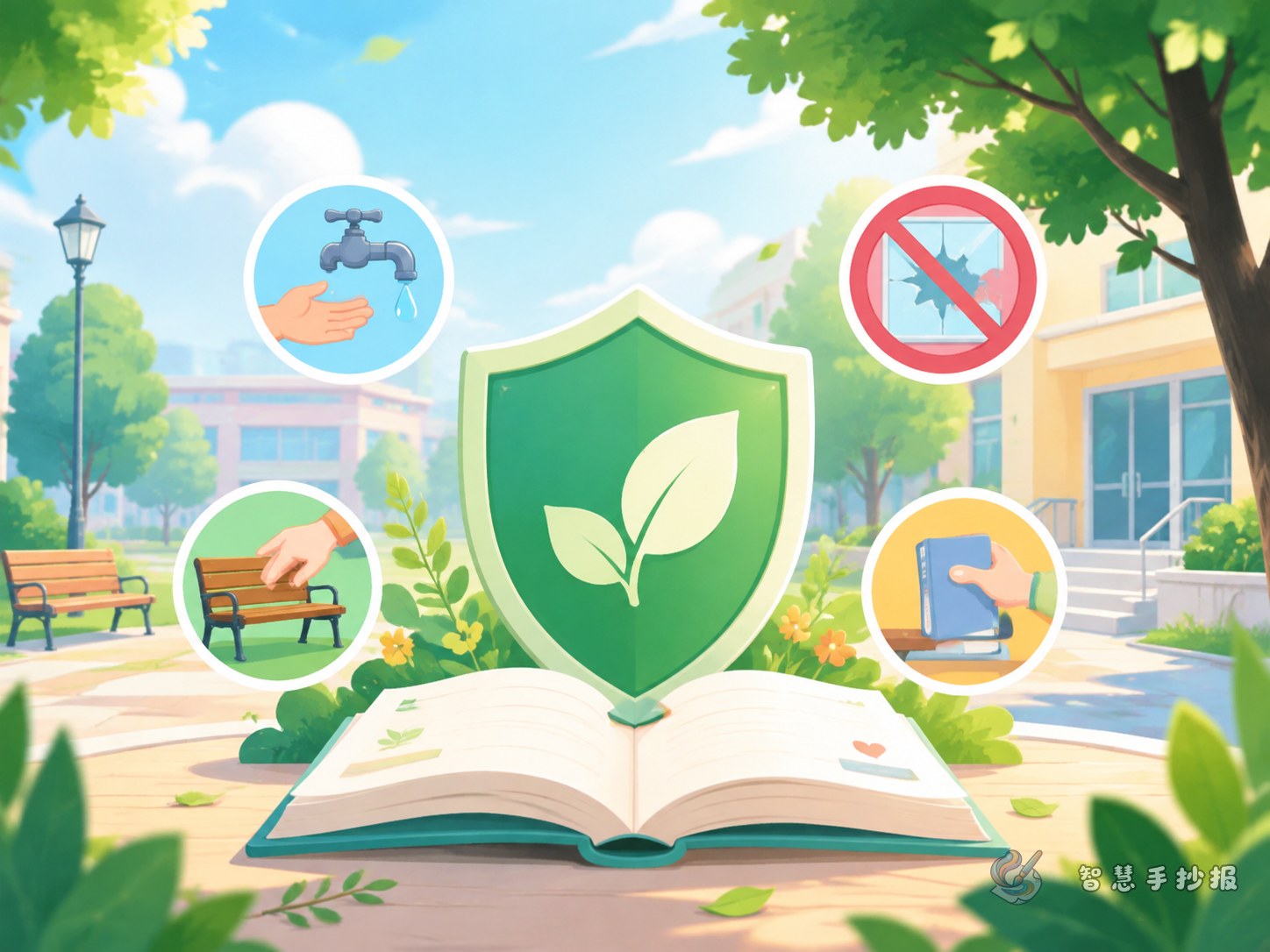
- Shared spaces:Protect plants, never play with fire safety equipment, and report damaged facilities to a teacher.
What If School Property Could Speak?
Short first-person messages make the rules more memorable and provide easy text to place beside drawings.
- The desk says, “Please keep my surface clean for every student who uses me.”
- The book says, “Turn my pages gently so I can be read many more times.”
- The basketball says, “Return me after the game so the next class can find me.”
- The tree says, “Let my branches grow, and I will give the campus shade.”
Create a Four-Step Care Promise
Replace vague reminders with actions children can follow. Four connected boxes can show the process clearly.
- Learn before using:Understand how an item should be handled.
- Use it carefully:Avoid dropping, hitting, or taking it apart.
- Return it neatly:Put shared materials back where they belong.
- Report a problem:Tell a teacher if something is damaged or unsafe.
Arrange the Poster Like a Campus Care Campaign
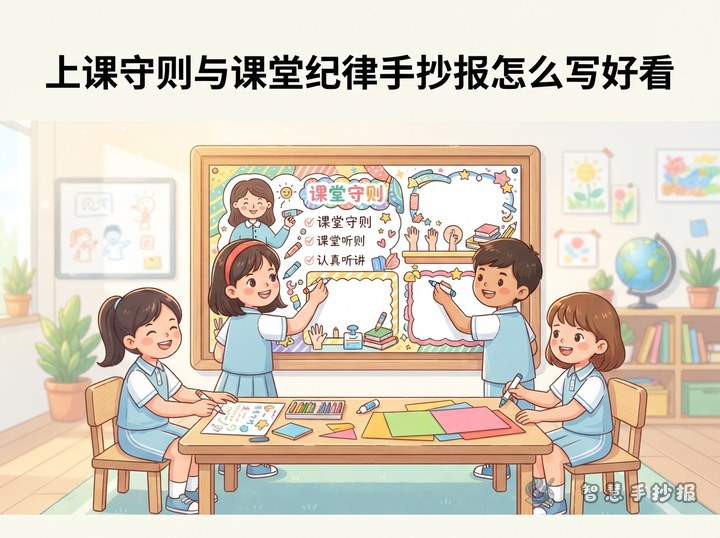
Put the main title across the top and a school illustration in the middle. Around it, add sections for the property map, behavior comparisons, speaking objects, and the care promise. Decorate borders with books, leaves, rulers, and stars. Blue and green can be the main colors, with a little orange or yellow for emphasis.
Short Slogans for the Final Corner
- Every desk and chair deserves thoughtful care.
- Use it gently, return it neatly, and share it responsibly.
- Care is not only a slogan; it appears in every small action.
After choosing the content, students and parents can continue arranging headings, sections, and illustrations in the Smart Handwritten Poster WeChat Mini Program, then adjust the balance of text and drawings before copying the final design onto paper.