Choose one central idea before you start drawing
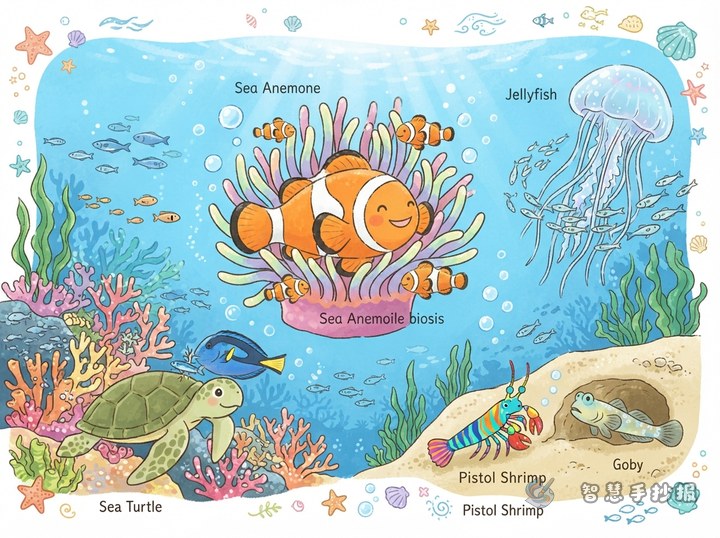
A marine animal handwritten newspaper does not need to include every sea creature. A focused theme makes the whole page easier to design. Good choices for students include Ocean Animal Collection, My Favorite Sea Friends, Deep Sea Adventure, or Protect Marine Life. If this is a school task, choose a theme with simple facts and easy drawings.
You can also make the title more vivid, such as “A Journey into the Ocean Kingdom” or “Meet the Amazing Creatures of the Sea.” A lively title makes the poster feel more interesting at first sight.
Smart section planning is better than writing too much
Three to five sections are usually enough for one handwritten newspaper. Here is a practical combination:
- Star Marine Animals: introduce 2 or 3 main animals.
- Where They Live: show their habitats such as coral reefs, shallow seas, or deep ocean zones.
- Fun Ocean Facts: add short and surprising facts.
- Protect the Ocean: include a small message about caring for marine life.
- Mini Quiz Corner: ask one or two simple questions.
This structure makes the page informative, lively, and suitable for classroom display.
Ready-to-use text ideas for students
Dolphin
Dolphins are smart and active marine animals. They often live in groups and swim very fast. They also use sounds to communicate with each other.
Sea Turtle
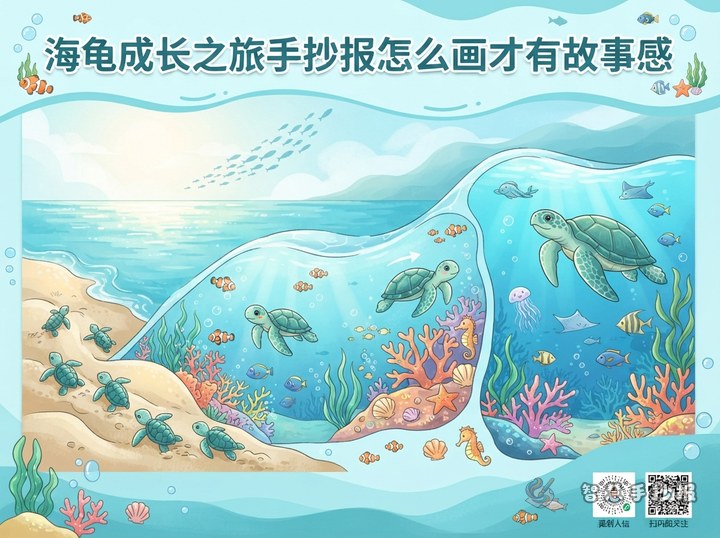
Sea turtles have hard shells and live in the ocean for most of their lives. They lay eggs on sandy beaches, and many people work to protect them.
Octopus
An octopus has eight arms and a soft body. When it feels danger, it can release ink to protect itself. It is one of the most interesting sea animals.
Short protection slogans
- Protect the ocean, protect our blue home.
- Do not throw trash into the sea.
- Care for marine life, starting from small actions.
Keep the writing short and friendly. A handwritten newspaper should be easy to read, not crowded with long encyclopedia-style text.
Make the page feel like an underwater scene
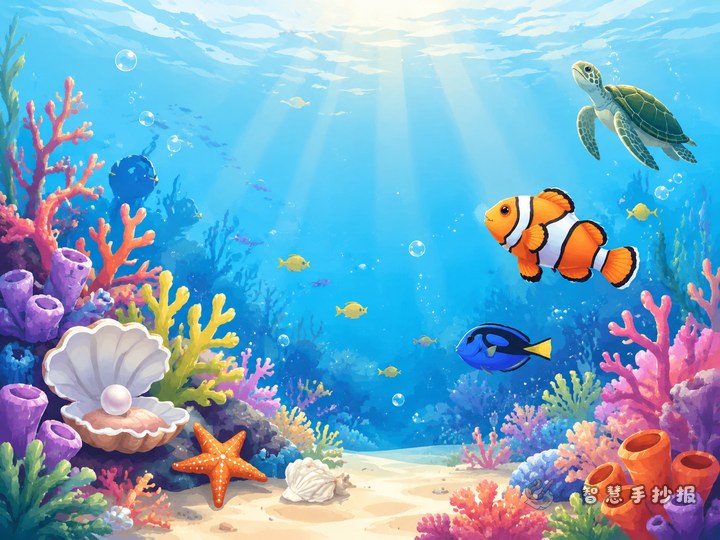
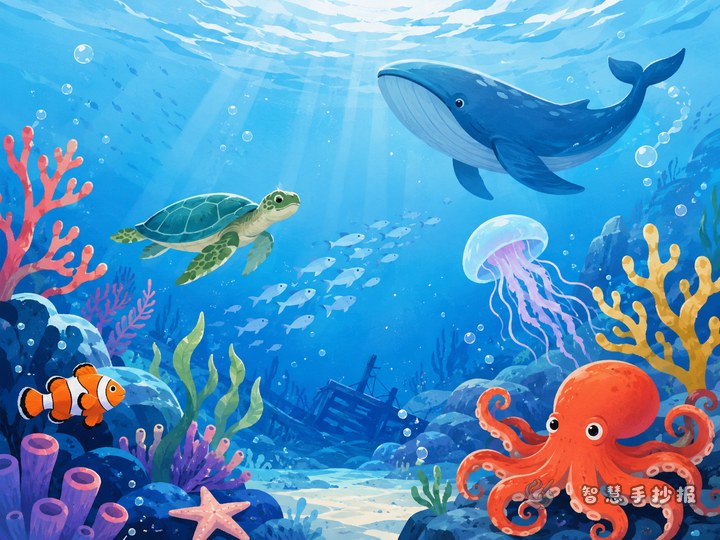
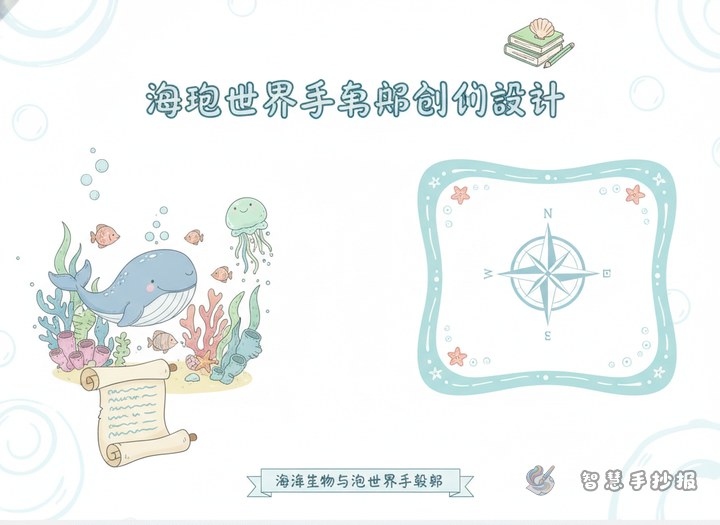
An ocean-themed poster looks great when the layout creates a scene. Put the title near the top center inside a wave-shaped frame. Place the main text sections on both sides and lower part of the page. Fill small spaces with coral, seaweed, bubbles, shells, and tiny fish.
- Put the title and the main drawing at the top.
- Place the key sections in the middle left and right areas.
- Use the bottom area for a quiz or protection message.
- Decorate the outer edge with waves or bubble borders.
If the page feels empty, use light blue background blocks in some sections, but leave enough white space so the poster stays clean.
Color choices and details make the final result better
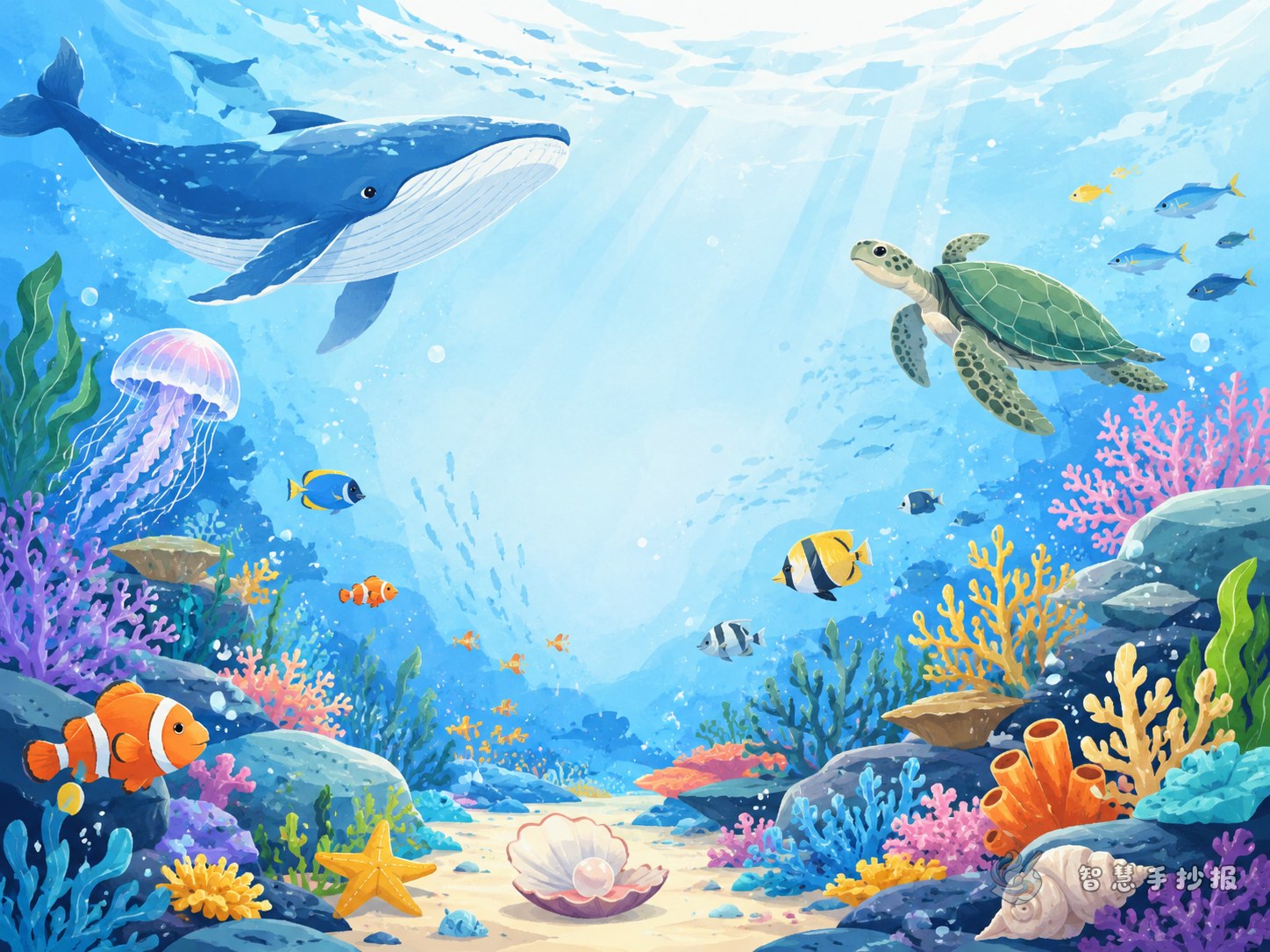
Blue, turquoise, and light purple work well as the main colors. Use yellow or orange for fish, coral, or starfish as highlights. Make the title brighter, while section backgrounds stay soft so the text remains clear.
- Use darker and lighter blue to show water layers.
- Give each section its own border shape, such as shell, bubble, or wave frames.
- Curve the title slightly to look like moving water.
- Add starfish, jellyfish, or shells in the corners for extra energy.
If you already know your theme and text, you can organize everything first and then continue making the final handwritten newspaper in the Zhihui Shouchao Bao WeChat mini program.
An easy final combination to follow
If you want a simple plan, use the title “Amazing Journey of Marine Animals,” draw a dolphin with small fish, and create four sections: animal facts, ocean fun facts, protect the sea, and mini quiz. Use wave and bubble decorations, and keep blue and green as the main colors. This combination is clear, balanced, and easy for students to finish well.