Decide what the page should highlight first
A balsam growth observation handwritten newspaper is most interesting when it shows what I planted, what I noticed, and what I learned. Instead of filling the page with general facts, focus on your own planting process and observations.
For students, a simple direction works best: What did I prepare? How did I plant it? What changed over time? What did I learn from taking care of the plant?
Section ideas you can use directly
Section 1: Getting ready to plant
Write about the flowerpot, soil, seeds, and watering tools. You can also mention that balsam likes sunlight and needs proper watering, so readers understand the preparation stage.
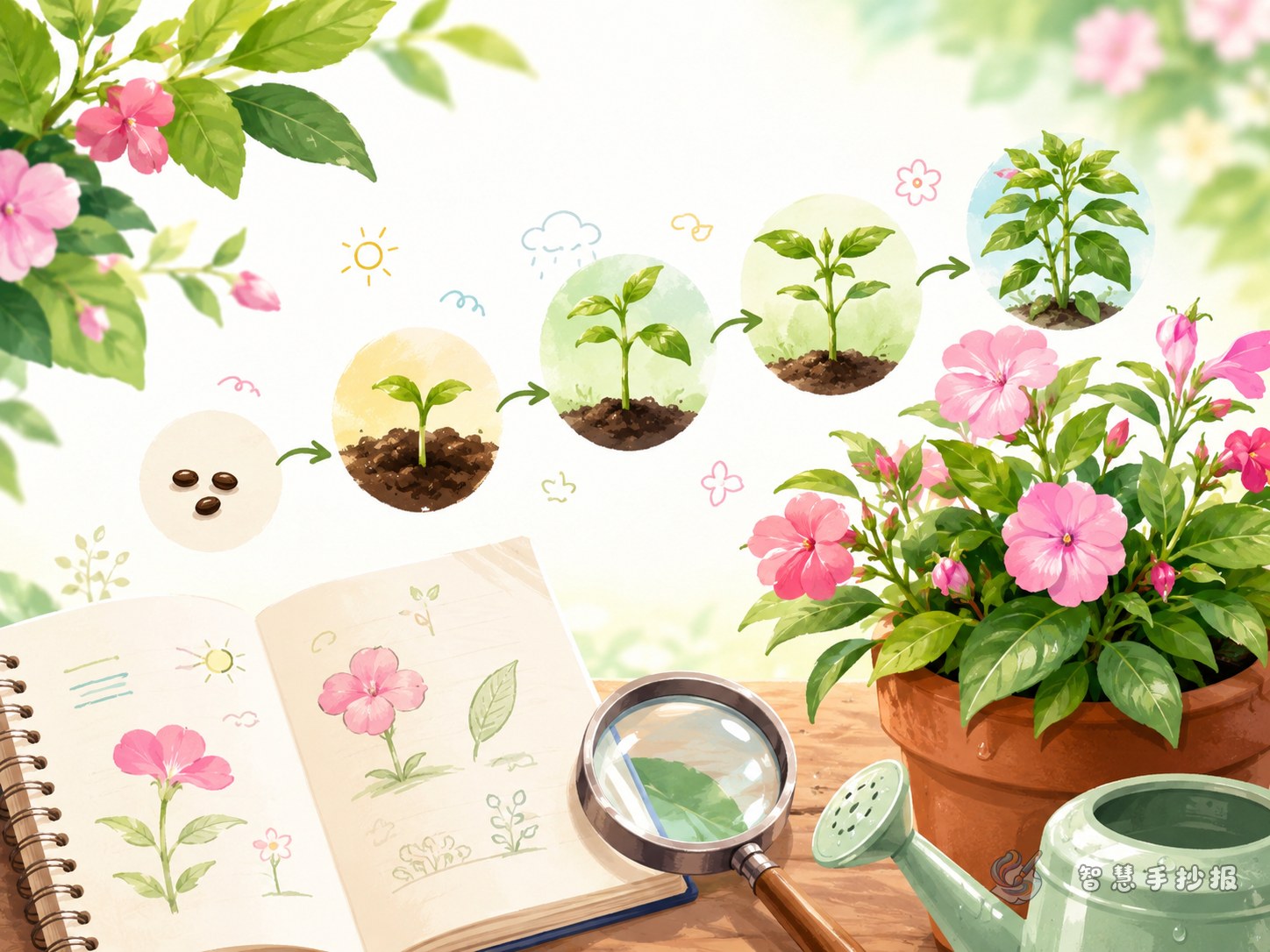
Section 2: Balsam growth timeline
- Day 1: Put the seeds into the soil and water gently.
- Day 3 to Day 7: Wait for sprouting and check the soil surface.
- After sprouting: Small green shoots appear.
- Leaf stage: More leaves grow and the color becomes deeper.
- Before and after flowering: Buds form and bright flowers begin to bloom.
Section 3: My observation notes
This section gives the page a strong hands-on feeling. You can record height changes, number of leaves, color changes, weather, and watering conditions. Even short notes can be very effective if they are specific.
Section 4: What I learned from growing balsam
You can write simple lessons such as not watering too much, placing the pot where it gets sunlight, and being patient while observing plant growth. This makes a natural ending for the page.
Ready-to-use writing material
Balsam is a common and easy-to-observe plant. From sowing to sprouting, from growing leaves to blooming, each stage shows clear changes. By planting balsam myself, I learned that plant growth needs sunlight, water, air, and careful attention. Careful observation helps us notice changes and feel the power of life growing little by little.
You can also add a short reflection like A tiny seed can bloom into a beautiful flower with patience and care. It works well at the end or in a blank decoration area.
Simple layout ideas that show the process well
Balsam is perfect for a process-based page design. Put the main title at the top, create a vertical or horizontal timeline in the middle, and arrange observation notes and fun facts around it. Finish with a short summary at the bottom.
- Use green, pink, and light yellow as the main colors.
- Make small headings in leaf or flower shapes.
- Keep observation boxes tidy so dates and notes are easy to read.
- Add simple drawings like buds, leaves, or a watering can in the corners.
How to make it feel personal instead of copied
The easiest way is to include your own real observations. For example, you might write that the leaves looked fresher in the morning, that rainy days kept the soil wetter, or that the buds appeared faster than expected. These details make the handwritten newspaper feel authentic.
If you are not sure how to arrange everything, you can first list your sections and notes, then continue improving the title, columns, and layout in the Wisdom Handwritten Newspaper WeChat mini program.