Start with a clear focus: turn the Great Wall into an easy-to-read poster
A Great Wall handwritten newspaper works best when it centers on four simple ideas: history, purpose, spirit, and protection. Instead of filling the page with too many facts, students can choose a clear theme such as The Great Wall in My Eyes, Great Wall Facts, or Protect the Great Wall. This makes the layout easier and keeps the page classroom-friendly.
Place the main title at the top center. You can add a smaller subtitle to connect it with traditional architecture and historic culture, making the whole page look both educational and visually focused.
What to write: short and clear text is easiest to copy
A simple introduction you can use
The Great Wall is a famous ancient Chinese structure and an important cultural heritage site. It stretches across mountains and hills, showing the wisdom and hard work of people in the past. The Great Wall was not only used for defense, but also represents perseverance and the spirit of the Chinese nation.
Fact boxes for small sections
- What is the Great Wall: A large ancient defensive project made up of walls, passes, and watchtowers.
- What are its features: It is built along mountain terrain, very long, and grand in appearance.
- Why is it famous: It has a long history and deep cultural meaning, and it is one of the symbols of Chinese civilization.
- What can we do: Learn history, visit politely, never carve on relics, and help protect historic sites.
A good closing sentence
The Great Wall is not just an old wall. It is a history book written across the mountains. Learning about it, valuing culture, and protecting historic places are meaningful actions for everyone.
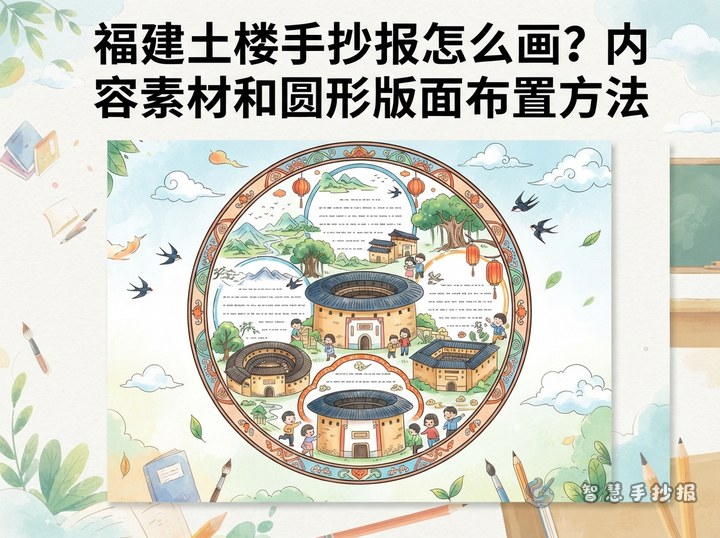
A simple layout: three areas are enough
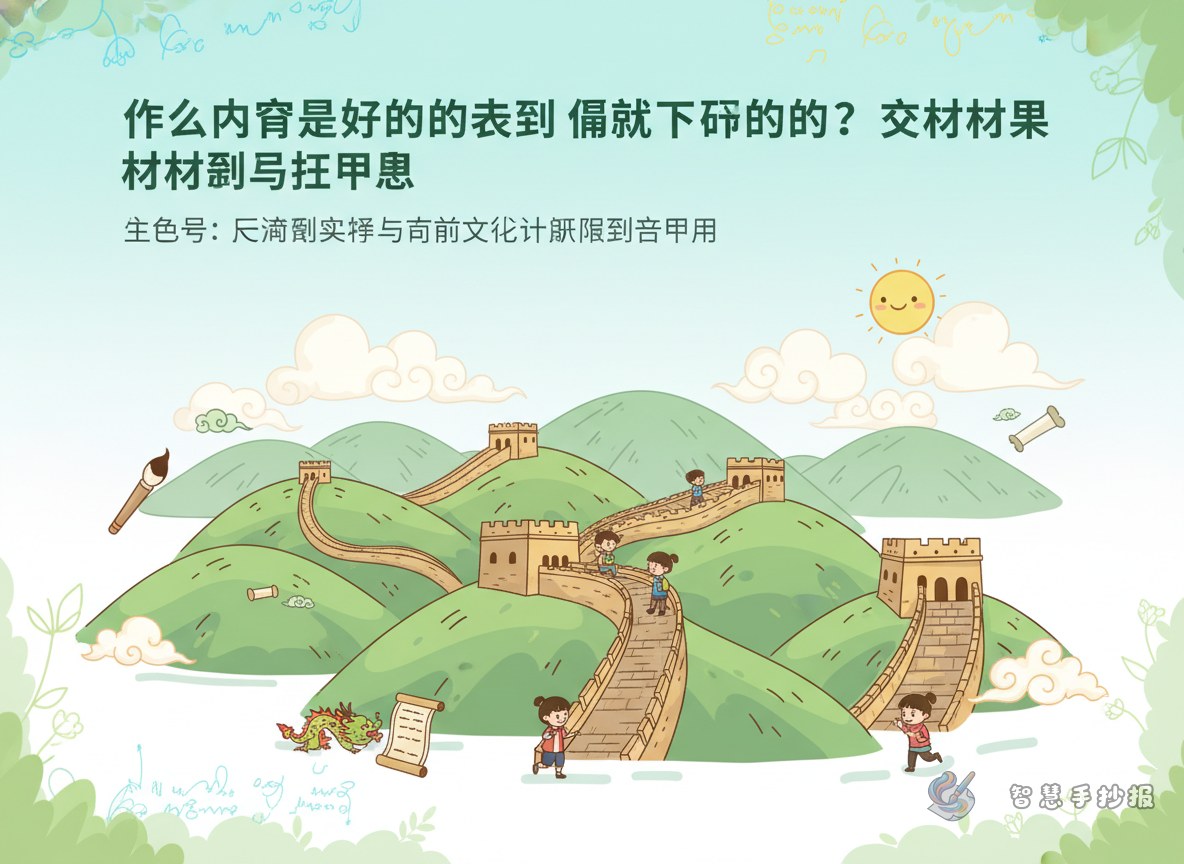
For an A4 page or a larger school poster sheet, try a layout with the title on top, knowledge in the middle, and reflections at the bottom. You can draw a winding Great Wall across the center and place text sections on both sides. This makes the theme stand out right away.
- Top area: Main title with mountains, clouds, or a wall-themed border.
- Middle area: Add three small sections such as introduction, fact cards, and cultural meaning.
- Bottom area: Write a protection message, a short reflection, or a final summary.
Good color choices include earthy yellow, brick red, dark green, and light blue. These colors match the historic feeling without making the page look messy. Text boxes can be shaped like bricks, scrolls, or little flags for extra style.
What to draw: simple decorations that match the topic
You do not need difficult drawings. A few easy elements are enough:
- Rolling mountain lines to show the Wall stretching far away.
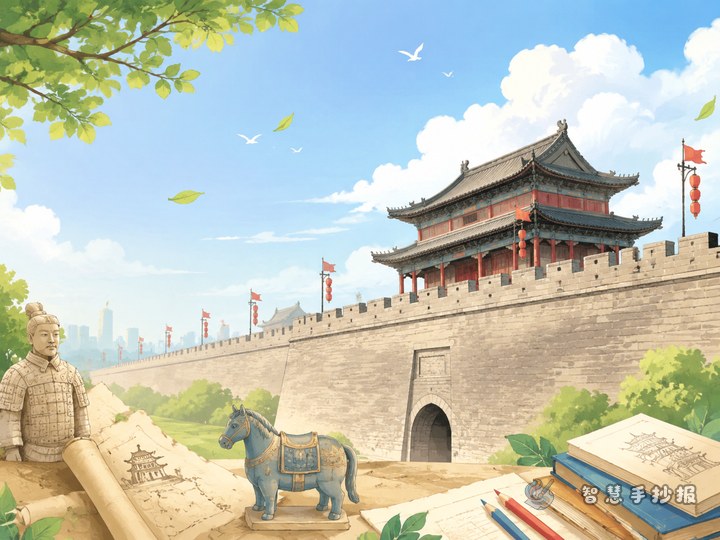
- Wall sections, watchtowers, and gates to highlight ancient architecture.
- Flags, clouds, birds, and the sun to make the page lively.
- Brick borders, traditional patterns, and stamp-style decorations for a neat look.
If drawing feels hard, sketch the outline first and then color in layers. If the page still looks empty, add a small section like “One sentence I want to say” or “Tips for protecting historic sites.”
Useful section ideas for students
- Section 1: Great Wall profile
- Section 2: Facts I know about the Great Wall
- Section 3: The spirit of the Great Wall
- Section 4: A message about protecting relics
- Section 5: My personal thought
If you want to keep improving the title style, borders, colors, and full-page layout, you can continue exploring ideas in the Zhihui Shouchaobao WeChat mini program.