Start with a title that creates a clear picture
A handwritten newspaper about Beijing siheyuan works well when it focuses on life inside a traditional courtyard, not just building names. Good titles include Exploring Beijing Siheyuan, The Charm of a Chinese Courtyard, or Traditional Architecture in One Courtyard. These titles feel natural and easy to develop into text and drawings.
You can begin with a short introduction: Siheyuan is a classic form of traditional Chinese housing. Rooms are built around a central courtyard, showing family closeness, order, and the beauty of courtyard life.
Build the page around the courtyard idea
This topic looks best with a center-focused layout. Draw a simple square courtyard in the middle, then place different content blocks around it so the page feels balanced and easy to read.
- Center: a simple siheyuan plan labeled with main house, side rooms, gate, and screen wall.
- Top left: “Architectural Features.”
- Top right: “Life in the Courtyard.”
- Bottom left: “Beijing Culture Notes.”
- Bottom right: “My View of Siheyuan” or “Protecting Traditional Buildings.”
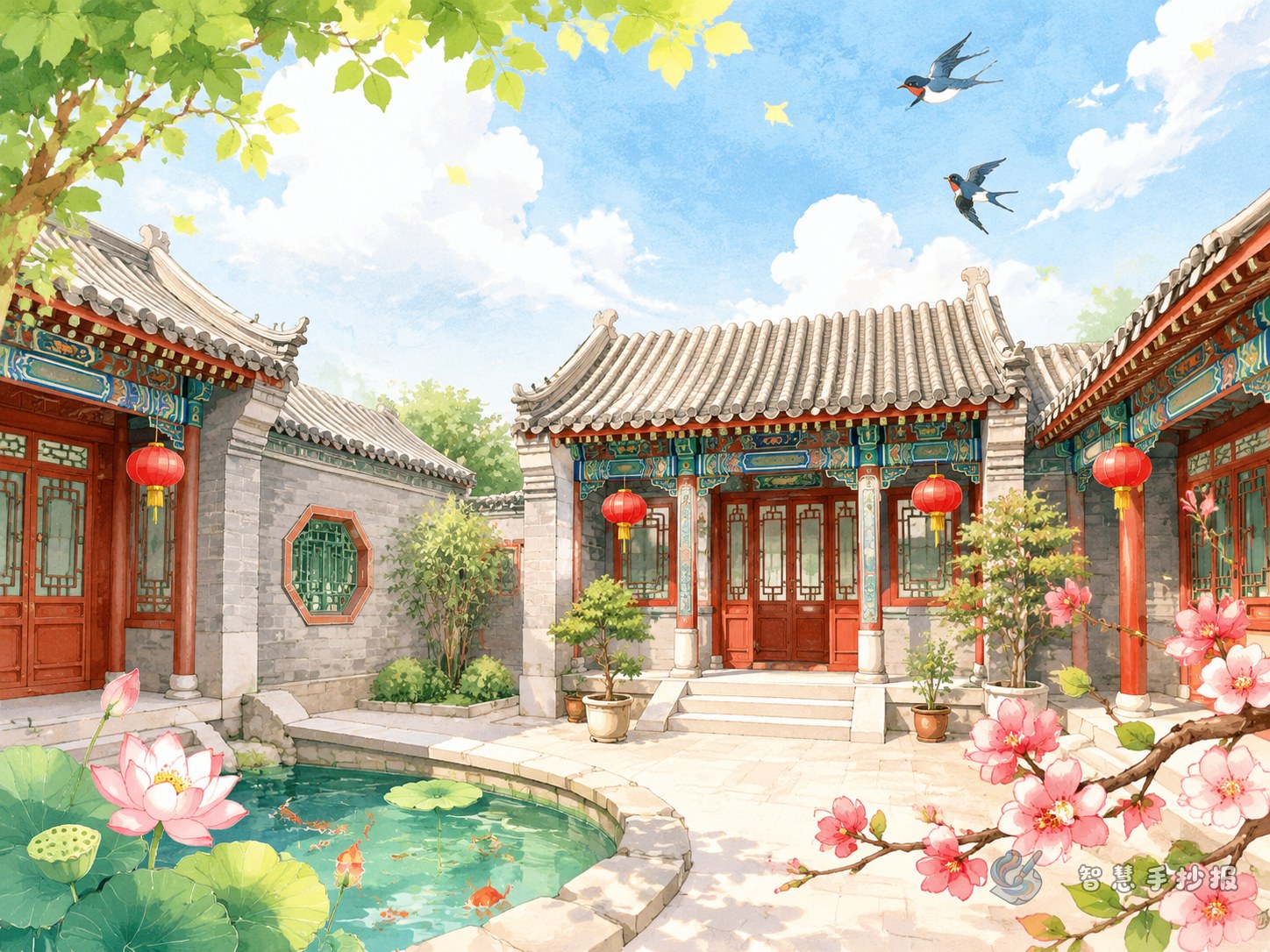
For decorations, use gray bricks, red gates, lattice windows, lanterns, roof tiles, and small trees. Colors like gray, red, brown, and dark green help create a traditional and calm feeling.
Ready-to-use text ideas for each section
Architectural features
A siheyuan usually has buildings arranged around one courtyard. The layout is neat and often symmetrical. The main house is commonly placed on one side, with side rooms on the east and west. The gate and screen wall also have their own functions. This design is practical for daily life and reflects traditional ideas of order.
Courtyard life
People in a siheyuan could plant flowers, enjoy the shade, talk with family, celebrate festivals, and experience the changing seasons in the courtyard. The yard is not only a living space but also a place full of family memories and neighborhood warmth.
Cultural meaning
Siheyuan is more than a style of architecture. It represents a way of life that values family harmony and closeness to nature. With trees in the yard and roof eaves around the home, people can feel the beauty of living together with the natural world.
Protecting traditional architecture
Learning about siheyuan is not only about admiring old buildings. It is also about understanding and protecting traditional culture. Caring for historic buildings and learning about old neighborhoods are meaningful ways to pass culture on.
Drawing and decoration ideas that make the page better
If the page feels too text-heavy, turn decorations into small “courtyard detail cards” to make the design livelier.
- Draw a red gate and add a short line about life inside the courtyard.
- Draw roof tiles and write keywords such as simple, orderly, and peaceful.
- Use a screen wall shape to place a theme sentence.
- Draw a pomegranate tree, persimmon tree, or potted plants to show the seasonal mood of the yard.
- Add lattice window patterns to decorate empty spaces.
Do not make every paragraph too long. Short sentences, key phrases, and mini-headings are easier for students to copy and make the page cleaner.
A simple ending students can write
You can end with a short reflection like this: Beijing siheyuan is like an open history book. It shows the wisdom of traditional Chinese architecture and the warmth of family life around one shared courtyard. Learning about siheyuan helps us understand the special charm of Chinese culture.
If you want to improve your title, border, or layout ideas, you can continue designing in the Zhihui Shouchaobao WeChat mini program for more handwritten newspaper inspiration and materials.