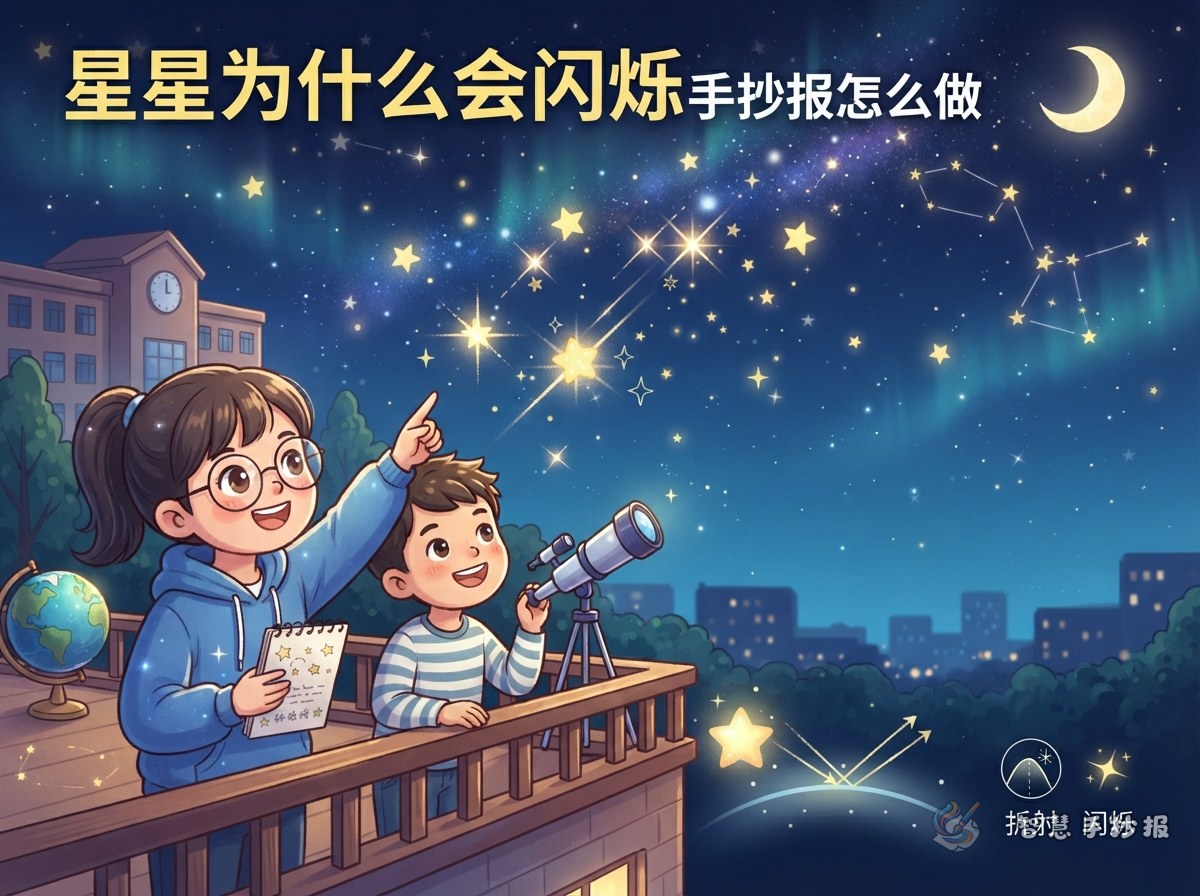
Start with a Question About the Night Sky
A handwritten newspaper about why stars twinkle works best when it begins with a simple question. You can open with: Stars seem to grow brighter and dimmer when we look at them. Are they really blinking? Then introduce the small changes that happen as starlight travels through the atmosphere. This creates a clear reading path from question to explanation, observation, and eye-care advice.
Turn Atmospheric Motion into a Simple Light Path
A three-step explanation
- Stars are very far away: After traveling an enormous distance, their light reaches us as a tiny point in the night sky.
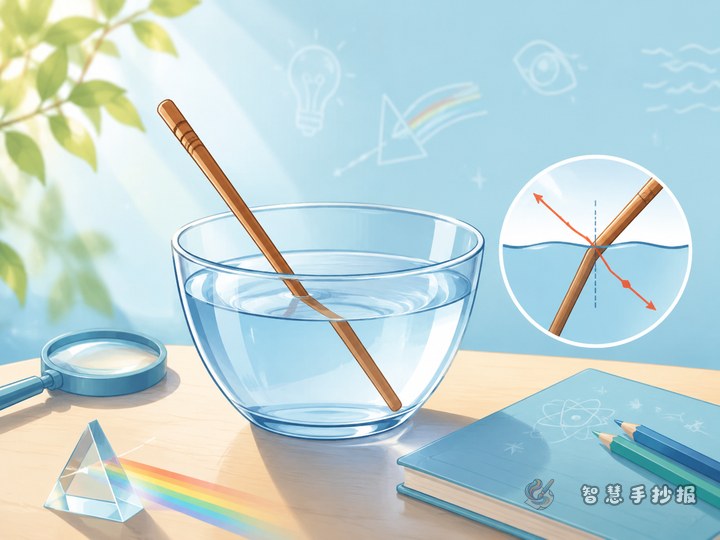
- The air is always moving: Air at different heights can have different temperatures and densities, so the direction of light changes slightly as it passes through.
- Our eyes see a flicker: These tiny changes make the star appear to vary in brightness and position, creating the impression that it is twinkling.
A paragraph you can use
Stars are not switching a light on and off. Their light passes through layers of moving air, much like light traveling through a gently rippling transparent surface. Its direction and apparent brightness change a little along the way. Planets often twinkle less because they appear more like small disks than single points, which makes a useful comparison for a night-sky project.
Design the Page Like a Night-Sky Map
Use dark blue as the main background and draw the night sky across the top. Place a curved path of starlight from a star toward the ground in the center. Put the twinkling explanation on one side and an observation panel on the other, then add eye-care tips along the bottom. Stars, air-flow lines, an eye, and a small telescope can serve as corner illustrations so that the pictures support the science.
- Place the title inside a moon-shaped or nebula-shaped frame.
- Highlight key words in yellow or orange to create a star-light effect.
- Keep each science paragraph short and separate ideas with small star marks.
- Draw the observation panel as a simple table for date, weather, direction, and visual impression.
Add an Observation Panel Without Special Equipment
- On a clear evening, observe the sky with a parent nearby and choose a place with limited artificial light.
- Pick a bright star and watch it for a short period. Notice whether its brightness seems to change.
- Compare it with another bright point that appears more steady.
- Write two or three sentences about what you noticed. Careful observation matters more than professional measurement.
Add an open question beside the record: Would twinkling be easier to notice when the air is moving more strongly? A question like this gives the handwritten newspaper a sense of discovery.
Finish with Color, Balance, and Eye-Care Advice
Combine dark blue, purple, and black with yellow and white to suggest the night sky and starlight. Sketch the sections in pencil first, then add the title, borders, and color. Leave enough empty space so the words stay easy to read. At the bottom, include reminders such as taking breaks, never looking directly at the Sun, and following a parent or teacher when using a telescope. For quick help with arranging sections and layouts, continue creating in the 智慧手抄报 WeChat Mini Program.