Begin with a beam of light
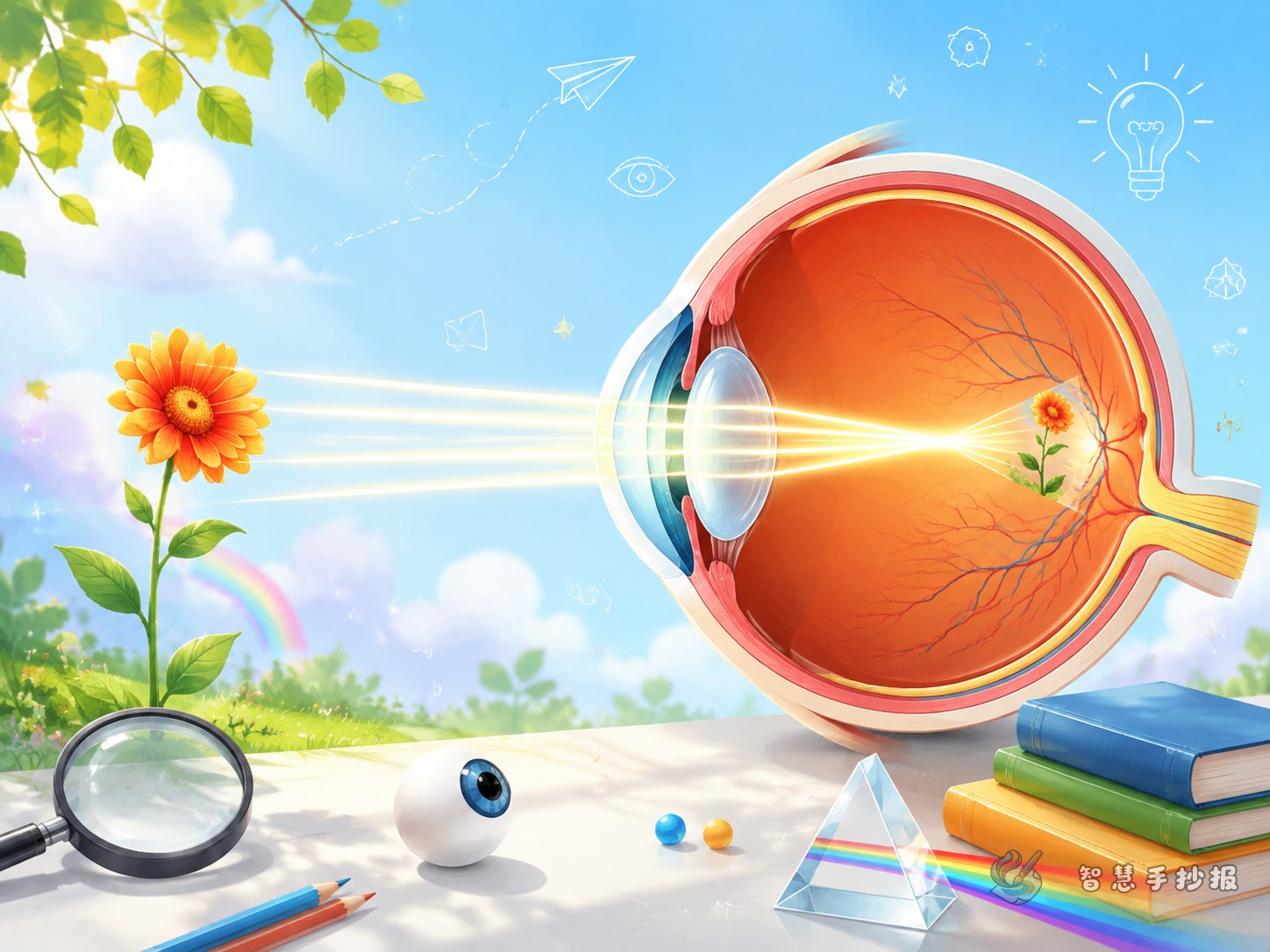
This science poster can answer one central question: how does light from an object pass through the eye and become a clear picture in the brain? Place a visual path across the middle of the page, connecting “object–eye–brain,” so readers can understand the idea from the drawing before reading the details.
- Light enters: Light given off or reflected by an object enters the eye, while the cornea helps bend the light.
- Light is controlled: The pupil works like a small window and changes size according to the brightness.
- The image is focused: The lens changes shape and helps focus the light on the retina.
- Information reaches the brain: The retina receives the light signals, and the optic nerve carries them to the brain. That is when we truly see the object.
Four small sections that explain vision
1. A mini visual story
Draw a short sequence showing a child reading. Light reflected from the page enters the eye, and the brain recognizes the letters. A useful caption is: “Seeing is teamwork between light, the eyes, and the brain.”
2. An eye-structure card
Draw a simple cross-section of an eyeball and label the cornea, pupil, lens, retina, and optic nerve. Give each part one short function. Short labels will keep the poster clear and easy to read.
3. A visual science quiz
- Why is it hard to see in a dark place? Less light enters the eye, so the retina receives less information.
- How can we see both near and far objects? The lens adjusts its shape so light from different distances can be focused as well as possible on the retina.
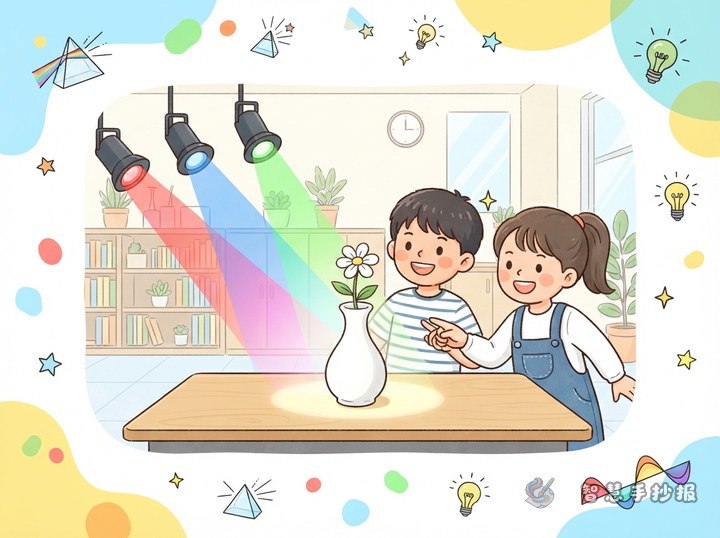
- Where do colors come from? Different objects reflect different light, and the eyes and brain use that information to recognize colors.
Design the page like a visual journey
Try a left-to-right layout with the light source on the left, a large eye in the center, and the brain on the right. Put the title near the upper left, use the biggest space for the eye diagram, and reserve the bottom for the quiz and eye-care tips. Yellow or orange arrows can show the path of light, while blue and green can make the eye diagram feel fresh and calm.
For a smaller sheet, divide the page into three areas: a process diagram at the top, an eye-structure explanation in the middle, and practical eye-care reminders at the bottom. This gives the poster both scientific information and enough open space for decoration.
End with practical eye-care habits
Create a “My eye-care promises” section near the bottom. It can include keeping a comfortable reading posture, studying in gentle light, taking regular breaks from screens, looking into the distance from time to time, and never staring directly at strong light or a laser. Keep these tips short and specific instead of using only general slogans.
After planning the text and layout, you can continue in the WeChat mini program “智慧手抄报” to arrange the sections, choose colors, and complete the poster. The visual path “light enters the eye–the retina receives it–the brain recognizes it” will then be easy to follow on the page.