Start with an artifact that can tell a story
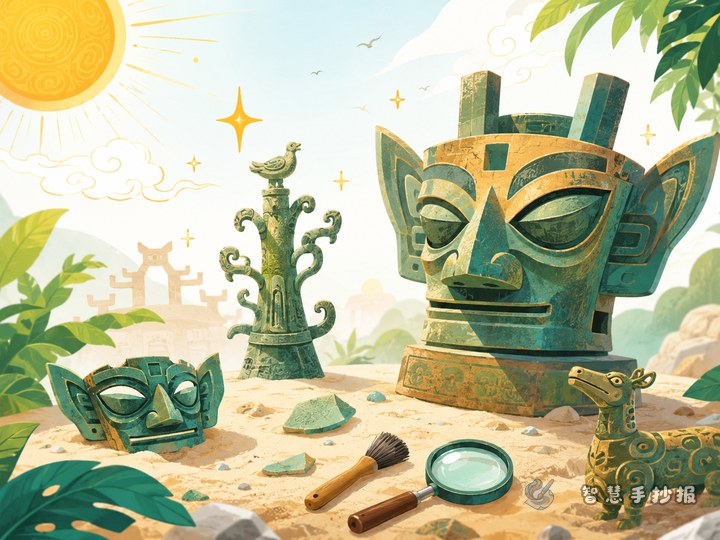
For a poster about your favorite museum artifact, it is better to focus on one object and one story instead of listing too many facts. Good choices for students include bronze ware, terracotta figures, porcelain, ancient coins, oracle bones, or jade pieces. These are easy to introduce and simple to decorate with drawings.
You can use titles such as “Listening to History in a Museum,” “My Favorite National Treasure,” or “What One Artifact Tells Us About the Past.” A clear topic makes the whole poster easier to organize.
Use four simple sections to fill the page well
Section 1: Artifact profile
- Name of the artifact
- Historical period
- Material
- Main use or special feature
This part works well in the top corner of the page because it is short and neat.
Section 2: What history does it reveal
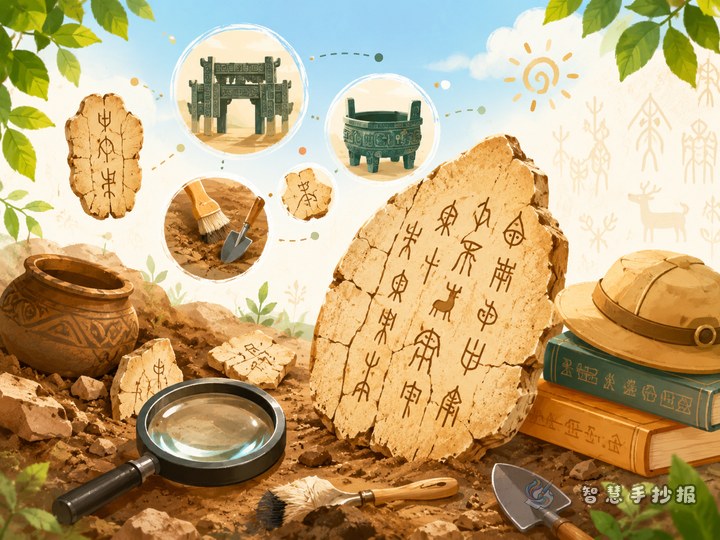
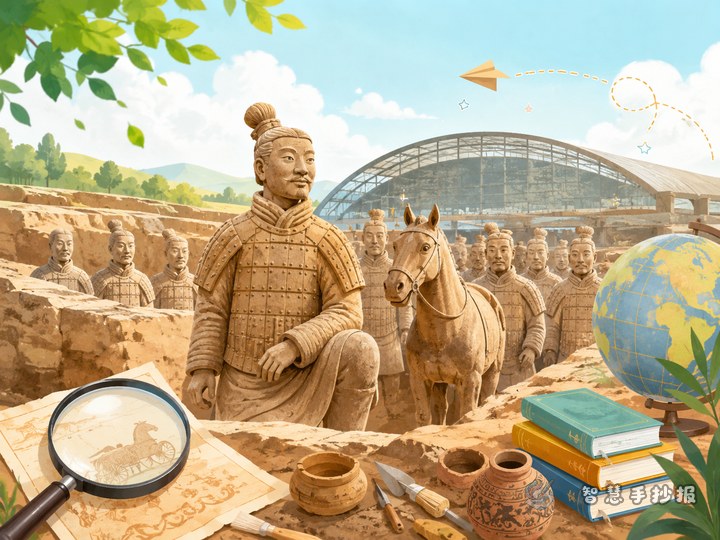
Instead of only giving facts, explain why the artifact matters. For example, oracle bones help us understand early writing, terracotta warriors show ancient military organization and craftsmanship, and porcelain reflects daily life and artistic taste. Sentences beginning with “It helps us know...” are easy for children to use.
Section 3: The story behind it
You may write a short paragraph about where it was discovered, the period it belonged to, or how it connected with people’s lives in the past. Keep this part brief and lively.
Section 4: My thoughts after learning about it
This section makes the poster feel personal. Students can write what impressed them most, what they admire about ancient people, or why protecting cultural relics is important today.
Ready-to-use lines for the poster
- An artifact is not just an old object. It is evidence left by history.
- Walking into a museum is like opening a three-dimensional history book.
- Every cultural relic records ancient wisdom, beauty, and daily life.
- Protecting artifacts means protecting our cultural memory.
- History is not far away when we can see it through real objects.
If there is still empty space, you can add a small box about museum manners, such as speaking softly, not touching exhibits, and reading the display notes carefully.
Make the layout feel like a museum route
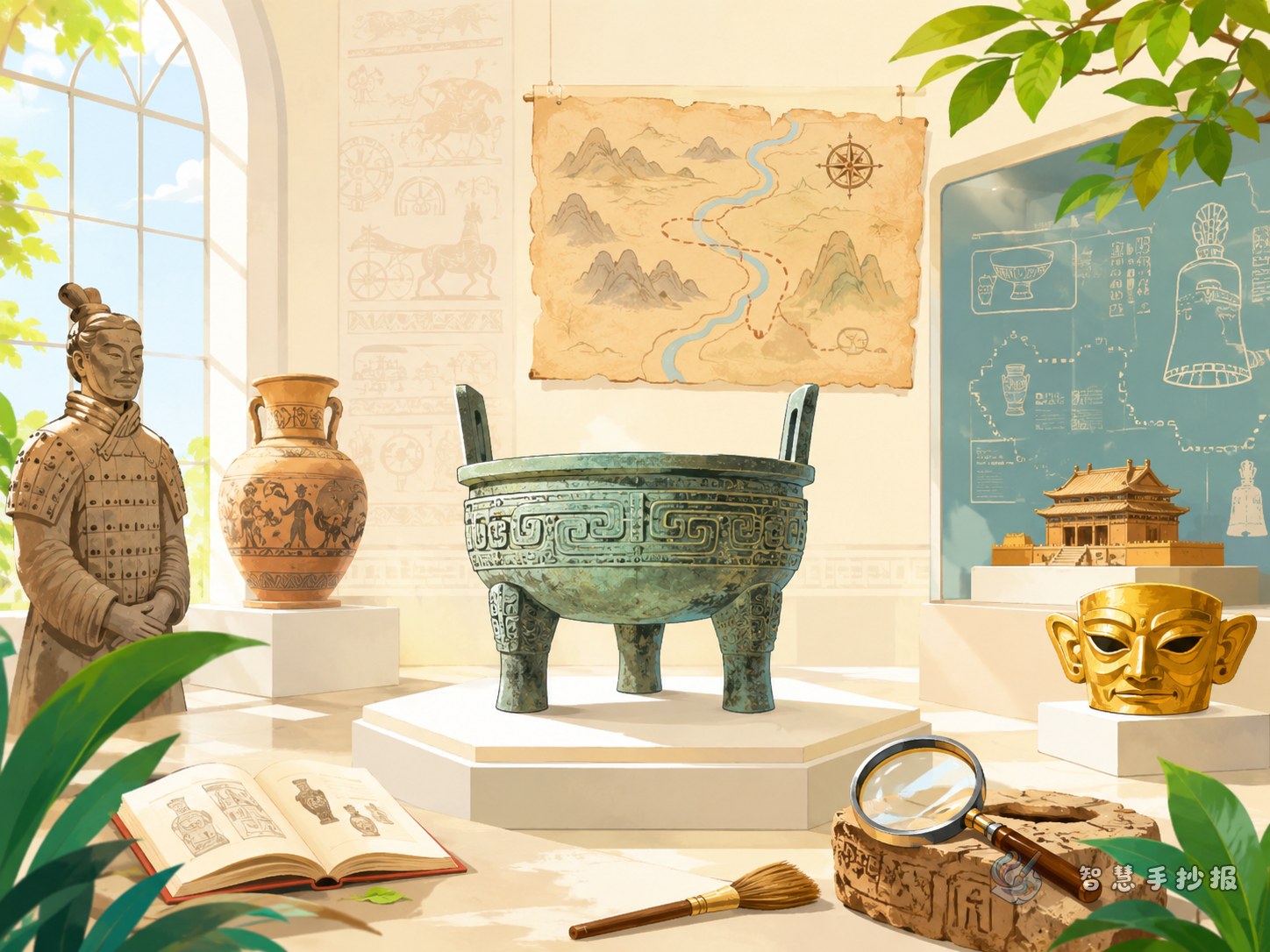
This kind of poster looks great with a layout that feels like moving through an exhibition. Put the main title in the center, then arrange the four sections around it. Decorative borders can use scroll lines, bronze-style patterns, seal shapes, or simple antique frames, but keep them light so the page does not become crowded.
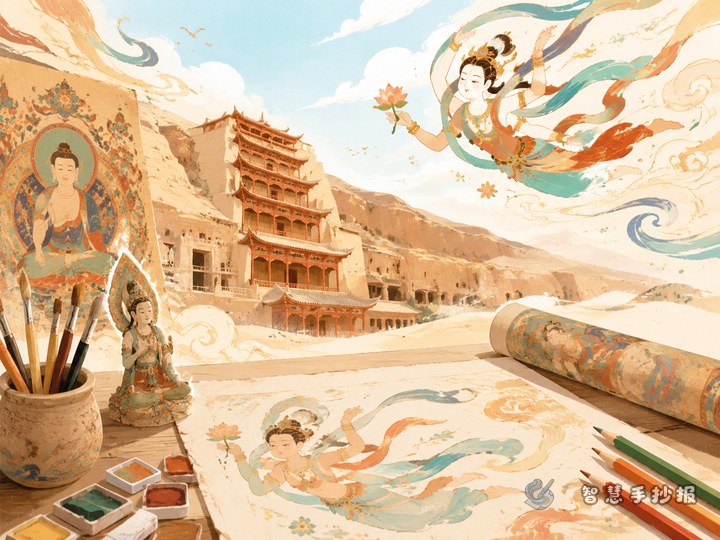
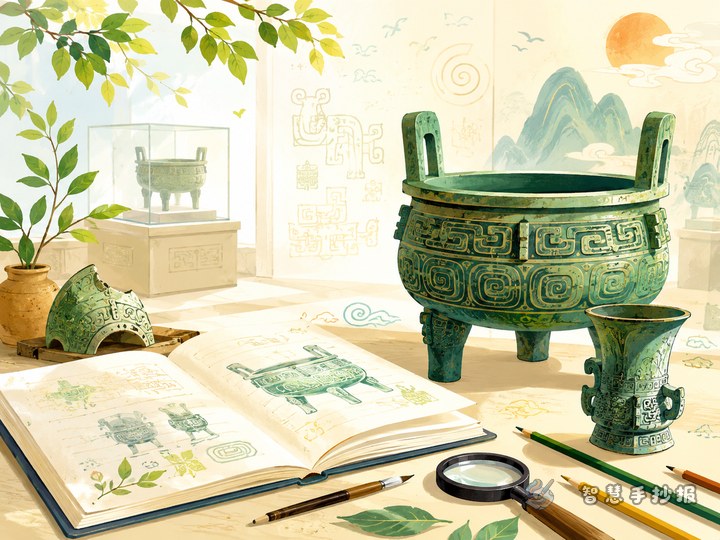
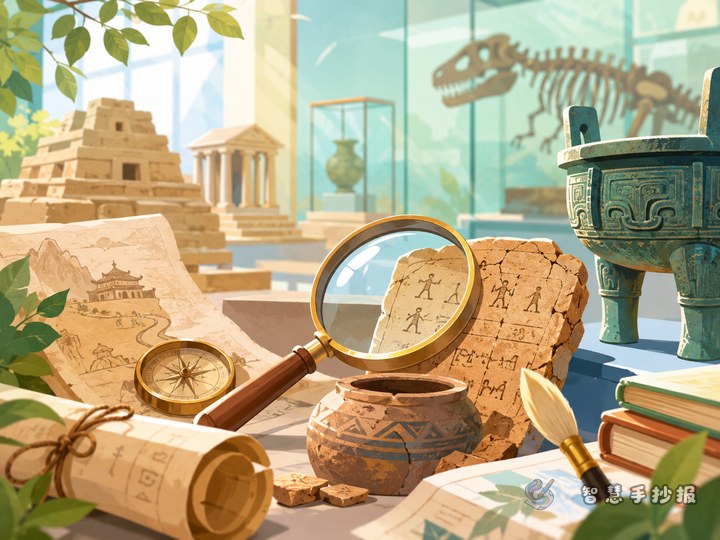
Colors such as earthy yellow, green, dark red, and deep blue can create a historical feeling. Small drawings of a museum building, display case, tripod vessel, pottery jar, jade ornament, or old map can strengthen the theme.
Write like a student, not like an encyclopedia
A good handwritten poster does not need long paragraphs. Keep each paragraph to two to four sentences and highlight key words with bold text. Instead of copying long passages, rewrite them in simple ways such as “I learned that...” or “This artifact tells us...”. That style is clearer and more suitable for classroom display.
If you already know your artifact but still need help arranging sections, title ideas, or page design, you can continue organizing your work in the Zhihui Shouchaobao WeChat mini program.