Turn the Topic into a Food Journey
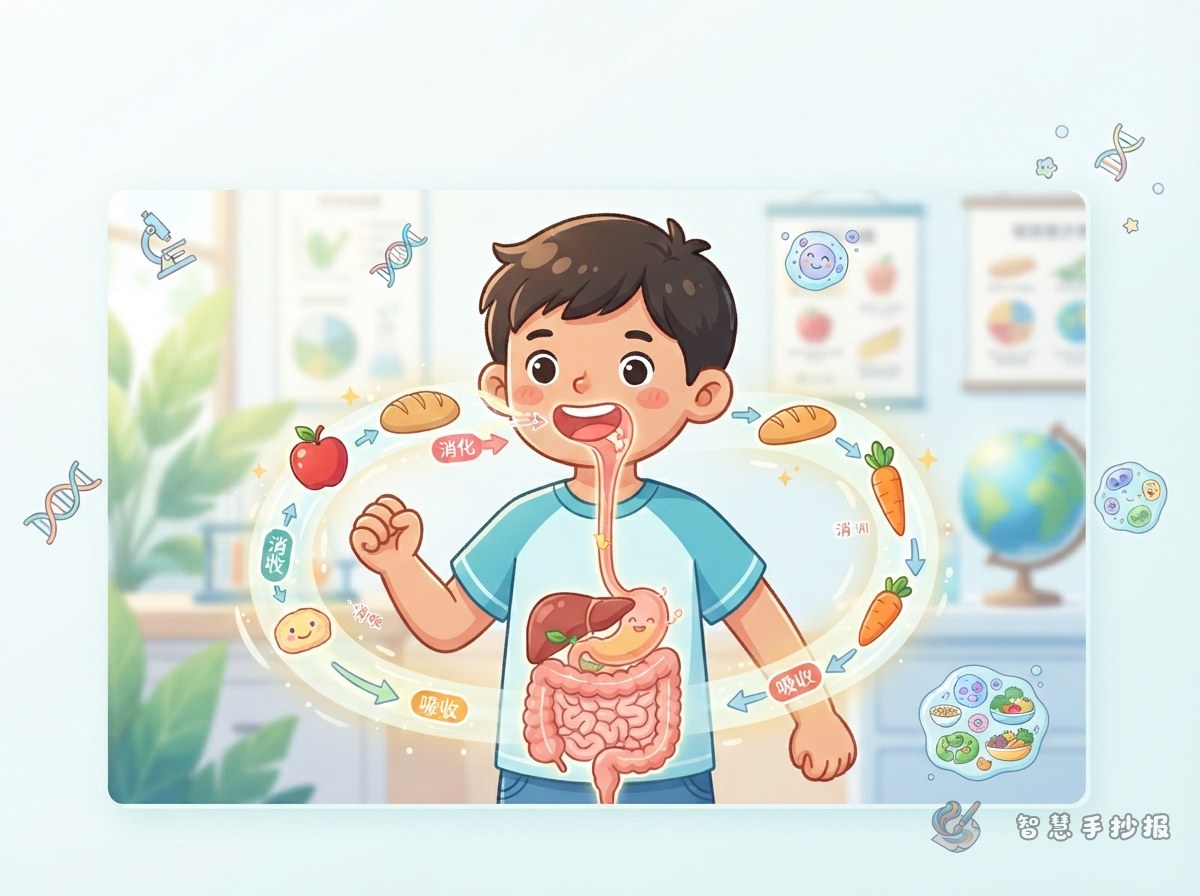
This handwritten newspaper can begin with a fun question: after we swallow a bite of food, where does it go? Design the page as a map of a journey through the body. Use arrows to connect the mouth, esophagus, stomach, small intestine, and large intestine. Small drawings of chewing, mixing, absorbing, and removing waste will make the process easy to follow.
- Main title: What Happens to Food Inside the Body?
- Central drawing: A winding digestive tract showing the order food follows.
- Decorations: Add small pictures of apples, rice, bread, and vegetables to connect the science to everyday life.
Text Ideas for the Five Digestive Stations
Station One: The Mouth
Teeth cut and grind food into smaller pieces. The tongue helps mix food and move it for swallowing, while saliva makes it wet and begins the digestive process. A tooth and a small piece of food can illustrate this section.
Station Two: The Esophagus
The esophagus is a passage that carries swallowed food to the stomach. A simple downward arrow is enough to show its transporting job without filling the page with difficult details.
Station Three: The Stomach
The stomach stores food for a while and mixes it with digestive juices through its movements. You can draw the stomach as a little pouch that is gently stirring its contents.
Station Four: The Small Intestine
The small intestine is an important place for digestion and absorption. Many nutrients are broken down and absorbed there. Make its long, winding shape a visual focus and label it “nutrient absorption.”
Station Five: The Large Intestine
The large intestine absorbs some water and helps form and hold the remaining waste. Keep this section simple so the route ends with a clear and tidy conclusion.
Add the Helpful Organs Behind the Scenes
Create an “organ profile” box beside the main route for the liver, gallbladder, and pancreas. The liver makes bile, the gallbladder stores bile, and the pancreas releases fluids that help digestion. These organs are not passages that food travels through, but they support the digestive process.
- Fact card: Liver — an important helper in digestion.
- Quick question: Why does food not finish digestion in the stomach? Different organs have different jobs, and many nutrients still need to be digested and absorbed in the small intestine.
- Healthy habit: Eating regularly, chewing slowly, and choosing a balanced variety of foods can support good eating habits.
Use the Layout to Guide the Reader
A useful layout is a title in the upper left, the digestive route in the center, and small fact cards around it. Use orange or yellow to highlight the food route, green for vegetables and healthy tips, and blue for organ names. Limit the palette to three or four colors. Write only one or two key sentences beside each organ so the page remains open and readable.
For a horizontal sheet, make the route a left-to-right challenge map. For a vertical sheet, turn it into a top-to-bottom body adventure. Keep the arrows consistent and place each organ name inside a colorful frame so readers can understand the picture before reading the details.
Final Checklist Before You Finish
- Does the title clearly show both the food journey and the digestive system?
- Are the mouth, esophagus, stomach, small intestine, and large intestine in the correct order?
- Does each organ have a short and easy-to-understand explanation?
- Are the liver, gallbladder, and pancreas placed in a helper section rather than on the food route?
- Are the arrows, colors, and lettering easy to read from a distance?
To make the page easier to complete, sketch the route and section boxes first, then copy the text and add illustrations and borders. You can also open the “智慧手抄报” WeChat mini program to continue arranging this digestive system handwritten newspaper.