Set the Theme: What “Cultural Exchange” Means on Your Poster
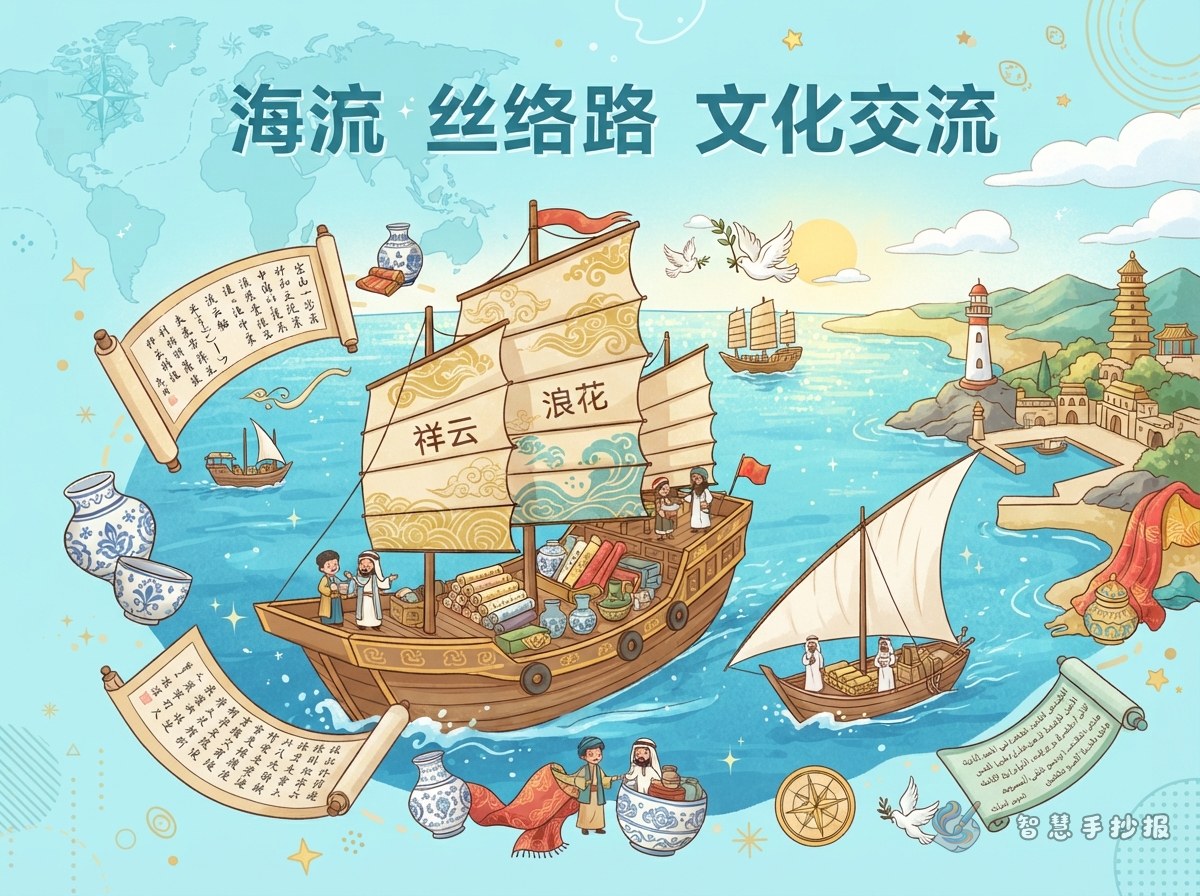
The Maritime Silk Road was not only a route for goods. It was also a route for people, ideas, and skills. If your handwritten newspaper only says “silk and porcelain were shipped,” it may feel thin. Try a column title such as “Exchange Across the Sea” and focus on three things: what China sent out, what came in from overseas, and how daily life changed on both sides.
- Sent out: silk, porcelain, tea, papermaking ideas, printing knowledge.
- Brought in: spices, jewels, glassware, crops, music, and dance.
- Changed together: foreign communities in port cities, shared shipbuilding methods, new foods, and new words.
This gives the page a clear sense of exchange instead of a simple list of goods.
Four Kinds of Material You Can Draw and Write About
Goods That Traveled Both Ways
Draw a simple balance scale or two arrows. On the left, write Chinese exports such as porcelain and silk. On the right, write goods from overseas such as spices, pearls, and glassware. Simple outlines with labels are enough.
People Who Met at the Ports
Draw three silhouettes: a Chinese merchant, an Arab merchant, and a Southeast Asian sailor. Add a line like “They brought goods, and they also brought stories and skills.” Place them in front of waves and a sailing ship.
Skills and Tools Shared at Sea
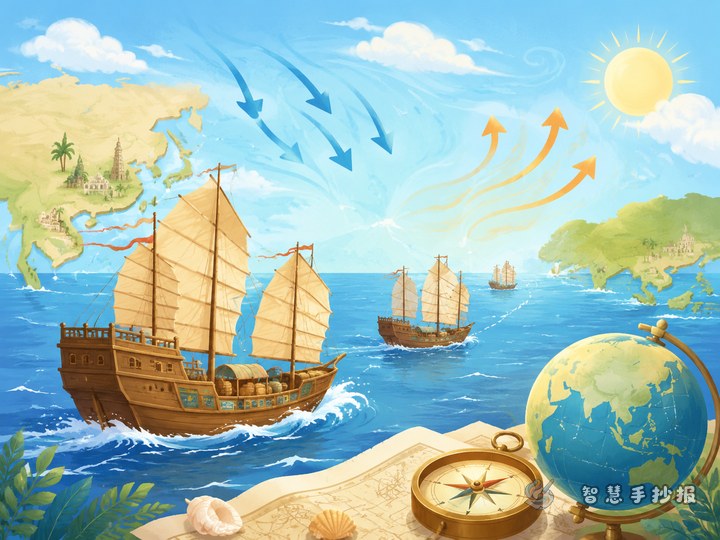
Write about watertight compartments, the compass, and monsoon knowledge. These skills were used and improved through contact across the sea. You do not need to explain them in a technical way; just show that people learned from one another.
Everyday Culture: Food, Music, and Beliefs
Choose one or two easy examples, such as spices entering Chinese kitchens or new instruments appearing in port cities. Add two sentences to show that exchange can be found in daily life.
Layout Ideas That Show Two-Way Movement
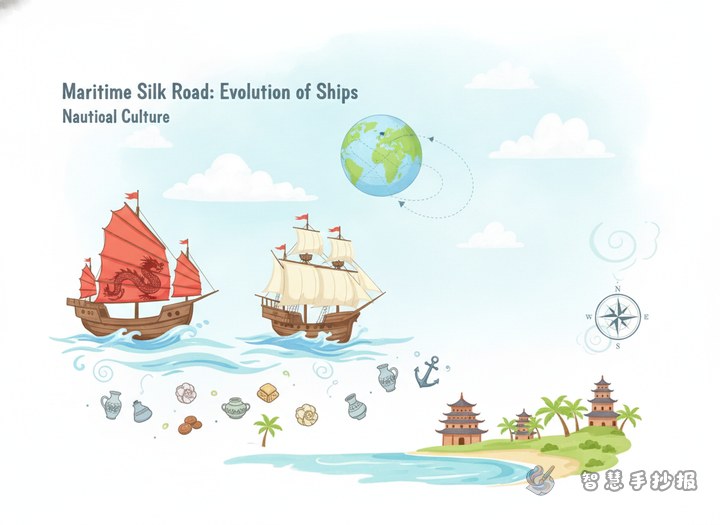
- Draw a large sailing ship in the center, with arrows on each side. Write “China” on the left and “Overseas” on the right.
- Use wavy lines at the top to separate “Sent Out” and “Brought In.” Use blue and orange for contrast.
- Leave a small box in the lower right for a “Port Classroom” with two or three facts about Guangzhou, Quanzhou, or Malacca.
- Make the main title large, such as “Maritime Silk Road: A Moving Culture,” instead of only writing “Maritime Silk Road.”
Use sea blue, sand yellow, and coral orange as the main colors. Too many colors can make the page look messy. You can decorate the border with dotted lines, ropes, shells, or small waves.
Short Lines You Can Copy
- “Goods traveled by sea, and culture stayed in the heart.”
- “A ship brought back more than spices; it also brought songs from far away.”
- “The port was the first stop for exchange and the place with the most stories.”
- Column title ideas: “Chinese Wisdom That Traveled Out,” “Exotic Treasures That Came In,” “Meetings at the Ports,” and “Learning from Each Other at Sea.”
These lines work well at the beginning or end of a column and help the whole page feel connected.
Three Small Details That Make It Neat
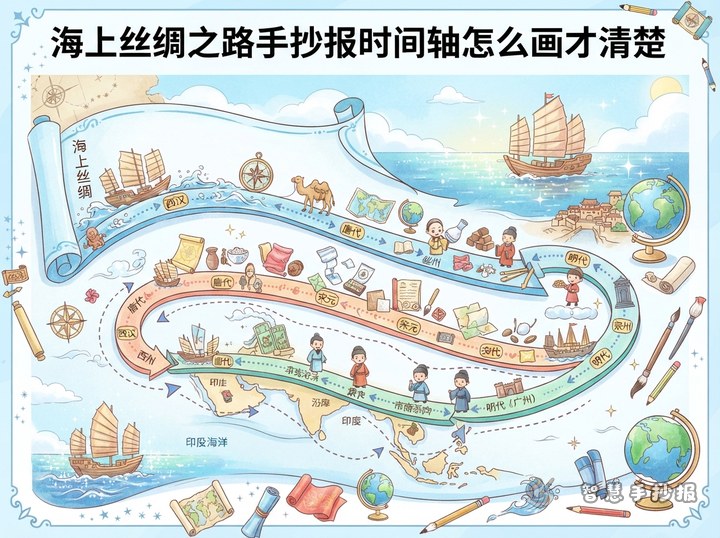
- Do not repeat a pure timeline here. This topic is about two-way flow, not dates in a row.
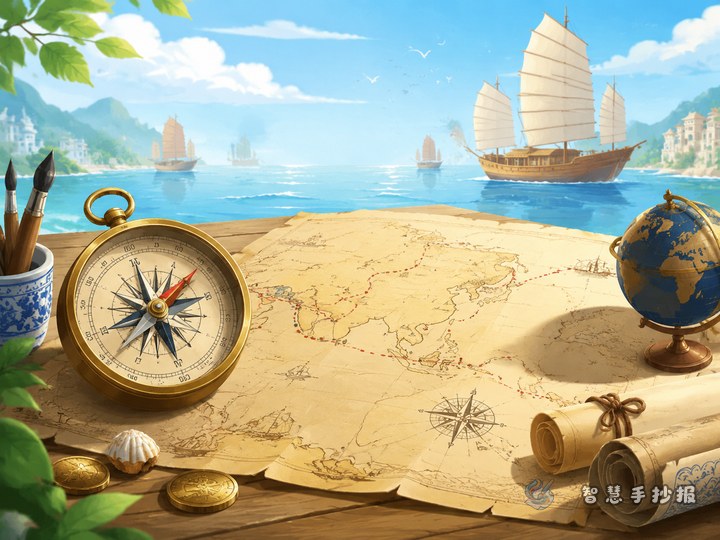
- Keep the map simple. Draw only the coastline and a few port dots.
- Do not crowd all the text together. Leave breathing room in each column and make titles clearly larger than the body text.
Turning It Into a Finished Handwritten Newspaper
If you have already decided to write about cultural exchange, you can open the Smart Handwritten Newspaper WeChat mini program, choose a Maritime Silk Road and navigation culture theme, look at ready-made layouts and column ideas, and then replace the sample text with your own sentences. Setting the columns first, then arranging the layout, and copying the text last can save a lot of revision time.