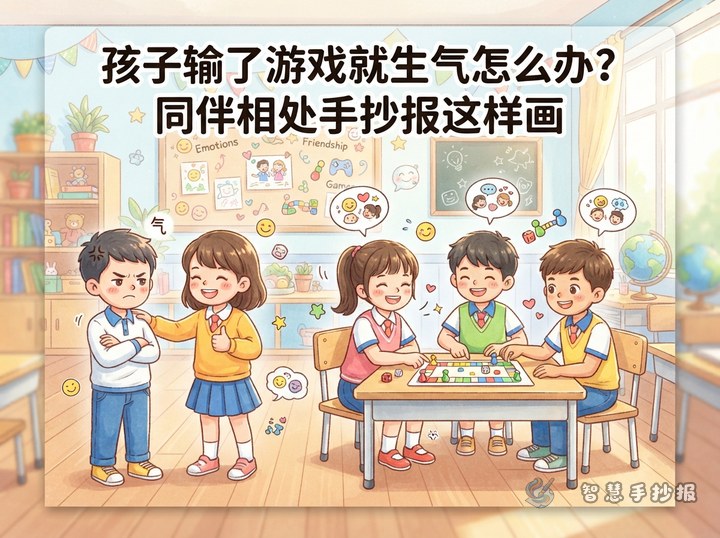
Turn a Disagreement into a Path Back to Friendship
This handwritten newspaper can focus on how classmates rebuild a friendly relationship after a misunderstanding. Under the title, add a short introduction: disagreements are a normal part of being with others. What matters is calming down, explaining your feelings, listening carefully, and looking for a solution together.
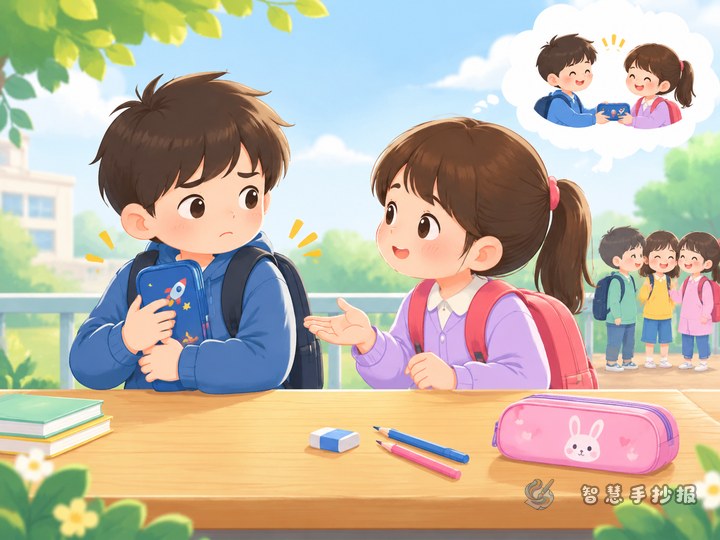
- What happened: Briefly describe a familiar situation, such as borrowing something without asking, disagreeing about game rules, or saying something that hurt a classmate.
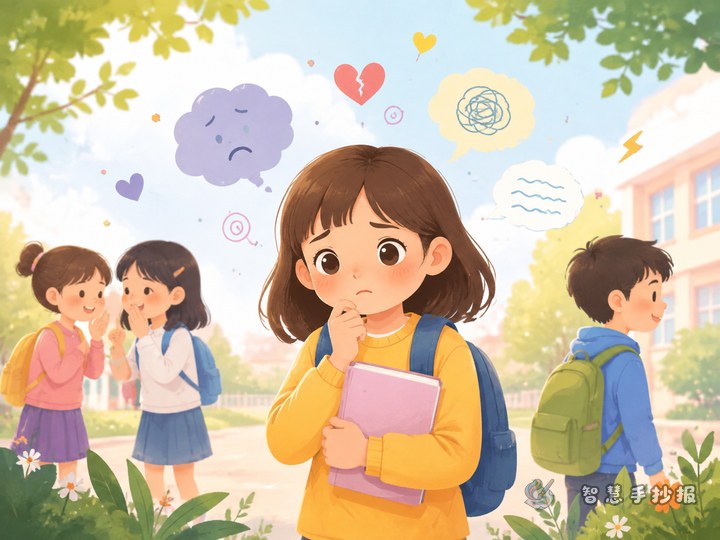
- How did I feel: Include honest feelings such as upset, angry, disappointed, worried, or lonely.
- How can I say it: Use “I feel... because...” instead of blaming or shouting.
- How can we make up: Suggest apologizing, taking turns speaking, listening, and agreeing on a better plan.
Four Sections That Move from Feelings to Action
The Emotion Thermometer
Draw a thermometer on the left side, changing from blue to red. Mark four levels: calm, bothered, angry, and ready to explode. Add a helpful note: “When your feelings get too strong, take a breath, drink some water, or count to five before speaking.”
A Communication Mini-Scene
Draw two classmates inside speech bubbles and write three short exchanges. For example: “I felt sad because you did not wait for me.” “I understand now. I am ready to listen.” “Let us find a plan that works for both of us.” Keep the dialogue polite, short, and easy to copy.
A Make-Up Action Card
- Say hello and give both people a chance to start again.
- Listen without interrupting, then share your own thoughts.
- Say “I am sorry” sincerely when you have made a mistake.
- Agree on a simple rule for the next game or group activity.
Short Messages You Can Write Directly
- Feelings are like the weather: they change and can slowly clear up.
- Calm down first, then speak; listen first, then answer.
- Talk about the problem instead of labeling a classmate.
- When opinions differ, negotiate instead of grabbing or arguing.
- A sincere apology can open the door to a fresh start.
- Friends may disagree, but they can still solve problems together.
A memorable four-line rhyme can go at the bottom: “Pause when anger grows, share what your heart knows; listen and find a way, then walk together into a better day.” Its rhythm adds charm and makes the message easy to remember.
Let Color Show the Change in Feelings
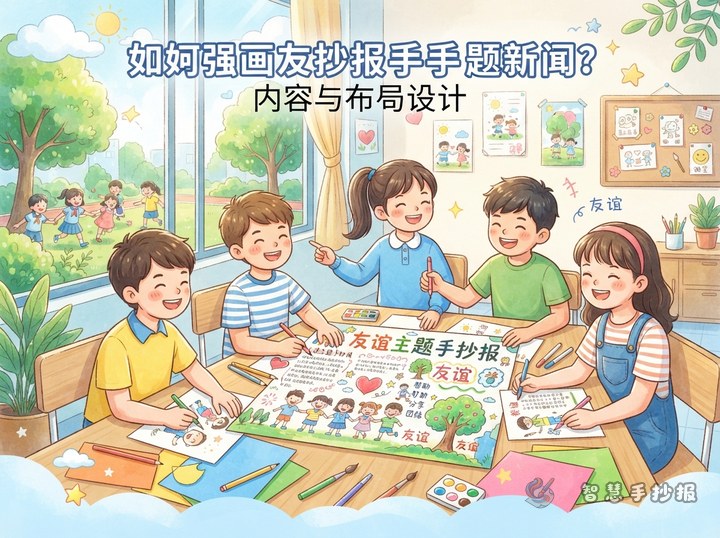
Try a layout with emotional awareness on the left, communication practice on the right, and action promises along the bottom. Place the title in the top center and decorate it with two hands shaking or two hearts moving closer together. Use blue, yellow, orange, and red for the thermometer, light green for the dialogue bubbles, and warm yellow for the action cards.
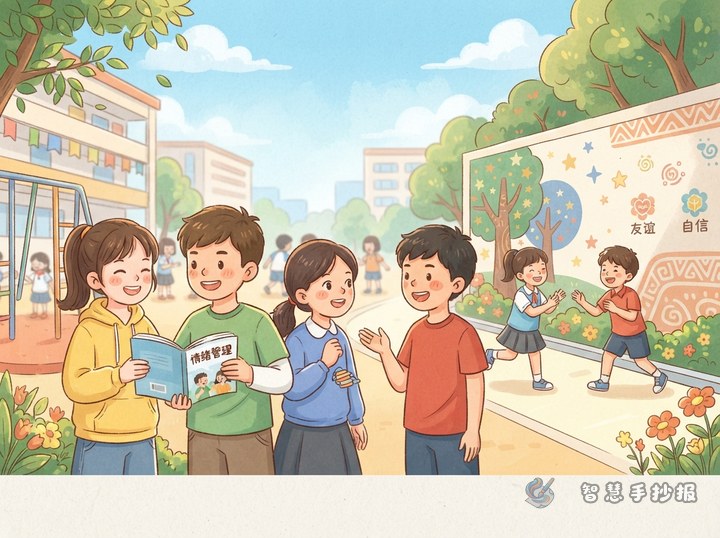
The illustrations can stay simple: changing facial expressions, a high five, two children completing a puzzle, or classmates organizing a desk together. Add one keyword beside each picture, such as “calm,” “listen,” “understand,” or “cooperate.” This keeps the page lively without crowding the writing.
A Friendly Final Check
- Does the title clearly show the theme of emotions and making up with classmates?
- Does every section include both a feeling and a practical way to respond?
- Are the sentences kind and positive, without mocking or blaming anyone?
- Can the main messages be read easily from a distance?
- Do the colors and drawings support the text while leaving enough blank space?
After the words and sections are ready, you can use the 智慧手抄报 WeChat Mini Program to organize the layout and choose suitable decorative elements. Add one personal promise about making peace so the finished newspaper feels sincere and warm.