Start with the Apple That Changes Color
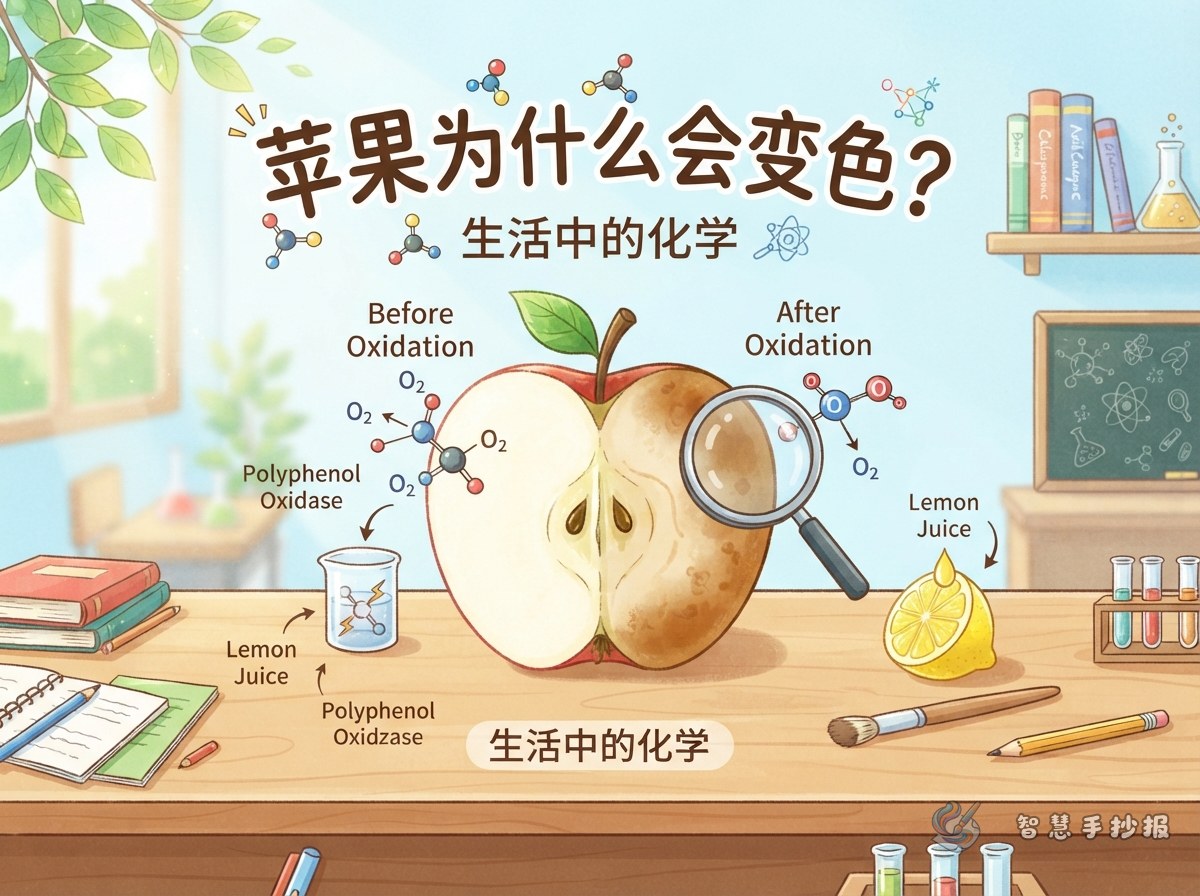
After an apple is cut open, its flesh slowly changes from a light color to yellowish brown. This is an easy everyday chemistry phenomenon for children to observe. Draw the cut apple as the main image, then use arrows to show the color change so the poster feels like a small science investigation instead of a list of difficult facts.
Choose a Question-Style Title
Suggested title: Why Does a Cut Apple Turn Brown? Everyday Changes in Matter. A subtitle such as “Learning About Oxidation Through One Apple” can make the topic clear while keeping the poster interesting.
Four Sections to Explain One Simple Phenomenon
- What I Observed: Draw the apple just after cutting, after a short wait, and when the color becomes darker.
- A Color Change Timeline: Use the sequence “just cut—exposed to air—color becomes darker” and add a few observation words for each stage.
- Why Does It Happen? Explain that the apple flesh reacts with oxygen in the air through the action of enzymes, creating darker-colored substances on the surface.
- My Everyday Discoveries: Add examples such as iron rusting or food changing color when heated, and invite readers to notice changes around them.
Science text you can use: After an apple is cut, some substances in its flesh come into contact with oxygen in the air. With the help of enzymes, an oxidation change takes place and darker-colored substances gradually form on the surface. That is why the apple turns brown. This is generally considered a chemical change.
Let a Timeline Guide the Page Layout
- Draw a cut red apple in the center of the page, using white or pale yellow for the fresh flesh.
- Draw three arrows from the cut surface and label them “just cut,” “exposed to air,” and “color becomes darker.”
- Place the observation section on the left, the explanation section on the right, and “My Discovery” plus everyday examples along the bottom.
- Fill small empty spaces with magnifying glasses, air bubbles, and clock icons to make the process easier to understand.
Keep the Observation Simple and Safe
With help from a parent or teacher, cut one apple into similarly sized pieces and observe how their colors change over time. Record the results with words such as light, slightly yellow, and yellowish brown. An adult should handle the knife and cutting. The samples are for observation only and should not be tasted. Keeping the lighting and viewing angle similar will make the drawings clearer.
Finish with Friendly Colors and Clear Details
Apple red, fruit-flesh yellow, and leaf green make a lively main palette. Use pale blue or cream for text boxes so the page stays neat. Highlight “oxygen,” “contact with air,” and “oxidation” in bold, dark brown, or orange lettering. Before finishing, check that the title stands out, the sections are easy to follow, and the explanation is short and clear. You can then scan into the Weizhi Handwritten Newspaper WeChat Mini Program to continue arranging and making the poster.