Build the Page Around One Motto Thread
Instead of listing many academy names, let the handwritten newspaper explore how academy rules and teaching sayings guided students. Historical texts from academies may appear as study rules, academy regulations, or lecture inscriptions rather than one standard form. You can organize the page around four ideas: steady reading, thoughtful learning, learning with others, and putting knowledge into practice.
Choose a title and a central line
Use the title “Wisdom from Ancient Academy Mottos” and add the subtitle “Read with purpose, learn with understanding, act with care.” In the center, write an original introduction such as: “An academy teaches more than books; it also trains patience, reflection, and responsibility.” A plaque or scroll-shaped box is a good place for this sentence.
Four Sections for the Main Ideas
- What an academy was: Explain in a few sentences that ancient academies were places for reading, lectures, discussion, and learning together.
- Four study values: Explain steady reading, thoughtful learning, learning with others, and practice. Add small icons such as a book, a lamp, speech bubbles, and footprints.
- How students learned: Mention quiet reading, asking teachers questions, discussing with classmates, reviewing lessons, and applying ideas.
- My study promise: Write four realistic actions, such as reading carefully, thinking before asking for help, listening to classmates, and checking work before finishing.
Ready-to-Copy Text
Section introduction: The wisdom of ancient academies reminds us to turn reading into steady action. Reading builds knowledge, thinking makes questions clearer, learning together broadens our understanding, and practice brings ideas into daily life.
Fact card: Ancient academies often valued lectures, reading, and discussion. Students were expected not only to remember words, but also to understand their meaning and test that learning through daily conduct. If you include a historical rule or quotation, check its original wording and source first.
Closing message: Each of us can carry an academy in our heart: build a foundation through reading, find direction through thought, broaden our view through conversation, and show growth through action.
Give the Layout an Ancient Academy Feeling
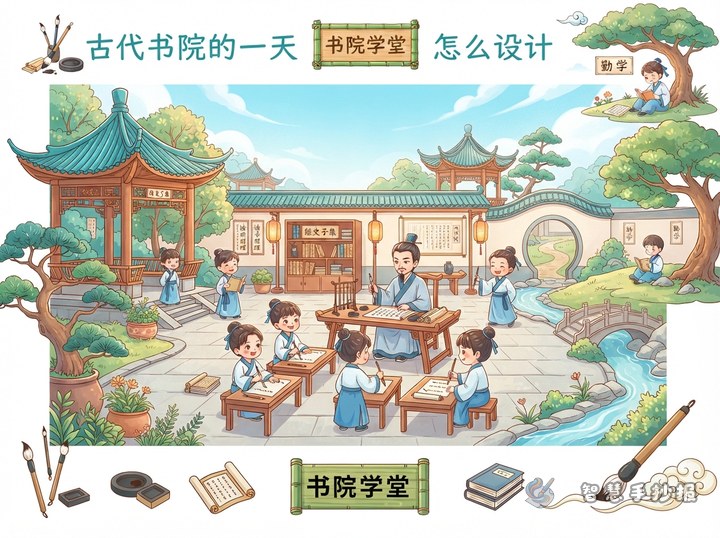
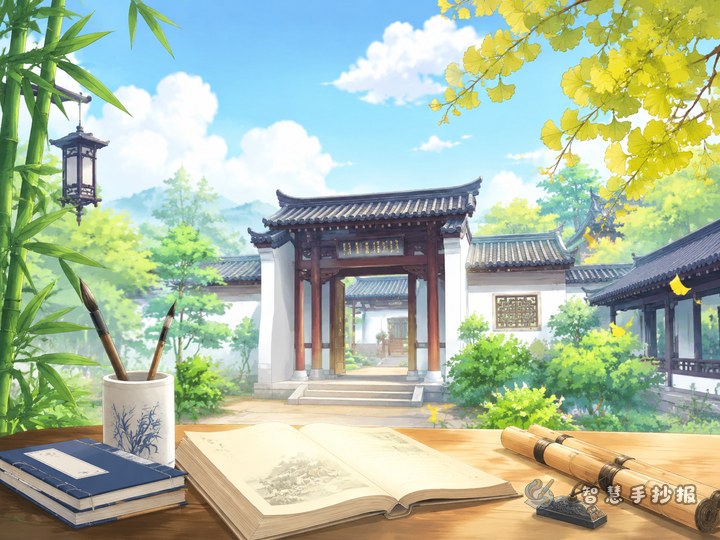
Try a layout with a central plaque, side columns, and an action card at the bottom. Put the main title on a banner at the top. Draw a simple academy gate or an open scroll in the middle, then arrange the four key ideas around it. Place the academy introduction and fact card on the left, the study promises on the right, and finish with footprints, bamboo slips, or a seal-shaped decoration.
Ivory, brick red, ink blue, and bamboo green create a calm traditional palette. Use window patterns, scrolls, bamboo leaves, or round seals as light border details, while leaving enough open space for the writing. Make the title large and clear, but keep the body text consistent and easy to read.
Check the Page Before You Finish
Sketch the sections lightly in pencil first. Make sure the title stands out, all four ideas are explained, and the paragraphs have enough breathing room. Younger students can use shorter sentences, keywords, and icons; older students can add a short personal reflection. After the content is ready, use the 智慧手抄报 WeChat mini program to continue arranging the page and turn the academy theme into a finished handwritten newspaper.