Build the theme around real-life shapes
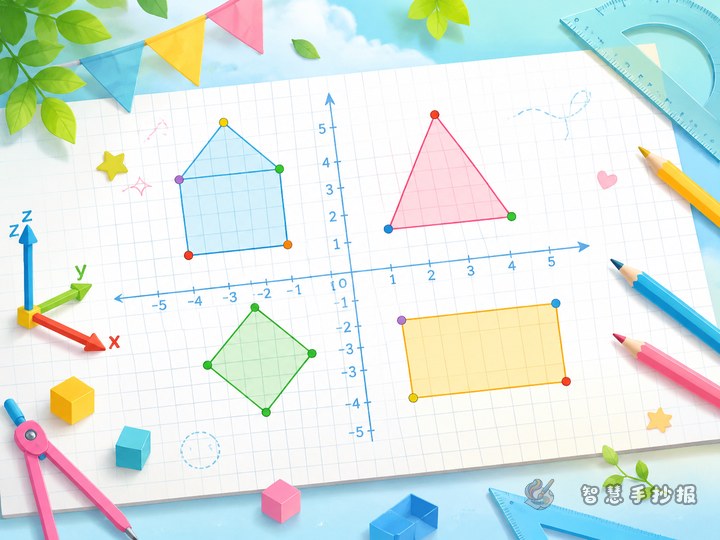
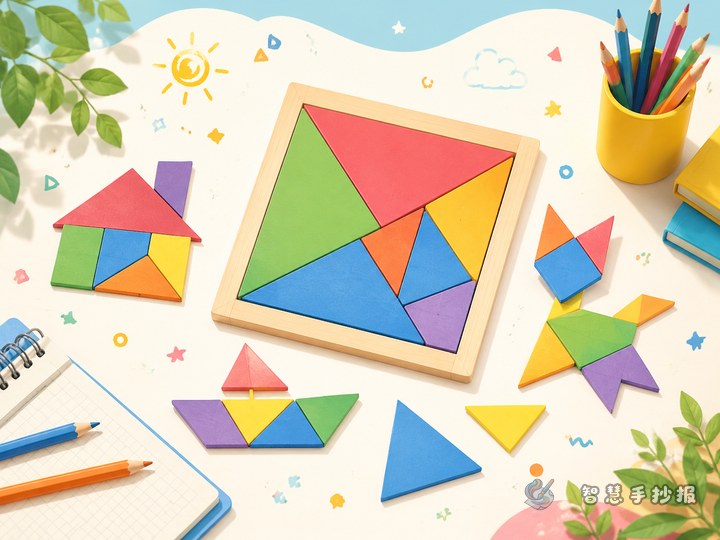
For a “Shapes in Everyday Life” handwritten newspaper, it is better not to focus only on definitions. A clearer idea is to connect geometry with familiar objects children see every day. For example, a clock looks like a circle, a roof can look like a triangle, a book is often a rectangle, a gift box can be a cube, and a ball is like a sphere.
This makes the page easier to understand and helps children connect math with observation.
Sections you can place on the page
Flat shapes around us
- Circle: clock, plate, coin
- Triangle: roof, warning sign, set square
- Square: sticky note, tile, checker pattern
- Rectangle: book, door, blackboard
Solid shapes in daily life
- Cube: dice, toy block, small gift box
- Cuboid: pencil case, refrigerator, cabinet
- Cylinder: cup, battery, crayon
- Sphere: ball, marble, globe model
Simple space-thinking tasks
- Find flat and solid shapes in the classroom.
- Group objects by the same shape.
- Compare how one object looks from the front, side, and top.
Short text for the handwritten newspaper
Sample paragraph: Geometry is all around us. Flat shapes include circles, triangles, squares, and rectangles. Solid shapes include cubes, cuboids, cylinders, and spheres. When we observe shapes in daily life, we learn to notice form, size, and position. Geometry helps us understand the world in a fun and practical way.
Short slogan: Shapes are everywhere. Look closely and discover the geometry of life.
How to arrange the layout
A good layout is a large title in the center with four small sections around it. You can divide the page into flat shapes, solid shapes, daily examples, and mini observation tasks. This keeps the work neat and easy to read.
- Use colorful title letters to make the page lively.
- Decorate borders with repeated circles, triangles, and squares.
- Use different light colors for different sections.
- Add simple icons like a ball, box, ruler, or window.
Tips to make the work better
Each small section can follow a simple pattern: shape name, real-life example, and one short explanation. Younger students can use fewer words and more drawings, while older students can add shape features and space-observation ideas.
After finishing the draft, check whether the shapes are grouped correctly and whether the spacing looks balanced. If you want to improve the layout further, you can continue designing in the Zhihui Shouchaobao WeChat mini program.