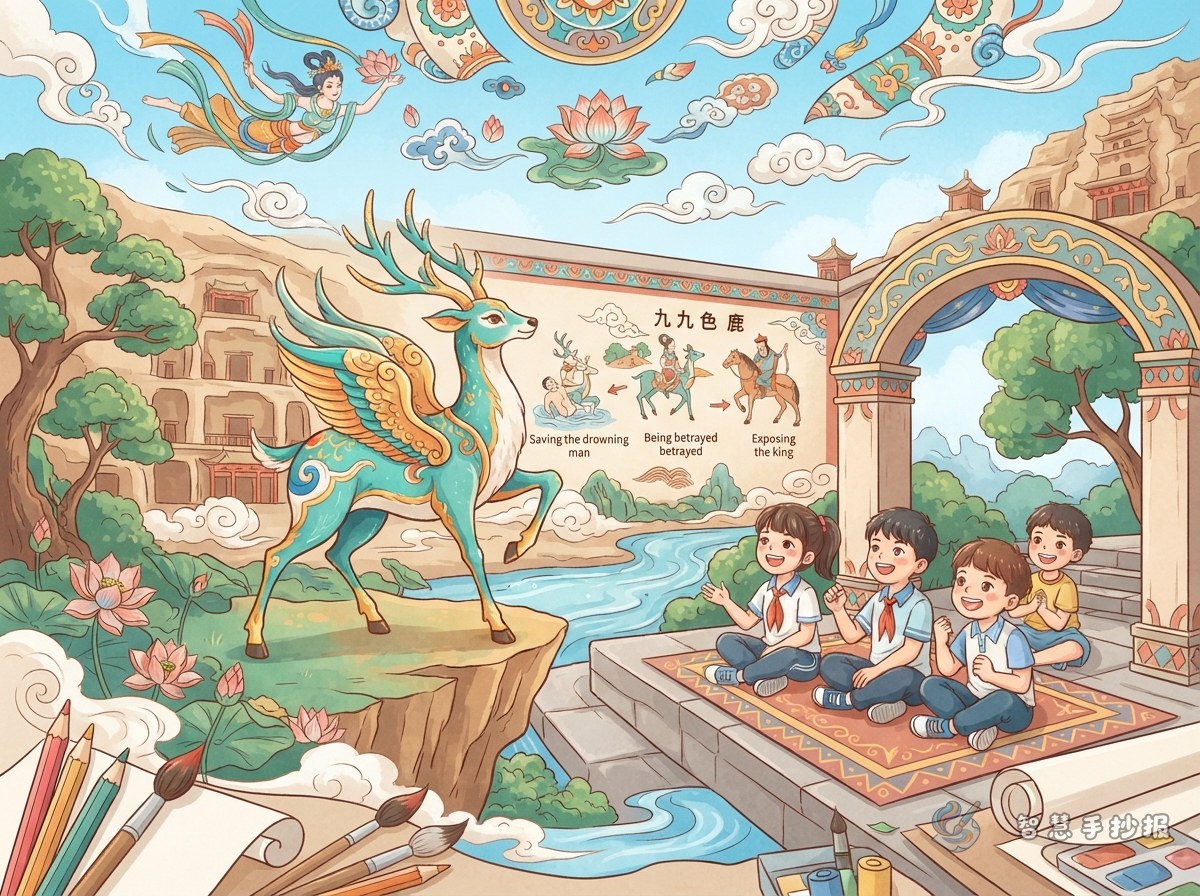
Why this deer works so well on a school newspaper
The Nine-Colored Deer comes from the mural in Mogao Cave 257, painted as a long horizontal strip that reads from both ends toward the middle. It has a hero, a conflict, a turning point and a moral, so your page gets both pictures and a real story instead of a wall of text.
For younger students it is also easy to follow: one unusual deer, one drowning man, one greedy queen, and the whole page has its cast.
Divide the story into four picture boxes
Resist the urge to write one long paragraph. Break it into four panels and give each one a sentence or two.
- The rescue: the deer pulls a drowning man from the river and he promises to keep its secret.
- The promise breaks: the queen dreams of the deer's fur and the king offers a reward.
- The betrayal: the rescued man leads the hunters there, and the deer tells the truth to the king.
- The ending: the king orders the deer to be protected, and the betrayer is condemned.
Under the four panels, add one line of your own, such as 'A promise should always be kept.' Now the page has an opinion, not just a summary.
Text you can copy or rewrite
A short introduction
'In the murals of Dunhuang, there lives a deer with nine colors of fur. It saved a drowning man, but he sold its secret for a reward. Standing before the king, the deer told the truth and showed everyone what honesty is worth.'
Two fact boxes
- Where it is: painted in Mogao Cave 257 in Dunhuang, from around the Northern Wei period.
- How it is arranged: a horizontal comic-strip scene, with events moving from both sides toward the centre.
- What colors are used: earth red, azurite blue, malachite green and dark brown, all ground from minerals, which gives the mural its warm, weathered look.
You do not need all three. One or two in a corner box or along the border works better than a crowded page.
Planning the page with a story strip
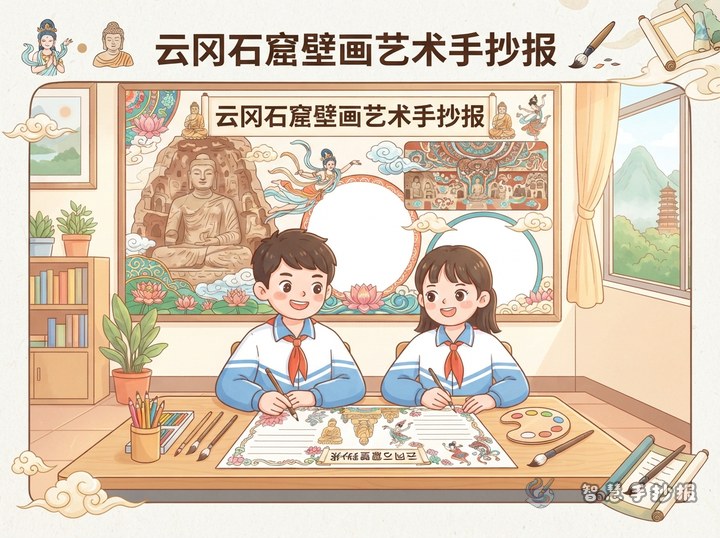
A three-column layout is easy to read and easy to draw: the deer illustration on the left, a vertical four-panel story in the middle, and the facts and reflection stacked on the right.
- Write the main title across the top, for example 'The Nine-Colored Deer' or 'A Deer in the Murals'.
- Use smaller labels like 'Mural File', 'Four Panels' and 'My Thoughts' in a lighter color.
- Leave even gaps between the panels so the page does not look cramped.
- If drawing the deer is tricky, show only the head, antlers and shoulders, and focus on the colored patches of fur.
Colors and ornaments with a grotto feel
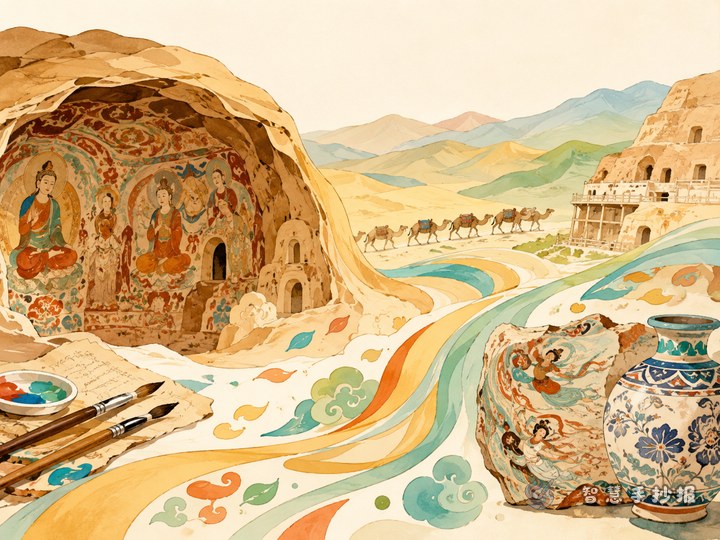
Skip bright neon markers. Earth red, ochre, azurite blue, malachite green, sandy beige and dark brown will immediately look closer to a cave mural. Add small touches of white or gold for highlights.
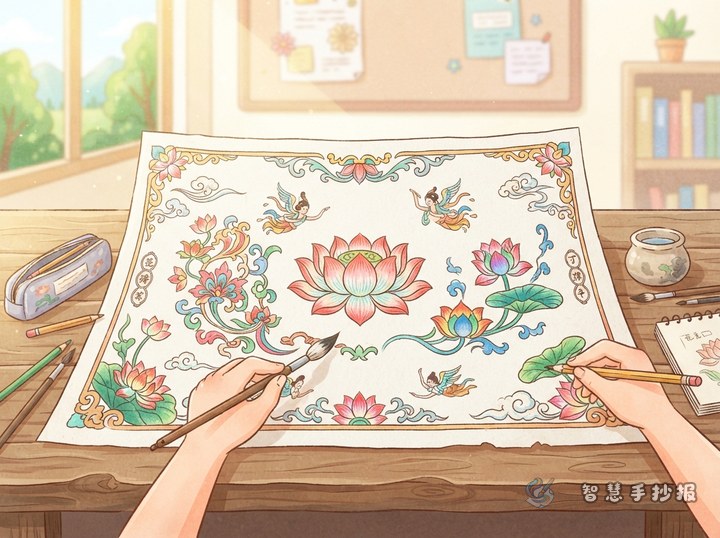
For the background, draw soft rolling hills or drifting cloud shapes in thin lines, the way mural painters filled empty space. The border can be a simple scrolling vine or a row of small lotus flowers, with hoof prints or tiny trees in the corners.
Before you start drawing
Sketch the four panel positions on scrap paper first, and count the characters in each sentence so the text blocks stay even.
If you are not confident about the line drawing, open the Smart Handwritten Newspaper mini program on WeChat, choose a grotto mural layout, drop your four-panel story and title into it, and copy the arrangement onto your paper. It saves a lot of rough-draft time.