Why relaxation tricks deserve their own page
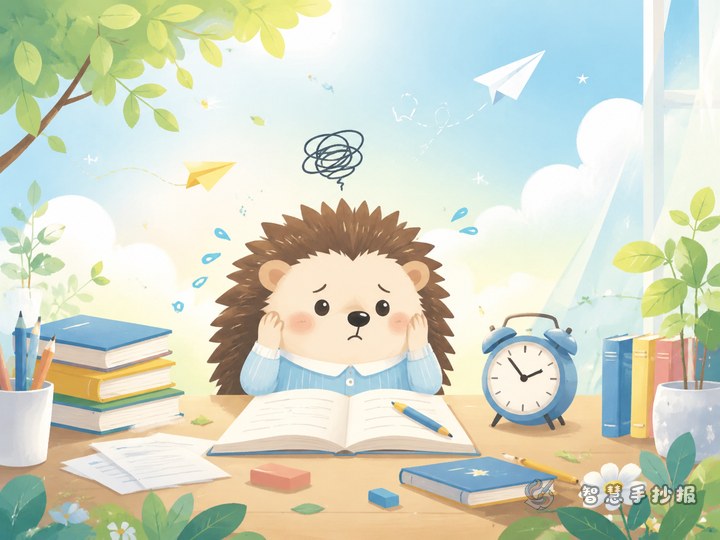
Children get nervous in very ordinary moments: before reading aloud in class, while waiting for a test to start, after an argument with a friend, or lying awake at night. In those moments, advice is hard to take in, but doing something small usually helps. Turn this issue of the newspaper into a relaxation toolbox so that classmates can read it and try the ideas straight away.
Five calming methods to draw and write about
1. Counting breaths
Breathe in slowly while counting 1, 2, 3, 4. Then breathe out slowly while counting 1 to 6. The exhale is longer than the inhale, so the heartbeat settles. Draw a big "4 - 6" on the page to make the numbers clear.
2. Butterfly tapping
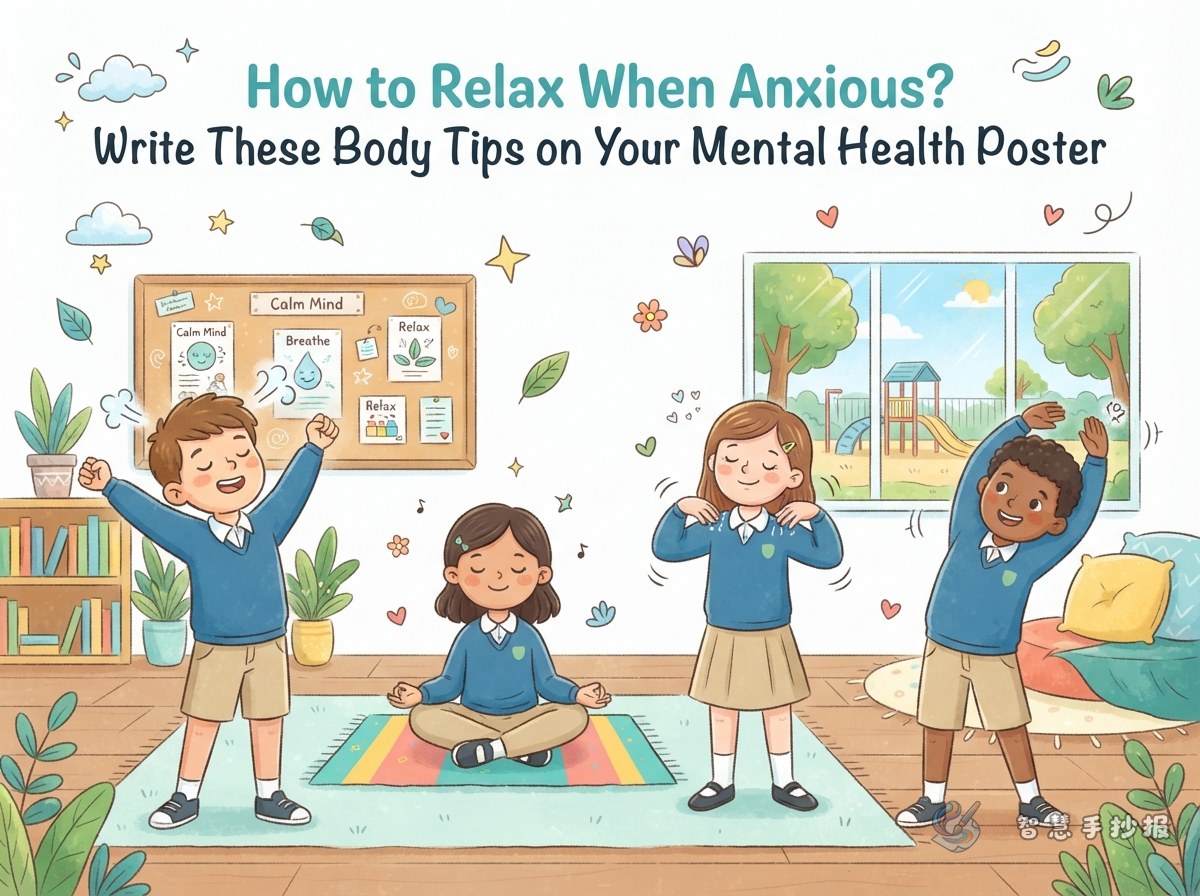
Cross your hands over your chest or shoulders and tap gently, left then right, like butterfly wings, breathing slowly as you tap. It works well when your heart is racing or you cannot sit still.
3. Squeeze and release
Squeeze both fists and count to five, then open them slowly and notice how your fingers loosen. Two small icons, one tight and one loose, are enough to show this on the page.
4. Stretch and walk
Stand up, reach both arms high in a long stretch, walk a few steps on the spot, and roll your shoulders. Moving the body helps a heavy mood loosen a little.
5. Warm water and one quiet minute
Drink some warm water and wash your face, then do nothing at all for one minute, paying attention only to your breathing.
Text you can copy: short lines, a three-step guide, one kind sentence
You do not need much text, but it should sound like something you would say to yourself. These lines can go straight into the boxes:
- Feeling nervous is not a bad thing; it reminds me that this matters to me.
- Take one breath first, then do the next thing.
- My hands can help me settle down.
- Going slowly is still going forward.
- If I cannot say it, I can write it down first.
You can also add a three-step guide: Step one, pause and do not rush to speak. Step two, take three slow breaths. Step three, name the feeling in one sentence, such as "I feel a bit panicky right now".
Layout: turning the page into a relaxation toolbox
Draw an open box or a large bag in the middle of the paper. The five methods become five tools inside it, each in its own small frame with a name, the steps, and one hint. Put the main title along the top or on the left, and save a column on the right called "Which one did I try today?" with five small boxes to tick.
- Make the title large and the body text small, and leave a little space around the title instead of filling every corner.
- Give each method one simple outline drawing; there is no need for fine detail.
- Soft blue, soft green, and cream make a calm, clean colour scheme.
- Draw a line near the bottom and write one encouraging sentence, such as "I can take my time".
Making steps and a quick self-check
- On scrap paper, list the five method names and mark the one you use most, then place it where it will be seen first.
- Lightly pencil the areas on the real sheet: title, five method frames, and the tick-box column.
- Copy the text, add the small drawings, then go over the outlines and colour them in.
- Before handing it in, check three things: have you actually tried these methods, is there at least one sentence written for yourself, and is there enough empty space rather than a crowded page?
Parents and teachers can invite children to try all five methods at home before writing, which makes the wording more personal. If you would like ready-made layouts and section ideas, open the "智慧手抄报" mini program in WeChat, choose a mental health and growth theme, drop your own sentences into the matching sections, and then draw them onto paper. It is much easier than starting from a blank sheet.