Start With One Clear Idea
Most drug prevention newspapers carry the same general slogan, and readers pass over it without thinking. Before drawing anything, ask yourself what single sentence you want a classmate to remember. Write it as a full sentence, such as "Curiosity should not be handed to strangers" or "The first refusal is the hardest and the most important." That sentence becomes the source of your headline and every short line on the page.
Keep the idea short enough to remember, around ten to fifteen characters in Chinese or one short English sentence. Parents and teachers can help by asking the child to describe a real situation first, then squeeze that situation into one line. It sounds more personal than a copied slogan.
Three Headline Styles You Can Use Right Away
Paired lines
Two short halves with matching length and contrasting meaning read with a rhythm. Examples: "One side curiosity, one side the deep end" or "Refuse once, stay clear for life."
Question headlines
A question pulls the reader in, and the subtitle answers it. Examples: "Would you try a sweet from a stranger?" or "Is 'just once' really only once?"
Call-to-action headlines
Start with a verb and keep the tone firm but not frightening. Examples: "Say the word no out loud" or "Put curiosity into books, not into unknown packages."
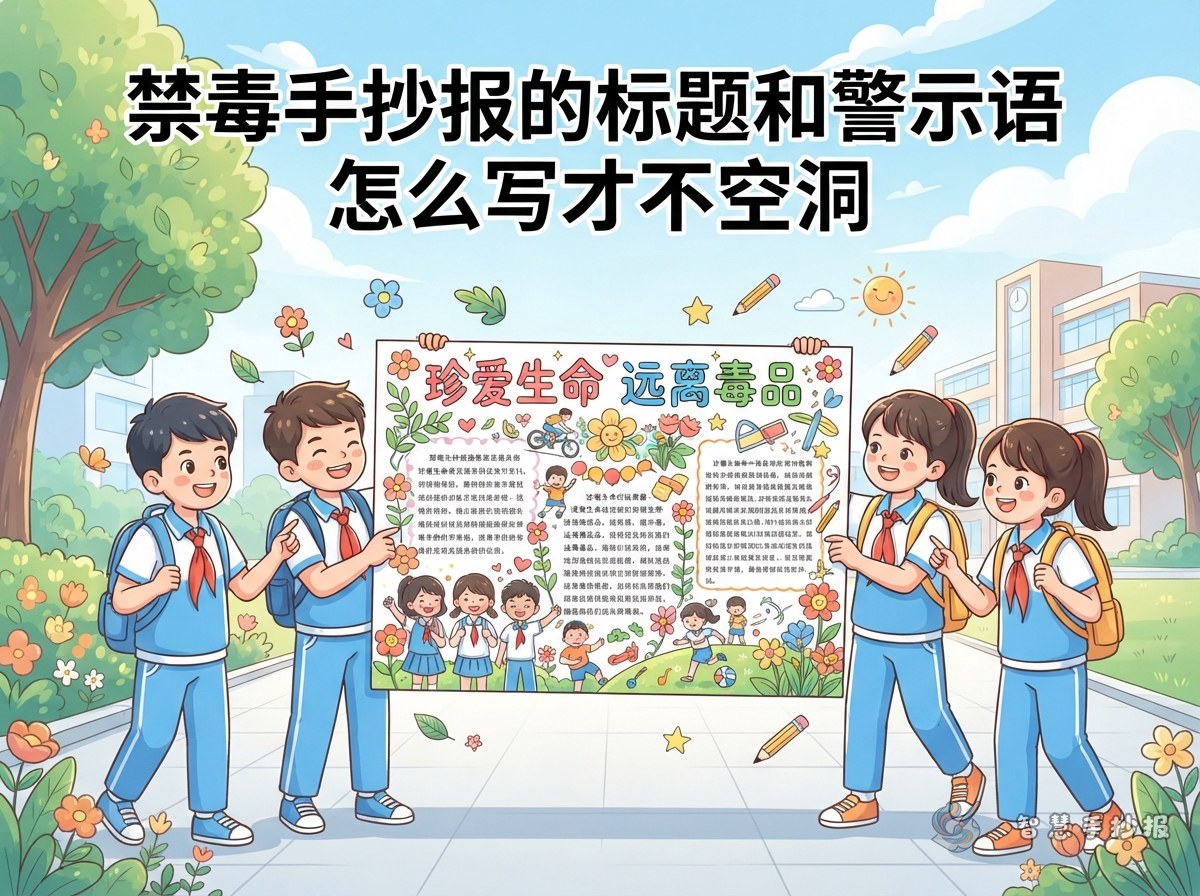
Choose one style and keep the main headline on a single line. Place the topic name, such as "Drug Prevention Newspaper," in a smaller subtitle underneath so the page reads in a clear order.
Warning Lines That Fit Each Column
Once the headline is set, you still need short lines for the body. Group them by column so a reader can scan the page quickly:
- Understanding the harm: "The first try is where it starts" and "Your body keeps the bill."
- Refusal skills: "Say you do not know, say you do not need it, then walk away" and "Say no loudly in a crowd, leave early when alone."
- Everyday reminders: "Do not take a drink from someone you do not know" and "If you leave your cup, do not go back to it."
- Promise column: "I promise not to try, not to carry, not to hide it."
One or two lines per column is plenty. Add a short reason after each one, such as "because the first offer often comes from someone you already know." That keeps the warning concrete instead of turning it into a scary slogan.
Placing the Headline and Warnings on the Page
Good words still disappear if the layout has no levels. Work from the top down:
- Give the top quarter of the page to the main headline, in the largest letters.
- Place the subtitle directly beneath it at about half the size, in a lighter color if you like.
- Open each column with one bold warning line, separated from the body by a blank line.
- Keep body text at a normal size with generous line spacing so blocks do not merge.
- Save a small corner for a promise line or the date, which gives the page a finishing point.
Keep decorations away from the headline. Borders and small drawings can sit between columns, but they should not crowd the title.
Replace Empty Phrases With Real Situations
The most common empty phrases are "drugs are harmful" and "we must stay away." They give the reader no picture. Add a situation and an action instead:
- Replace "very harmful" with "it is addictive, it damages the body, and it worries your family."
- Replace "stay away from drugs" with "ask where something came from before you accept it; if nobody can explain, do not take it."
- Replace "cherish life" with "eat well, sleep well, and talk to your family when something is wrong."
Read the new line aloud. If you can picture the scene, the writing is specific enough.
A Quick Check Before You Copy It Out
- Does the headline carry one idea instead of four slogans?
- Does every column have at least one warning line and one short reason?
- Are the headline, the warning lines and the body text clearly different in size?
When the wording is ready, you can open Smart Handwritten Newspaper in the WeChat mini program, choose the drug prevention and cherish life theme, place your headline and short lines into the layout, and print it as a guide for copying.