
Start With One Small Deskmate Story
A mutual-help newspaper becomes dull when it lists too many grand ideas. Before drawing the layout, remember one small moment between deskmates: lending an eraser, reminding someone to listen, explaining a math step, sharing an umbrella, or encouraging a partner before a contest. Choose one moment and tell it clearly.
- When did it happen? Before morning reading, during math class, or the day before sports day.
- What did the helper do? Pass a ruler, mark a key sentence, or point to the right page.
- What changed? A difficult task became easier, or two classmates became closer.
Build Four Simple Sections
Deskmate Profile
Introduce the deskmate in two or three sentences. For example, “She writes quickly, but she always circles the important part for me.” This gives the story a real person.
Help Timeline
Split the event into four steps: a problem appears, the deskmate notices, they solve it together, and the writer feels something afterward. Short sentences on a timeline are easy to follow.
Thank-You Note
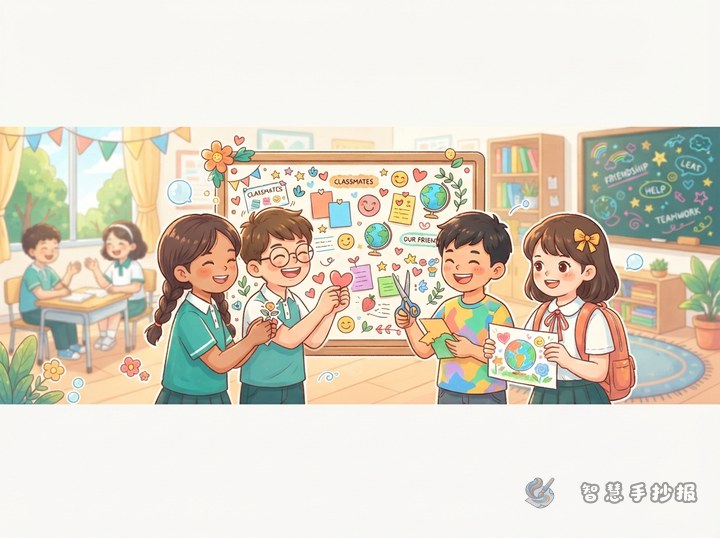
Shape this section like a sticky note or a small card. A sentence such as “Thank you for not laughing at my slow counting and for doing it again with me” feels specific and warm.
Teamwork Tips
List three simple ways deskmates can work together: take turns checking homework, listen fully before adding an idea, and remind each other of one small task each day. This connects deskmate help with wider teamwork.
Turn Help Into Visible Actions
Instead of repeating “we should help each other,” describe what helping looks like. These sentence patterns can be adapted directly:
- “When I could not find my ruler, he folded his own and said half a ruler was enough.”
- “She saw me staring at the question. Instead of giving me the answer, she drew a line on my rough paper.”
- “We agreed that whoever finished first would check one question for the other.”
- “A small help between deskmates can last only one sentence, yet it makes the whole day lighter.”
Make the Layout Read Like a Story
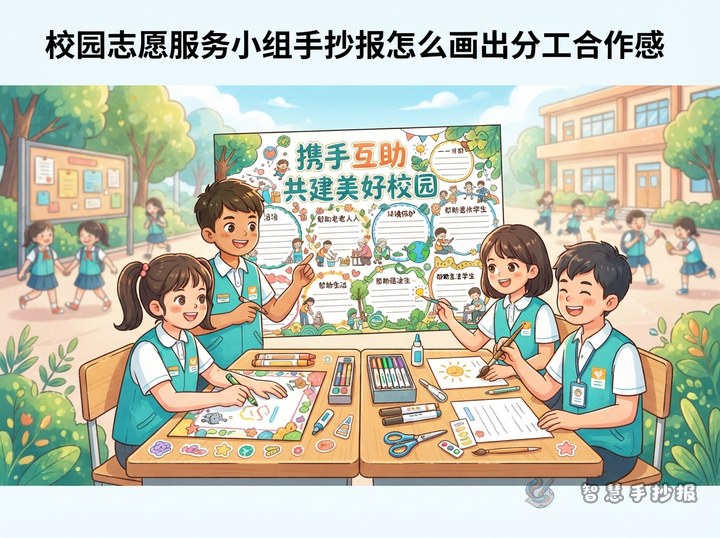
Place the title clearly at the top, then divide the page into two main areas. Put the deskmate profile and thank-you note on one side, and the timeline and teamwork tips on the other. Connect timeline points with arrows or dots, and place short dialogue inside simple speech bubbles. Use two or three main colors: one for the title, lighter colors for section borders, and a clear dark color for body text. Leave a small corner for a class mutual-help pledge so the theme grows from one desk to the whole classroom.
A Quick Check Before You Write
- Does the page focus on one small event instead of many unrelated ideas?
- Are there clear actions, dialogue, and feelings?
- Are there only three or four sections with enough white space?
- Does the ending connect deskmate support with teamwork?
If you want to adjust the sections or layout, open the 智慧手抄报 WeChat mini program, choose a peer-support or teamwork template, and fill in the story details above to finish the page more easily.