
Give the Poster a Theme: Spring Is Wrapping Up
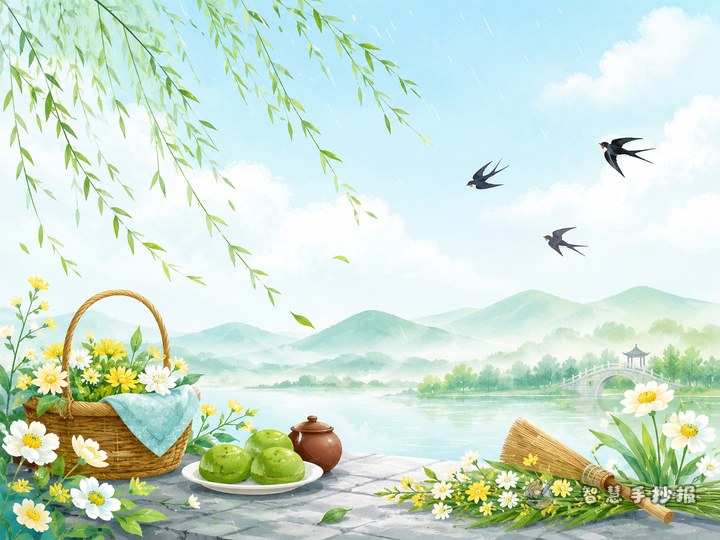
Grain Rain is the last solar term of spring. Its name means rain feeds a hundred grains: the showers arrive, and the seeds that were planted begin to grow in earnest. A poster that only says 'Grain Rain is one of the 24 solar terms' will look empty, so try a theme like one spring rain seeing spring off. That gives you both a fact and a picture.
A good theme line is short: Grain Rain arrives, spring has one last stretch to go; the rain falls, and the grain lifts its head. One or two sentences fill the space under the masthead neatly.
Four Customs That Fit Neatly Into Panels
Grain Rain customs are mostly about eating, looking, and walking, which makes them easy to write about and easy to draw. Choose three or four.
Drinking Grain Rain Tea
Tea picked around Grain Rain is called Grain Rain tea, and people say the leaves are tender and fragrant at this time. In this panel, write when the tea is picked, what the buds look like, and how your family makes tea. Two or three leaves and a small cup are enough for the drawing.
Viewing Peonies, the 'Grain Rain Flower'
Peonies bloom most fully around Grain Rain, which is why they are nicknamed the Grain Rain flower. Note when people go to see them and what colors appear, then copy one short line about flowers. The page instantly feels like the lively end of spring.
A Grain Rain Walk and Toona Shoots
A Grain Rain walk means stepping outside on a fine day to look at fields and trees. Toona shoots are the seasonal vegetable of the moment; describe how red and green they look when they first sprout and how your family cooks them. Both are close to a child's daily life.
Cangjie and Grain Rain Paper Charms
Some places honor Cangjie, the legendary figure said to have created writing, at Grain Rain. Others paste Grain Rain charms showing a rooster or a scorpion to drive off pests and wish for safety. One short paragraph is enough here so it does not crowd out the main text.
A Layout Built From Raindrops and Grain Stalks
The easiest decorations come straight from the name of the solar term: raindrops and grain.
- Border: draw a ring of raindrops in different sizes around the edge, leaving a square writing area in the middle.
- Dividers: use grain or wheat stalks as horizontal lines to split the page into two or three blocks.
- Four panels: arrange the customs in two rows of two, with a small heading in each top-left corner and a thumbnail-sized drawing space in each bottom-right corner.
- White space: keep a narrow strip under the masthead for the theme line and leave two or three fingers of space between panels.
Lightly pencil in the boxes and headings first so you know the text will fit, then go over the lines in color. That way you never run out of room halfway through.
Headlines, Sayings, and Short Lines to Copy
Keep headlines short and vivid, and add a proverb or a line of poetry in the body text to fill things out.
- Masthead options: Rain Feeds a Hundred Grains; The Last Rain of Spring; Peonies Open at Grain Rain; Spring in a Cup of Tea
- Proverb options: Around Grain Rain, plant melons and beans; Rain at Grain Rain means good planting
- Short lines: The rain comes down and the grain looks up; spring hands the baton to summer here
Proverbs work well as a slim strip across the lower middle of the page, while a short line can sit under the masthead as a subtitle. Do not use the same sentence in both places.
Quick Check Before You Hand It In
- Are the headline, theme line, and customs text all present? No panel should have a picture but no words.
- Does each custom panel contain real details instead of just 'this is a Grain Rain custom'?
- Is there at least one personal detail, such as how your family makes tea or a flower you saw on the way to school?
- Have you kept to three or four colors, and do the raindrops and the body text clash?
If time is short and you want to see a finished layout first, open the WeChat mini program from Smart Handwritten Poster, choose a solar term template, swap in your own text, and copy the arrangement onto paper. The finishing steps become much easier.